
REVIEW · CHANIA
Wine & Olive Oil tasting one day private tour in Crete
The star of this private Crete tour is the chance to connect everyday Cretan food with the places that produce it. You’ll see one of the world’s oldest olive trees, taste wine and oil at a Venetian-era monastery, wander Chania’s old city, then visit a family winery on Kissavos Mountain. The private vehicle lets you set the pace, and the mix of food, culture, and countryside gives the day more range than a simple tasting.
I especially like the monastery stop, where olive oil, wine, honey, vinegar, and soap are made, and the final winery visit, where five wines are paired with local food. A possible drawback is that lunch is not included, and the tour can run close to six hours, so you should keep the rest of your day flexible.
Key points to know before booking
- Five wines at the monastery: Taste wine with rusk, extra virgin olive oil, sea salt, and oregano in a historic religious setting.
- A private day at your pace: Only your group participates, with private transportation and pickup offered from several places.
- Chania added to the tasting route: Walk narrow old-town streets and browse for leather goods, ceramics, honey, herbs, cheese, and olive oil.
- A second winery with local varieties: Try Assyrtyko, Romeiko, Vilana, and other native and international grapes.
- Lunch costs extra: A meal at a winery on Kissavos Mountain can be arranged, but it is not part of the listed price.
- Allow half a day: The start time is 10:30 a.m., and the advertised duration is about five hours, with some descriptions placing the day closer to six.
Why this private Crete tour works well
Crete is easy to reduce to beaches, ruins, and mountain roads. This tour gives you a look at something more ordinary and more revealing: the food that appears on nearly every Cretan table. Olive oil is not treated as a small tasting note here. It is part of the island’s work, economy, cooking, and family life.
The private format matters. You are not tied to the pace of a large coach group, and you can spend more time at a stop that interests you. If you want to linger over wine, browse the market in Chania, or keep the old-city walk short, your guide can adjust the rhythm within the limits of the day.
Pickup and drop-off are offered from several locations, which removes much of the usual planning fuss. Start time is 10:30 a.m. The tour is listed at about five hours, though the highlights describe roughly six hours, so I would treat it as a half-day outing that may occupy most of your afternoon.
The price is $178.10 per person. That is not a bargain if you are looking only for a few samples of wine and oil. But it includes private transportation, all listed fees and taxes, snacks, bottled water, pickup, and two separate tasting experiences. For a couple or small group that values a private vehicle and a flexible schedule, the price can make sense. Lunch is extra, so include that in your budget.
More Olive Oil Tastings in Chania:
- Chania: Elafonisi & Falasarna Private Tour w/olive oil tasting
★ 5.0 · 46 reviews - Chania Private Olive Oil Tour: Oil Tasting & Villages Tour
★ 4.4 · 9 reviews - Chania Sourdough Bread Class – Olive Oil Tasting
★ 5.0 · 6 reviews
The Venetian monastery and its olive-oil tradition
The first major stop is the Monastery of the Holy Trinity Tzagarolon, a Venetian-era religious site. The setting gives the food tasting a useful sense of place. You are not simply standing at a shop counter with bottles arranged in front of you. You are learning how food production fits into a monastery that also preserves art and religious objects.
The monks produce organic olive oil, wine, honey, vinegar, and soap. That variety helps you see how olive cultivation and small-scale production extend beyond a single bottle of oil. It also gives the stop a practical side. You can compare several products and understand how the same agricultural tradition supports cooking, preserving, cleaning, and trade.
The tasting includes five different wines. They are paired with rusk, extra virgin olive oil, sea salt, and oregano. Rusk is a dry, crisp bread that works well with oil, and the simple pairing keeps attention on the flavors rather than on a large meal.
You should expect this to be a guided tasting rather than a full winery meal. Snacks are included, but lunch is not. If you are hungry early in the day, eat beforehand or plan to pay for the optional lunch later.
The monastery also has a museum. You can see church icons, a 12th-century manuscript cover, and 16th and 17th-century icons of St. John the Theologian and St. Nicholas. This gives the stop a cultural layer that a standard winery visit would lack.
I would allow yourself time to look beyond the tasting table. The monastery is valuable because it links Cretan food with religious art and older local traditions. If your main interest is wine alone, the museum may feel like a detour. If you want a fuller picture of Crete, it earns its place in the route.
Seeing one of Crete’s oldest olive trees
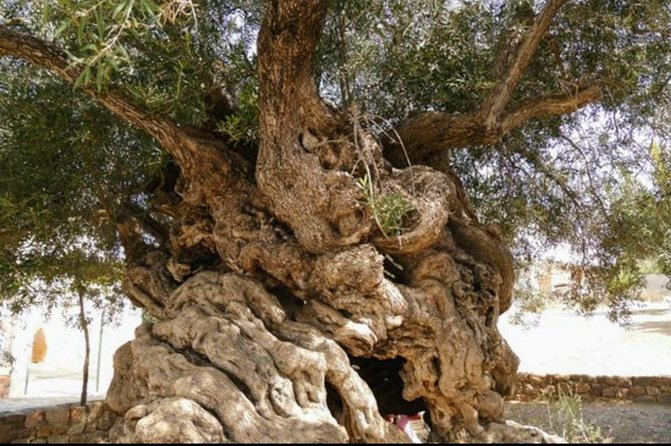
The tour also includes a visit to one of the oldest olive trees in the world. The supplied details do not identify the exact tree or explain how long the stop lasts, so you should not expect a formal lesson in tree dating or a museum-style presentation.
Still, this is one of the most memorable ideas in the day. Olive trees can look modest beside grand churches and mountain views, but they explain a great deal about Crete. The island’s food culture depends heavily on olive oil, and the tree turns that idea into something visible.
This stop should appeal to anyone interested in farming, local customs, or food origins. It is less important for visitors who want a long, structured historical tour. Ask your guide how the tree is connected to the surrounding area and how olive oil production has changed over time. Since the excursion is private, this is the sort of question that can shape your conversation.
Chania’s old city and its food market
The tour then moves into Chania, where you can walk through narrow streets in the old city. The route includes shops selling leather goods and ceramics, along with a lively market offering honey, herbs, cheese, and olive oil.
This is a useful change of pace after the monastery. Instead of tasting products at their source, you see how local food and crafts are presented in town. It also gives you time to browse rather than simply follow a tasting schedule.
Keep your expectations realistic. The description does not promise a long historical walking tour or entry to a specific museum in Chania. The emphasis is on strolling, shopping, and seeing the market. If you want to buy olive oil or local food, ask about carrying purchases in the vehicle and about the best time to shop.
The private arrangement is especially helpful here. Chania’s narrow streets are better suited to a relaxed walk than a large group. You can pause for photographs, look closely at ceramics, or spend more time at the market without worrying that a bus full of people is waiting.
I like this part because it connects the countryside visits with city life. You see the products being made, then encounter them in the place where residents and visitors buy them. If you have only one day in Chania, the stop gives you a quick taste of the old city without turning the tour into an all-day urban walk.
More Olive Oil and Wine Tours in Chania:
- Crete Wine and Olive Oil Tour
★ 5.0 · 272 reviews - Wine & Olive Oil Tour with Lunch at Milia Mountain Retreat
★ 5.0 · 194 reviews - Wine & Olive Oil Tour with Lunch – Semi Private Safari Tour
★ 5.0 · 156 reviews - Chania: Milia Mountain Tour w/Lunch Olive Oil/Wine Tastings
★ 4.9 · 97 reviews
The family winery on Kissavos Mountain
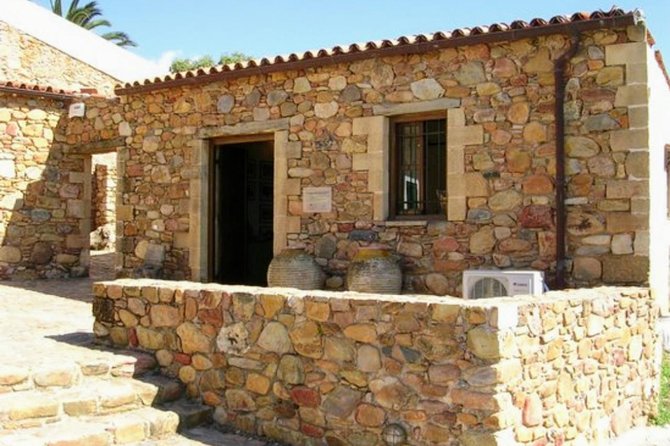
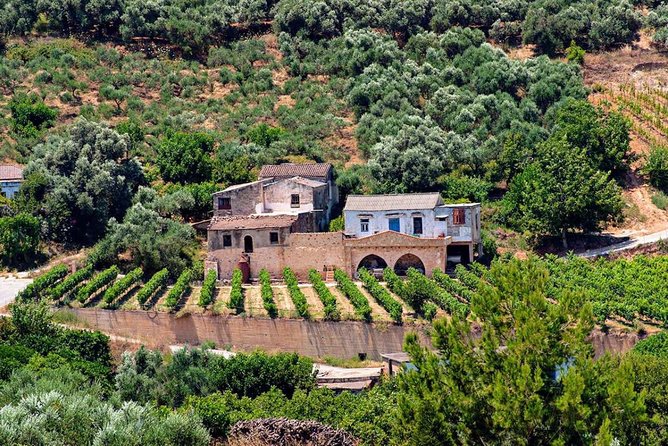
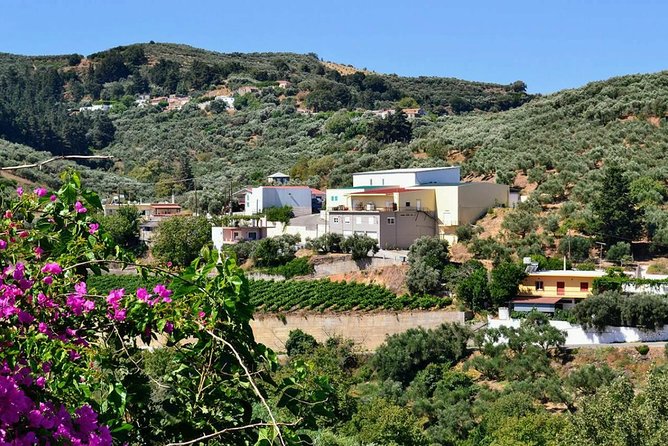
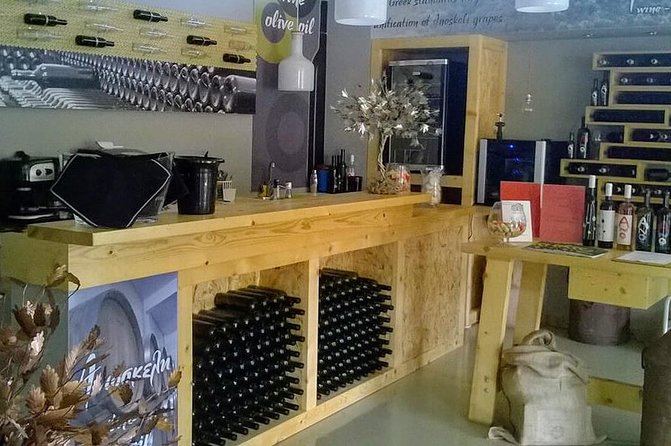
The final major stop is a family winery covering more than 200 acres. You can tour the facilities, taste five wines, sample local delicacies, and visit the winery’s small farm.
The wine selection includes Assyrtyko, Romeiko, Vilana, and other native and international varieties. This matters because Cretan wine is not limited to one familiar style. Native grapes give the tasting a local identity, while international varieties offer a point of comparison.
The tasting is more useful when you try to compare rather than simply count the pours. Notice how the wines differ in aroma, weight, and finish, then match them with the local delicacies provided. You do not need to know much about wine beforehand. Ask which grapes are native to Crete and which are international, and ask how the winery uses each variety.
The small farm is another welcome detail. It gives you a glimpse of the working side of the property rather than only its polished tasting room. The available information does not specify which crops or animals you will see, so treat it as a short farm visit rather than a guaranteed agricultural demonstration.
A lunch stop at a winery on Kissavos Mountain is available for an additional fee. Since lunch is not included, confirm the price and menu before the day begins. This is likely the most convenient place to eat, especially if the tour continues into the afternoon, but you should not assume the meal is part of the $178.10 cost.
What the private guide and vehicle add
Private transportation is the main practical advantage of this experience. The route combines a monastery, an old city, an olive-tree stop, and a winery. Having a vehicle arranged for the day saves you from organizing separate taxis or trying to connect rural stops by public transport.
The private setup also changes the tone. You can ask questions about olive farming, Cretan food, wine grapes, and the places you pass. One driver associated with the experience, Dimitri, comes from generations of olive farmers and has spoken about the areas along the route. If he is assigned to your group, that family connection could add useful context to the drive.
Rallou has also hosted the experience and is described as friendly and informative about Cretan culture. Guides can change, so treat these names as examples rather than a promise that either person will lead your tour.
The route is not designed for people who want to spend the entire day at one winery. You will be moving between several places, and the tour’s strength is variety. That means each stop has limited time. Tell the guide early if you care most about wine, olive oil, Chania, or the monastery so the private format can work in your favor.
Food, drinks, and what to budget
The included snacks are tied to the tastings. At the monastery, expect rusk, olive oil, sea salt, and oregano with the wines. At the family winery, local delicacies accompany the five-wine tasting.
Bottled water is included, which is a small but useful comfort on a day spent moving between indoor and outdoor stops. All fees and taxes are also included.
Lunch is the main extra expense. The optional winery lunch offers a simple solution, but you need to pay separately. If you prefer to decide later, carry enough flexibility in your schedule and budget to choose between the winery meal and eating elsewhere.
The tour can suit people who enjoy tasting without needing a full food-focused itinerary. You get repeated chances to try local products, but the day also includes history, shopping, and scenery. If you do not drink wine, ask whether the tour can still work for you, since wine tasting is a central part of both winery stops.
Who should book this experience?
I would recommend this tour to couples, families, and small groups who want a private introduction to Cretan food and countryside without arranging transport themselves. It is also a good fit if you have limited time in Chania and want to combine several types of sightseeing in one outing.
Food lovers will appreciate the direct focus on olive oil, wine, honey, herbs, cheese, and local snacks. People with an interest in religious art will get extra value from the monastery museum. The old-city stop helps keep the tour from feeling like a day spent only in rural tasting rooms.
You may want a different experience if you prefer a slow, single-winery visit, a formal wine course, or a long guided tour of Chania’s history. The itinerary covers a lot in five to six hours, so it favors variety over depth at any one stop.
Check the pickup location when booking, since pickup is offered from several places rather than described as universal. The tour requires good weather, and it may be canceled if the minimum number of participants is not met. In either case, a different date or a full refund is offered.
Should you book the wine and olive oil tour?
Book it if you want an easy, private way to connect Cretan food with the farms, monastery, market, and winery behind it. The strongest reasons are the flexible vehicle, the two different wine tastings, the monastery’s museum and organic production, and the chance to see Chania in the same half-day.
At $178.10 per person, the value depends on how much you prize privacy and included transport. The cost is easier to justify for a small group than for a solo visitor, especially if you add the optional lunch. Just remember that this is a busy half-day, not a long leisurely meal.
For the best experience, start with a light breakfast, keep your afternoon open, and tell the guide what interests you most. If olive oil, local wine, and a practical look at Cretan life sound better than another standard sightseeing loop, this is a strong choice.
FAQ
What time does the tour start?
The listed start time is 10:30 a.m.
How long does the tour last?
The duration is approximately five hours, although the tour description also refers to a day of around six hours. Plan for a half-day outing and keep some flexibility afterward.
Is transportation included?
Yes. Private transportation, pickup, and drop-off are provided. Pickup is available from several places, so confirm the exact location when booking.
Is lunch included?
No. Lunch is not included in the price. A local lunch stop at a winery on Kissavos Mountain is available for an additional fee.
Is this a shared group tour?
No. This is a private activity, and only your group participates.
What happens if the weather is poor or the tour is canceled?
The experience requires good weather. If it is canceled because of poor weather or because the minimum number of participants is not met, you will be offered another date or experience, or a full refund. Free cancellation is available up to 24 hours before the start time.
More Day Trips in Chania
- 1 Day Rhodes Island Tour including Lindos and Medieval City
★ 4.0 · 82 reviews - Olive Oil Tasting and Culinary Day Trip in Carmona
★ 5.0 · 2 reviews
Just added around Chania
- Wine, Beer, Olive Oil Tasting Private Tour (price per group of 6)★ 5.0 · 4 reviews
- Discover Rethymno, Lake Kournas & the Secrets of Cretan Olive Oil★ 5.0 · 10 reviews
- Rethymnon Olive Tree Sponsorship Protect and Plant Tour★ 5.0 · 5 reviews
- Chania Old Town – Millennial Olive Tree – Olive Oil Mill★ 5.0 · 2 reviews
- Crete Off-Road & Flavors Safari: Wine, Olive Oil & Mountain Life★ 5.0 · 9 reviews
- Pottery – Honey & Olive Oil experience★ 4.5 · 9 reviews
- Explore the Secrets of Wine and Olives in Rethymno★ 5.0 · 2 reviews
- Monastery – Ancient Olive tree & Museum-Cretan Brewery Private Tour from Chania★ 5.0 · 5 reviews
Olive Oil Tastings, compared.
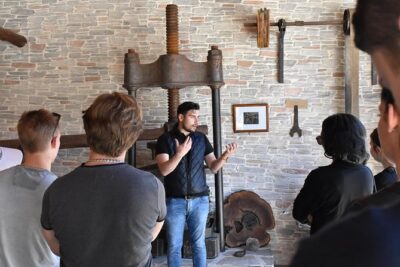
The Governor’s Olive Mill Tour with Olive Oil Tasting
Read our review →
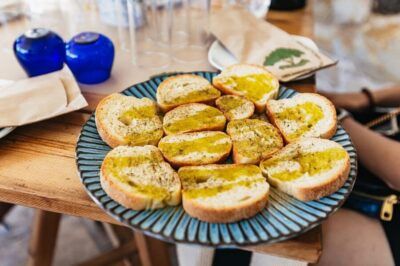
Masseria tour among thousand-year-old olive trees with oil tasting
Read our review →
Olive Grove Tour with Wines & Olive Oil Tasting
Read our review →
Bardolino: Lake Garda Oil Mill Tour with Olive Oil Tasting
Read our review →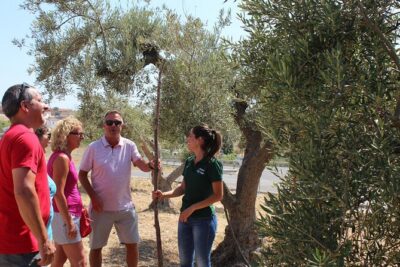
Guided tour and olive oil tasting in Alhaurin el Grande (Málaga)
Read our review →Browse the lists this tour appears in