
REVIEW · CHANIA
Rethymnon Olive Tree Sponsorship Protect and Plant Tour
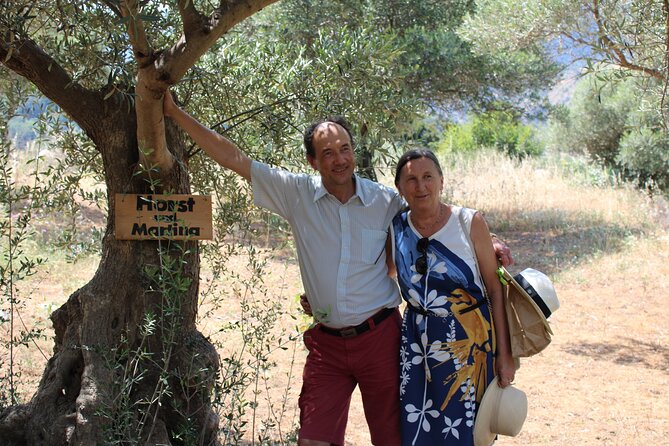
The most meaningful part of this private olive-tree visit is simple: you leave with a lasting connection to Crete rather than just another set of holiday photos. You can sponsor an existing tree, add your name to its plaque, and return to it later, or plant a young olive from the Cretan Lazarus project.
I like two things in particular. First, the activity supports old olive varieties and new trees grown from cuttings, including types threatened with extinction. Second, the team makes the event personal with photos, video, and a toast beside the tree. The main consideration is transport: you meet at the agreed point and travel together, so you need to be mobile unless a separate pickup point is arranged.
Key points at a glance
- Choose between sponsorship and planting: Attach your name to an existing tree, or plant and fence a young olive from the Cretan Lazarus project.
- Visit an actual olive grove: The ceremony takes place beside the tree, not in a shop or display room.
- Support old Cretan varieties: New cuttings come from monumental olive trees and varieties at risk of disappearing.
- Make it personal: Your name can appear on a plaque, with photos and video made during the visit.
- Private for your group: You do not share the activity with another tour party.
- Plan for 2.5 hours: The visit includes meeting, shared transport, time in the grove, the ceremony, and the return to the starting point.
Why this olive-tree visit feels different
Crete is covered with olive trees, but most holiday visits treat them as scenery. This activity asks you to stop and pay attention to one tree. That small change makes the visit feel more personal.
You meet the Cretan Aenaon team at Dimitrakaki 2 in Rethymno, then travel together to an olive grove. The exact grove depends on the arrangement, and one documented sponsorship is near Georgioupoli. The activity ends back at the meeting point.
At the grove, you attach your name plaque to your sponsored tree. This is the heart of the visit. You have time to photograph and film the tree, while the team also produces photos and video. A toast follows beside the tree, turning what could be a simple agricultural visit into a small ceremony.
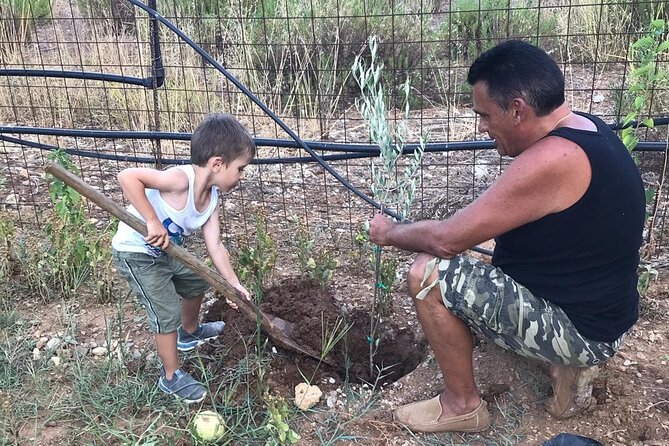
If you prefer to take part with your hands, you can plant an olive tree instead. The planting option uses young trees from the Cretan Lazarus project. These are grown from cuttings taken from the gene pool of very old monumental olive trees and from varieties threatened with extinction.
That distinction matters. You are not simply buying a decorative certificate or posing beside a random sapling. The stated aim is to help preserve old genetic lines, support new growth, and keep an olive-growing ecosystem going.
More Olive Grove Walks in Chania:
- Monastery – Ancient Olive tree & Museum-Cretan Brewery Private Tour from Chania
★ 5.0 · 5 reviews - Chania Old Town – Millennial Olive Tree – Olive Oil Mill
★ 5.0 · 2 reviews - Crete: Local Wine Tasting & Visit to the Ancient Olive Tree
★ 5.0 · 2 reviews
Sponsoring an existing tree near Rethymno
Sponsorship suits you if you want a continuing connection with Crete but do not need to plant anything yourself. Your name plaque marks the tree, and you can visit it again on a future trip.
The exact sponsorship package depends on the option you choose. The available information says sponsors receive a package when included with their selected sponsorship, but it does not specify every item. Check the precise package before booking if this matters to you.
The plaque is a useful personal touch for couples, families, and gift-givers. One couple chose a tree as a wedding anniversary surprise, and another person was surprised by a partner with an olive tree. That makes this a particularly good choice for a birthday, anniversary, wedding trip, or family milestone.
You should understand what sponsorship does not mean. It is not a private farm visit that gives you control over the land, and the details of future harvests or deliveries are not stated. The clear benefit is a named connection to a protected tree and support for the wider preservation work.
The team’s founder, Karl Röske, is mentioned in connection with the project. The supplied information does not name every guide, so you should not expect a particular guide unless Cretan Aenaon confirms that in advance.
Planting a young olive from the Cretan Lazarus project
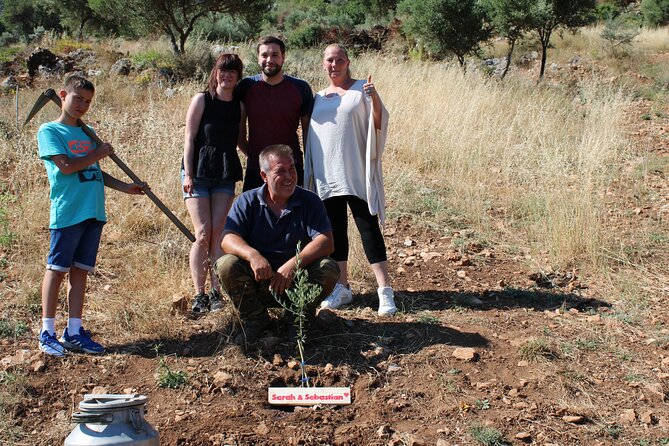
Planting is the more active option. You help put a young olive into the ground on an olive grove, rather than only marking an existing tree as your own.
The project’s approach gives this option real purpose. The new trees are grown from cuttings taken from old monumental olive trees and from varieties that face extinction. The project says the newly planted trees are no more than two generations removed from their source trees.
That wording points to preservation rather than mass planting. Old olive trees carry genetic lines that may be hard to replace if they disappear. By growing new trees from those lines, the project aims to keep them alive for the future.
The planting process also gives you a clearer sense of effort. You can help plant and fence the tree, then learn about the older olives and the part they play in the local ecosystem. The available information does not specify the planting tools, the size of the sapling, or the precise maintenance plan, so ask those questions if you want a detailed picture of the work after your visit.
For children, planting may be easier to remember than a plaque ceremony alone. Still, this is an outdoor activity, and participation depends on being able to travel to the grove and take part there. The operator says most people can participate, but the full accessibility details are not provided.
What happens during the two and a half hours
The visit begins at the agreed meeting point in Rethymno. The published starting address is Dimitrakaki 2, Rethimno 741 32, Greece. You travel together to the olive grove, so allow the full approximately 2 hours and 30 minutes rather than treating this as a quick stop.
The shared drive is part of the practical arrangement, but no route length or driving time is given. That means you should keep the rest of your day flexible. You also need to be mobile. If the standard meeting arrangement does not suit you, Cretan Aenaon says a different meeting point can be arranged so the team can take you with them.
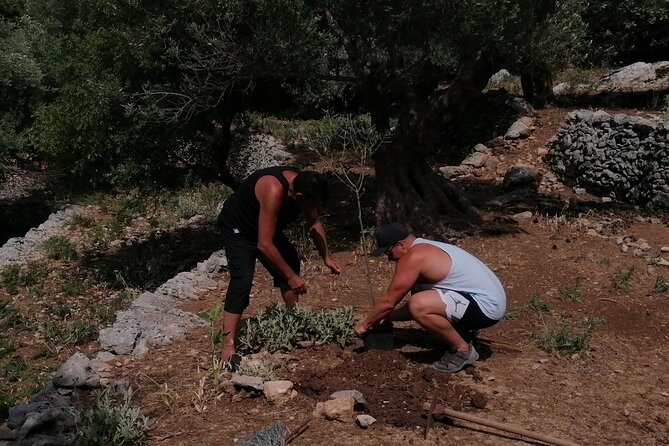
At the grove, the activity splits into two paths. Sponsoring a tree means attaching your name plaque, taking photos and video, and joining the toast. Planting means putting a young tree into the ground and fencing it, followed by time to learn about the trees and the preservation project.
The team also takes photos and video during the visit. This is useful if you want a record of the ceremony without asking one member of your party to stand aside and handle a phone. The information does not state how or when those files are delivered, so confirm that detail before you book.
The activity returns to the original meeting point. It is private, so only your group participates. That is a real advantage for a family event or romantic surprise because the pace and conversation stay focused on your group.
A few more olive oil tours around Chania worth a look
- Crete Wine and Olive Oil Tour
★ 5.0 · 272 reviews - Wine & Olive Oil Tour with Lunch at Milia Mountain Retreat
★ 5.0 · 194 reviews - Wine & Olive Oil Tour with Lunch – Semi Private Safari Tour
★ 5.0 · 156 reviews - Chania: Milia Mountain Tour w/Lunch Olive Oil/Wine Tastings
★ 4.9 · 97 reviews
The old trees behind the project
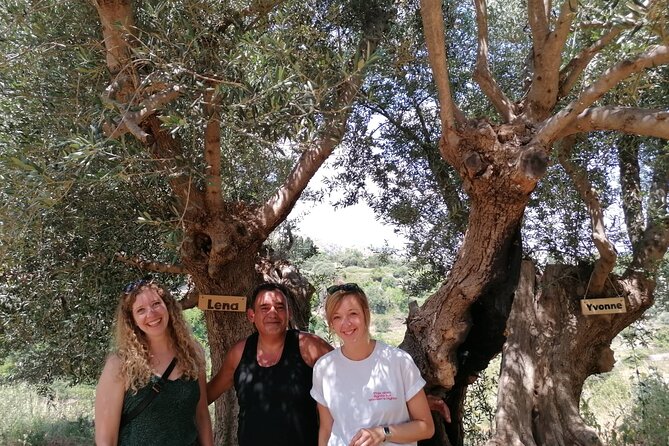
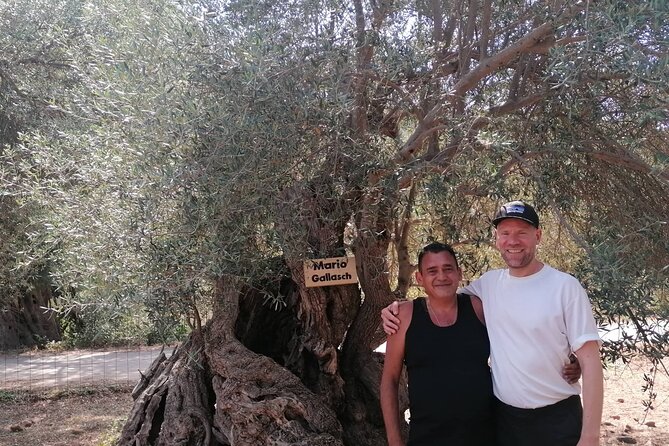
The project places emphasis on monumental olive trees. These old trees are more than large plants. They represent long-lived local varieties and a form of agriculture that has shaped Crete for generations.
You are given information about these trees during the visit. The strongest part of the educational side is its connection to action. You do not only hear that old varieties matter. You can sponsor one, plant a cutting from one, or help protect a young tree descended from one.
The project also includes varieties threatened with extinction. That gives the visit a wider purpose than supporting one grove. Preserving a variety means keeping its genetic material in use, which can matter for the future of the crop and the surrounding natural system.
The experience does not promise a formal museum presentation, a long lecture, or a tasting session. If your main interest is olive oil production, ask what information is covered before booking. This tour is more focused on sponsorship, planting, and preservation than on a full farm-to-table food tour.
Photos, video, and the name plaque
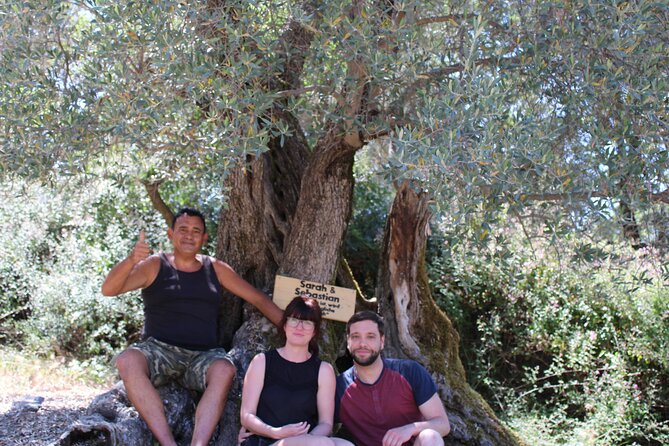
The photo element is built into the activity. You can take many pictures and make your own video beside the sponsored or newly planted tree. The team also produces photos and video.
That makes the tour work well as a gift. A name plaque gives the occasion a physical marker, while the visual record lets you share it with family at home. It also gives returning visitors a clear reason to seek out the same grove again.
Do not assume that every booking includes the same physical items. The sponsorship package depends on the option selected, and the published details do not list its contents. Ask about plaque wording, package contents, and delivery of team-produced photos or video if those details affect your decision.
You are asked to provide the name or names for the plaque. Prepare the spelling before the activity, especially if you want a family name, a date, or a short dedication. The information confirms that the names are needed, but it does not state a character limit or the exact plaque design.
What the $141.78 price means
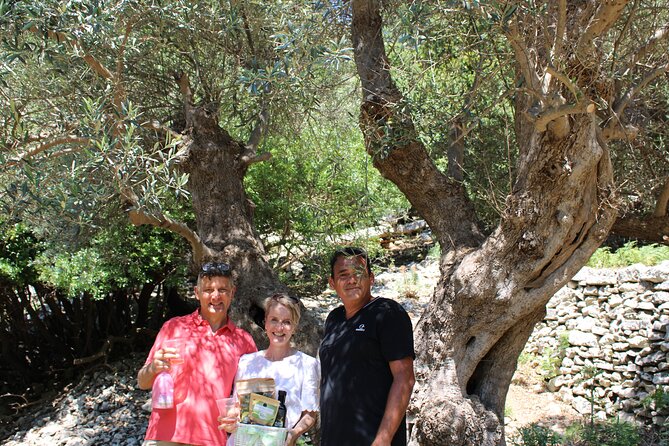
At $141.78 per person, this is not a low-cost sightseeing stop. Its value depends on what you want from your time in Crete.
You are paying for a private activity, shared transport to the grove, the team’s time, the tree connection, and the ceremony. Depending on the sponsorship choice, you may also receive a sponsorship package. The private format matters: your group does not have to share the moment with strangers, which is useful for a celebration.
The price makes more sense for couples and families who want a lasting project than for someone looking only for a quick agricultural photo. If you are comparing it with a general olive farm visit, check what each includes. This activity’s strongest value is the named tree and the conservation work, not a long list of food samples or multiple sightseeing stops.
You should also consider the number of people in your group. Since the price is per person, a private experience can become costly for a large family. For a couple marking an anniversary, the personal ceremony may justify the cost more easily.
Who will enjoy this most
I would choose this activity for you if one of these ideas appeals:
- You want a meaningful anniversary or wedding-trip activity.
- You like conservation projects with a clear physical result.
- You expect to return to Crete and want a tree to visit again.
- You prefer a private outing to a large group tour.
- You want children to take part in planting rather than only looking at sights.
- You enjoy learning about local agriculture and old plant varieties.
It is less suitable if you want a packed sightseeing tour, an olive-oil tasting, or a full day of stops. The visit is short and focused. You spend the time at one grove, with the project and your tree as the main subjects.
The experience is offered in English. Service animals are allowed, and the operator says it is near public transportation. Most people can participate, but the word mobile matters here because you must get to the meeting point and travel to the grove. Ask about your specific mobility needs before booking.
Booking, weather, and timing
The activity is listed daily from 9:00 a.m. to 6:00 p.m. The stated operating period runs from June 26, 2022, through December 8, 2026. Since the supplied dates include an earlier start date, confirm the available date when you reserve.
You receive confirmation at booking. Provide the plaque names as requested, and make sure your meeting arrangement is clear. If the published point at Dimitrakaki 2 is not practical, contact the team about arranging another meeting point.
Good weather is required. If poor weather forces cancellation, you are offered another date or a full refund. You can also cancel for a full refund if you do so at least 24 hours before the start time. Cancellations or changes made less than 24 hours ahead are not refunded or accepted under the stated policy.
The timing policy uses local time. That is worth remembering if you are booking from another country or changing plans across time zones.
Should you book the Cretan Aenaon tree tour?
Book it if you want your holiday to include a small act of care that continues after you fly home. The private format, name plaque, planting option, and focus on old Cretan olive varieties give the activity more substance than a standard photo stop.
I would be especially keen on it for an anniversary, a surprise gift, or a return visit to Crete. Sponsoring suits a quieter ceremony, while planting is better if you want to work with the soil and create a clear moment for children or a couple.
Skip it if your priority is low cost, a food-focused olive tour, or a full schedule of sights. At $141.78 per person, the value lies in the personal connection and preservation work. Ask about the exact sponsorship package, plaque details, and photo delivery before booking, then choose the option that matches the occasion.
FAQ
Where does the activity start?
It starts at Dimitrakaki 2, Rethimno 741 32, Greece, unless another meeting point is arranged with Cretan Aenaon.
Where does the activity end?
The activity ends back at the meeting point.
How long does the tour take?
The visit lasts approximately 2 hours and 30 minutes.
Is the activity private?
Yes. Only your group participates in this activity.
Can I sponsor an existing olive tree?
Yes. You can attach your name plaque to your sponsorship tree, take photos and video, and toast the sponsorship beside it.
Can I plant an olive tree instead?
Yes. You can plant a young olive from the Cretan Lazarus project in an olive grove and fence it.
What names are needed before the visit?
You need to provide the name or names for the plaque placed on the tree.
Is the tour offered in English?
Yes. English is the listed language.
What happens if the weather is poor?
If bad weather causes cancellation, you are offered another date or a full refund. You can also cancel at least 24 hours before the start time for a full refund.
Just added around Chania
- Wine, Beer, Olive Oil Tasting Private Tour (price per group of 6)★ 5.0 · 4 reviews
- Wine & Olive Oil tasting one day private tour in Crete★ 5.0 · 2 reviews
- Discover Rethymno, Lake Kournas & the Secrets of Cretan Olive Oil★ 5.0 · 10 reviews
- Chania Old Town – Millennial Olive Tree – Olive Oil Mill★ 5.0 · 2 reviews
- Crete Off-Road & Flavors Safari: Wine, Olive Oil & Mountain Life★ 5.0 · 9 reviews
- Pottery – Honey & Olive Oil experience★ 4.5 · 9 reviews
- Explore the Secrets of Wine and Olives in Rethymno★ 5.0 · 2 reviews
- Monastery – Ancient Olive tree & Museum-Cretan Brewery Private Tour from Chania★ 5.0 · 5 reviews
Olive Grove Walks, compared.
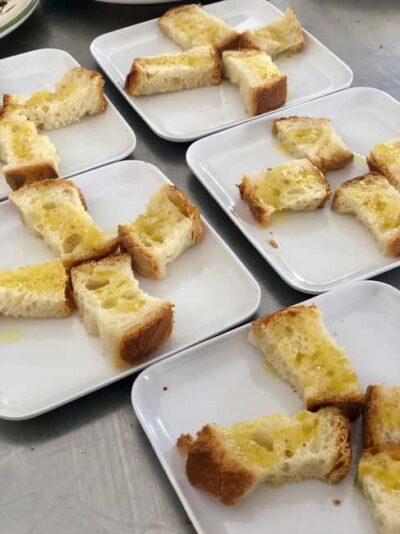
Masseria tour among thousand-year-old olive trees with oil tasting
Read our review →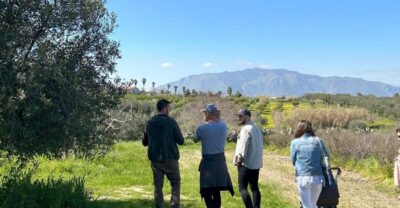
Olive Grove Tour with Wines & Olive Oil Tasting
Read our review →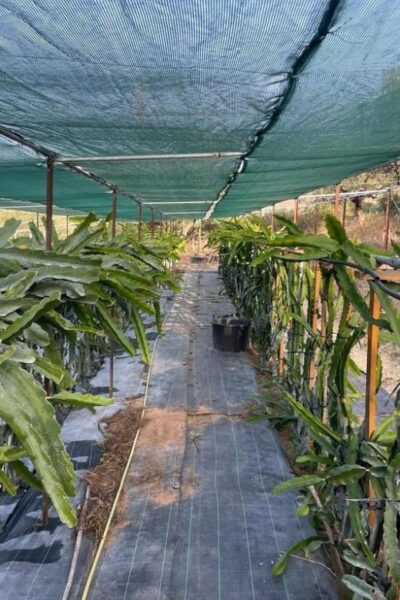
Traditional Olive Grove and Dragon Fruit Farm Tour
Read our review →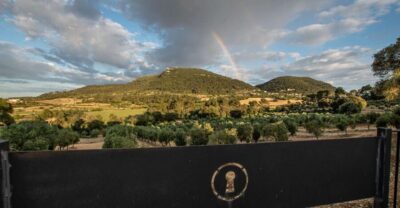
Visit of the olive grove, olive oil tasting and snack
Read our review →
Olive Grove and Vineyard Tour with Product Tastings
Read our review →
Balestrate Olive Grove Tour: Wine and Olive Oil Tasting
Read our review →
Guided tours of the olive grove with oil tasting.
Read our review →
Organic Olive Grove tour & Olive oil tasting & lunch in Kalamata!
Read our review →Browse the lists this tour appears in