
REVIEW · SPAIN
Cazorla: Olive grove and mill tour
The most interesting part of this Cazorla experience is the jump from centenary olive trees to a huge working oil mill. You see the crop in the field, follow it through reception, extraction, and bottling, then taste the finished oil in a proper tasting session.
I like the close look at how olive trees are grown, and I like the tasting because it covers both excellent oil and common faults. That makes the lesson useful at your dinner table, not just interesting during the tour. The main drawback is that the visit is in Spanish, and you need your own vehicle unless you are among the first four people to book.
Key points at a glance
- See old and thousand-year olive trees: Learn about cultivation and the different varieties grown around Cazorla.
- Follow the full production chain: Visit SCA La Betica Aceitera in Quesada, one of the world’s largest and most modern olive oil mills.
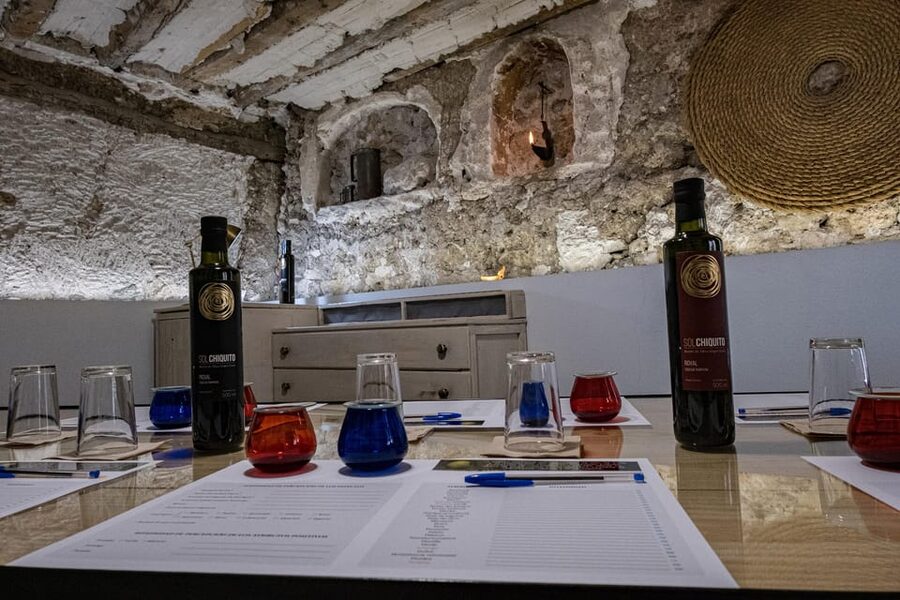
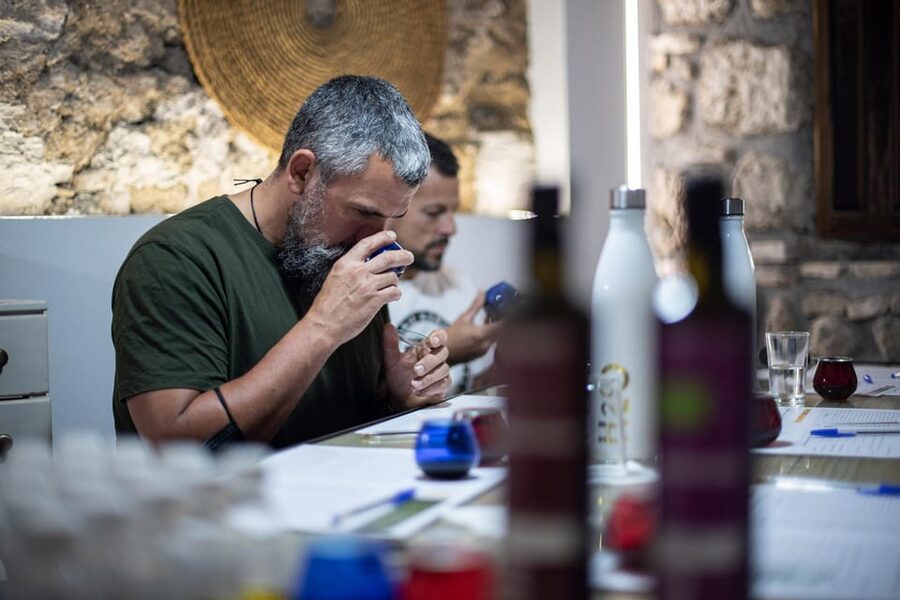
- Taste like a panel member: Use official tasting glasses and a tasting sheet to assess two olive oils.
- Learn to spot defects: Smell examples of faults so you can recognize poor oil in the future.
- Keep the group small: The tour is limited to eight participants, though at least four people are needed for it to run.
From ancient trees to a modern oil mill
Cazorla’s olive country is best understood with a step-by-step visit. You begin outdoors among old trees, where the guide explains how this important crop is grown. You then see the industrial side of the business at a cooperative linked to more than 2,000 associates.
That contrast gives the tour its shape. Olive oil is not simply a local product poured into a pretty bottle. It depends on tree care, harvest timing, processing speed, machinery, storage, and careful tasting. You get a view of each part in about four hours.
The first meeting point is the public car park beside the Villa Turística de Cazorla. From there, the group visits an olive-growing area identified at WX7M+49 Cazorla, then continues to the mill in Quesada before returning to the original meeting point.
You should expect a practical outing rather than a museum-style talk. The focus is on how the trees are cultivated, how the mill operates, and how you can judge oil with your own senses.
More Olive Mill Visits in Spain:
- Ronda: LA Almazara LA Organic, Olive Oil Museum and Tasting
★ 4.6 · 435 reviews - Guided Tasting Tour in 16th century House and Olive Oil Factory
★ 5.0 · 169 reviews - Visit Oil Mill Museum and Olive Oil Tasting in Ronda
★ 4.5 · 105 reviews
Stop one: old olive groves near Cazorla
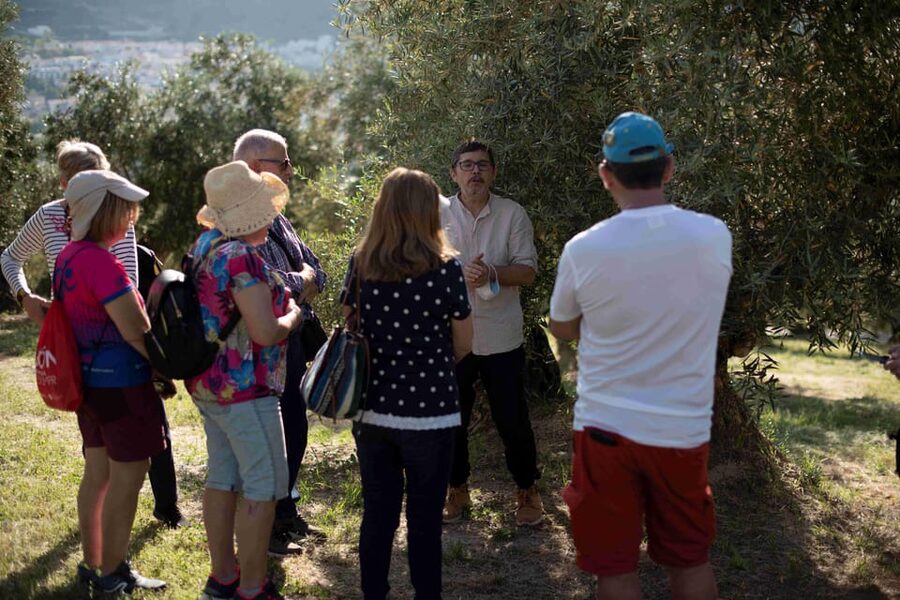
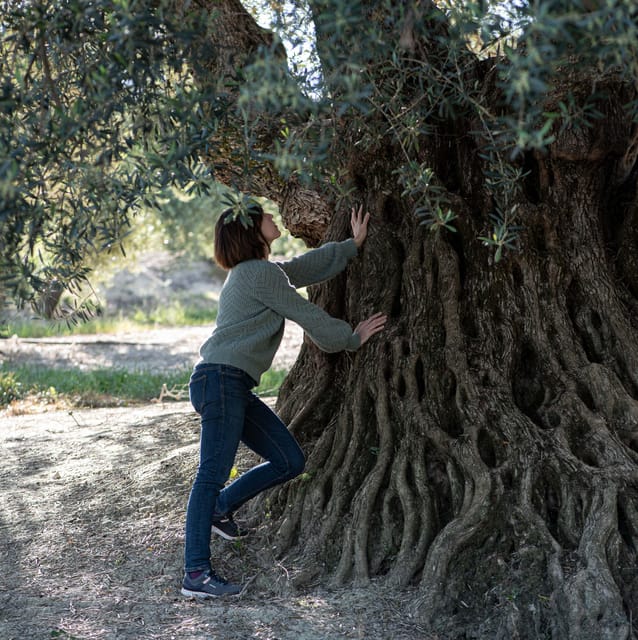
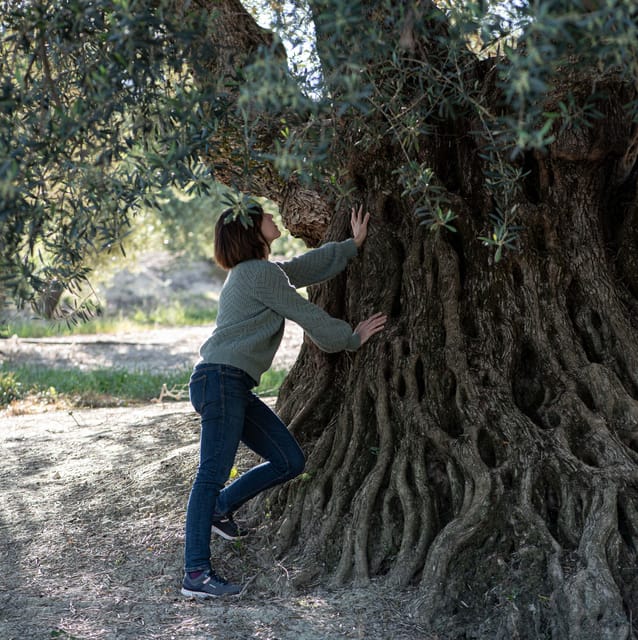
The opening hour takes place among traditional olive groves. This is where you get a sense of the scale and age of the crop. Some trees are described as centenary, while others may impress you with their thousand-year dimensions.
The guide explains how olive trees are grown and points out the different varieties found in the region. That matters because olive oil does not have one standard taste. Variety, cultivation, and processing all affect the result in your glass.
I like beginning here because it gives the later mill visit a clear purpose. Once you have looked at the trees, the production machinery is easier to understand. You can connect the raw fruit to the finished oil instead of treating the mill as a collection of anonymous pipes and tanks.
The grove visit lasts about one hour. The information supplied does not give a detailed walking distance or describe the exact ground conditions, so wear sensible shoes and be prepared to spend time outdoors. If you dislike uneven rural settings, it is worth asking for more detail before booking.
This stop also gives you a better appreciation of the work behind a familiar kitchen staple. The tour does not promise a long agricultural workshop, but it does explain the basic cultivation of the trees and the regional varieties. For many people, that is enough context to make the tasting more meaningful.
Stop two: inside SCA La Betica Aceitera in Quesada
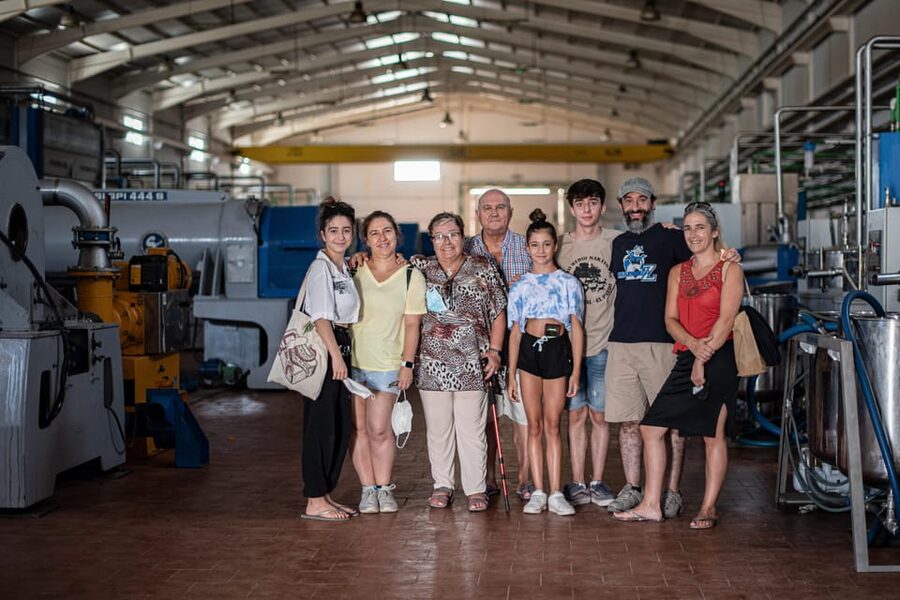
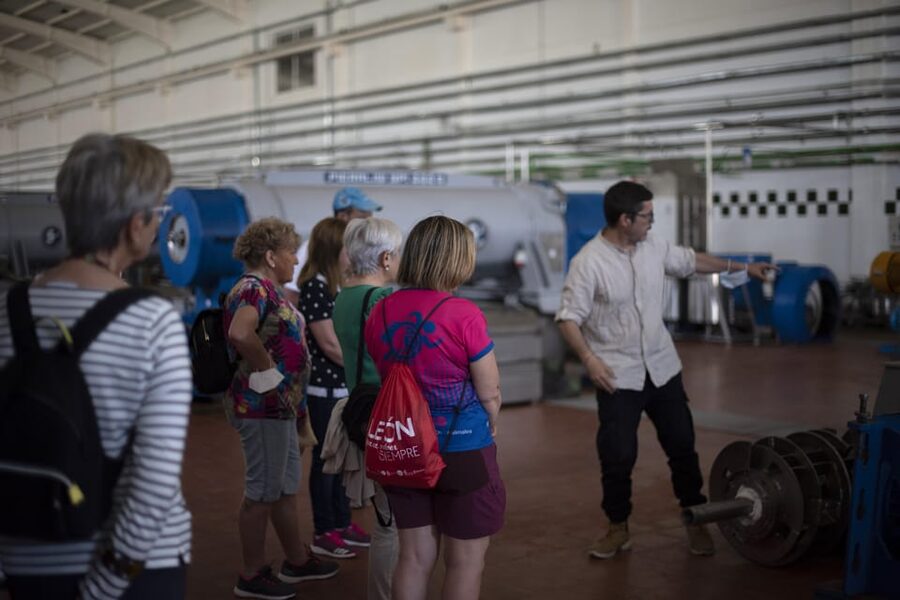
The next hour takes you to SCA La Betica Aceitera in Quesada. The mill is described as one of the biggest and most modern in the world, so this is not a tiny farm press or a decorative old workshop.
You follow the process from the reception yard through extraction and on to bottling. Seeing the full chain is the strongest reason to choose this tour over a simple tasting. You learn where the olives arrive, how the oil is separated, and how the product reaches its final container.
The cooperative model is also part of the visit. More than 2,000 associates are connected to the operation, giving you a look at how many growers can work through one large organization. That detail adds useful business context: the mill is not only producing oil, it is handling the crop of a large network of olive growers.
The mill stop lasts about one hour. Since the visit takes place inside an operating industrial facility, the experience may feel more functional than picturesque. That is a fair trade if you want to understand modern production, but it may disappoint you if you are looking for a small, old-fashioned press with hand tools and rustic charm.
People with claustrophobia should take note. The activity is specifically not suitable for people with claustrophobia, and the mill setting may include enclosed or industrial areas. Wheelchair users and people with hearing impairments are also advised against booking, according to the activity information.
The guide’s explanations are an important part of this stop. One highly praised guide is Antonio, whose clear explanations and willingness to answer questions helped make the visit feel shorter than expected. If Antonio is leading your departure, you can expect plenty of room for questions. The guide language is Spanish, so you should be comfortable following a technical explanation in Spanish.
Stop three: a 75-minute olive oil tasting
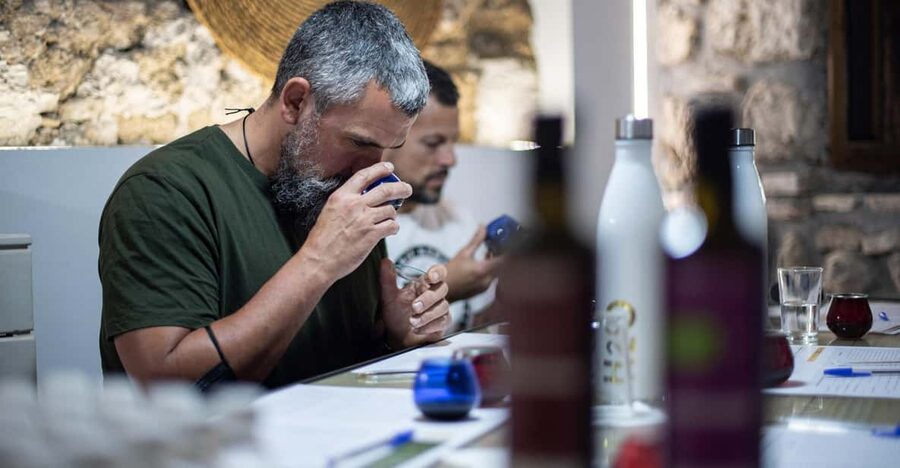
The final part takes place at Agraria OLEARUM and lasts about 75 minutes. Here, you stop looking at olive oil and start examining it with your nose and palate.
You taste two different olive oils using official tasting materials, including tasting glasses and a tasting sheet. Water is provided during the session. The setup is more serious than simply dipping bread into oil, which is useful if you want to learn how professionals assess quality.
A proper tasting asks you to pay attention to aroma, flavor, and defects. You also have the chance to smell examples of faults that can occur in olive oil. This is one of the most practical parts of the experience because it helps you avoid confusing a flaw with a distinctive regional character.
You will also take part in an aroma-identification game. It adds a lighter touch to the technical information and gives you a reason to focus closely on what you smell. The goal is not to turn you into a professional taster in one afternoon. It is to give you a working vocabulary and a few reliable habits.
The guide also discusses olive oil use and health, allowing time for questions. That makes the tasting useful for everyday shopping and cooking. You can leave with a better idea of what to look for, what to avoid, and why two oils can taste different even when both are presented as quality products.
The included souvenirs are modest but fitting: a bookmark and photographs of you taking part in the tasting. They are a pleasant extra rather than a reason to book, but the photos can help preserve the memory of the activity.
More Olive Grove Walks in Spain:
- Visit of the olive grove, olive oil tasting and snack
★ 4.9 · 111 reviews - Córdoba: Visit a family organic olive grove with tasting
★ 5.0 · 30 reviews - Granada in EVOO: Olive grove guided tour and sensory tasting
★ 4.8 · 26 reviews - Visit to olive grove and olive mill with oil tasting and tasting
★ 5.0 · 25 reviews
Why the tasting adds real value
At $28 per person, the price is reasonable for a four-hour guided outing with three distinct parts. The fee includes the expert guide, entrance to the mill, tasting materials, two oils, water during the tasting, and the small souvenirs.
The value comes from the range of the experience. You are not paying only for a sample of oil. You get an agricultural visit, an industrial tour, and an organized tasting. The mill entrance and official tasting materials would be difficult to recreate independently, especially if you do not speak Spanish or know which facilities accept visitors.
There are limits. Transportation is included only for the first four people to book. After those spaces are taken, you must use your own vehicle. This can change the total cost and effort, particularly because the tour starts near Cazorla and includes a visit to Quesada.
You also need to consider the minimum group size. At least four people in total are required for the activity to run. If that number is not reached, you will be notified in time to cancel. The group itself is limited to eight, so the format remains small, but the minimum can matter if you are visiting during a quiet period.
I would compare this tour with the cost of arranging separate transport, a mill visit, and a tasting. At $28, it offers good value if you already have a car or qualify for the limited transport places. It is less convenient if you need to organize a vehicle at the last minute.
The guide and the pace
The supplied experience information names Olearum as the provider, with a live guide in Spanish. Antonio is specifically praised for explaining everything clearly and answering questions, so his approach appears to be a major strength when he leads the group.
The visit is designed to be informative without dragging. The time is divided into roughly one hour in the groves, one hour at the mill, and 75 minutes at the tasting, with the remaining time covering transfers and movement between stops.
That pacing gives each part enough room. You do not spend the entire morning in a lecture, and you do not rush through the tasting. One useful detail is that the questions are not treated as an interruption. The guide’s ability to explain things in an engaging way is a big part of why the four hours can feel manageable.
The group limit of eight is another advantage. A small group makes it easier to hear the guide and ask about cultivation, machinery, flavors, defects, or health. It also suits a tasting better than a large coach group, where individual participation can get lost.
The language is the main consideration. This is a Spanish-language experience, and no other language is listed. If you understand only basic Spanish, you may miss some of the technical details at the mill and during the tasting. Consider this carefully before reserving.
Practical details before you reserve
You meet at the public car park beside the Villa Turística de Cazorla, and the tour ends back at that same meeting point. The exact start time varies, so you need to check availability for the date you want.
The total duration is four hours. That makes it easy to fit into a day in the Cazorla area, but you should avoid scheduling another fixed activity immediately afterward. The transport between the grove, Quesada, and the tasting location takes part of the morning or afternoon.
The first four people to book receive transportation as part of the arrangement. Everyone else needs to drive their own vehicle. This is the single most important logistical point because the advertised price does not guarantee transport for every participant.
The tour is not suitable for wheelchair users, people with hearing impairments, or people with claustrophobia. The information does not provide further details about terrain, sign language, or alternative access, so contact the provider before booking if you have a specific mobility or sensory need.
Cancellation is flexible up to 24 hours before the activity for a full refund. You can also reserve now and pay later, which is helpful when your Andalusia schedule is still changing. These policies do not remove the four-person minimum, so keep an eye on any notification from the provider.
Who will enjoy this olive oil tour?
I would recommend it to you if you like local food with a clear sense of place. The visit connects the product to the trees, the growers, the cooperative, and the people who assess the finished oil.
It also suits curious cooks. Learning to smell defects and compare two oils can change the way you shop. You may not become an expert after one session, but you will have better questions to ask and a sharper idea of what you are tasting.
The tour is a good fit for couples, small groups, and solo visitors who enjoy asking questions. The eight-person limit keeps the activity personal, while the Spanish guide makes it especially suitable for Spanish speakers who want more than a basic sightseeing stop.
I would think twice if you want a short, purely scenic outing. Four hours is a substantial commitment, and the modern mill is industrial rather than quaint. You should also skip it if you need wheelchair access, cannot manage Spanish explanations, or feel uncomfortable in enclosed settings.
Should you book the Cazorla olive grove and mill tour?
Book it if you want to understand how Andalusian olive oil moves from old trees to a modern bottle. The strongest combination is the centenary grove, the large cooperative mill, and the tasting lesson on both quality and defects.
At $28, the tour offers good value when transport is covered or you have your own car. Confirm the language, vehicle arrangements, and group minimum before committing. If those points work for you, this is a useful and unusually hands-on way to spend four hours around Cazorla.
FAQ
Where does the olive oil tour begin and end?
You meet at the public car park next to the Villa Turística de Cazorla. The activity ends back at the same meeting point.
How long does the tour last?
The experience lasts four hours. You should check availability for the exact starting time on your chosen date.
Is transportation included?
Transportation is included for the first four people to book. If you are not among those first four, you need to use your own vehicle.
What language is the tour in?
The live tour guide speaks Spanish. No other tour language is listed.
What is included in the olive oil tasting?
You taste two olive oils and use official tasting equipment, including tasting glasses and a tasting sheet. Water is provided during the tasting, along with a bookmark and photographs of you taking part.
What accessibility restrictions should I know about?
The activity is not suitable for people with claustrophobia, wheelchair users, or people with hearing impairments.
Just added around Spain
- Córdoba: Olive Oil Tasting Experience★ 4.4 · 8 reviews
- Cazorla: Highligts Tour with Olive Oil Tasting★ 5.0 · 2 reviews
- Cazorla: Oleotour – Olive Oil Culture Initiation★ 5.0 · 3 reviews
- Aires de Jaén: Olive Oil Plantation Tour and Local Meal★ 4.9 · 9 reviews
- Olive Oil Tasting and Culinary Day Trip in Carmona★ 5.0 · 2 reviews
- Oleotourism and olive oil tasting in Seville – Private tour★ 5.0 · 7 reviews
- Granada: Tasting of Extra Virgin Olive Oils★ 5.0 · 3 reviews
- Granada in EVOO: Guided tour and unique sensorial tasting★ 5.0 · 6 reviews
Olive Grove Walks, compared.
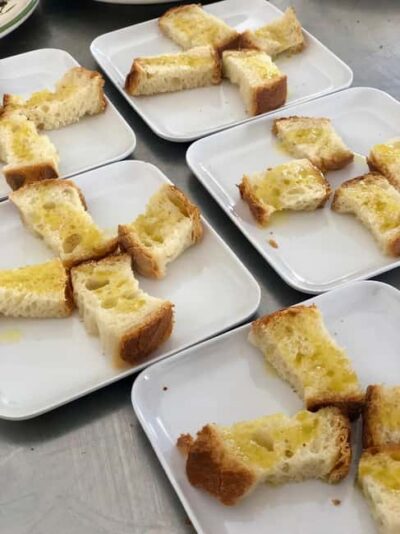
Masseria tour among thousand-year-old olive trees with oil tasting
Read our review →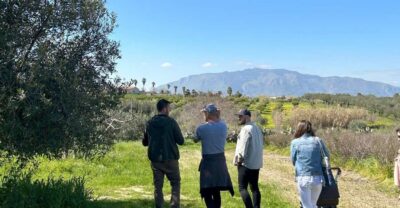
Olive Grove Tour with Wines & Olive Oil Tasting
Read our review →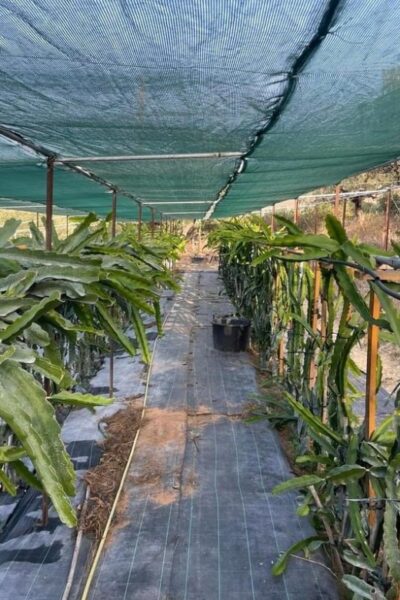
Traditional Olive Grove and Dragon Fruit Farm Tour
Read our review →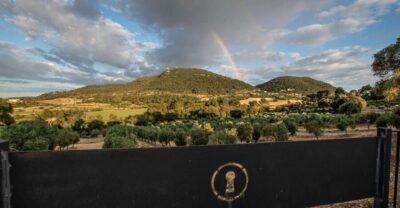
Visit of the olive grove, olive oil tasting and snack
Read our review →
Olive Grove and Vineyard Tour with Product Tastings
Read our review →
Balestrate Olive Grove Tour: Wine and Olive Oil Tasting
Read our review →
Guided tours of the olive grove with oil tasting.
Read our review →
Organic Olive Grove tour & Olive oil tasting & lunch in Kalamata!
Read our review →Browse the lists this tour appears in