
REVIEW · ITALY
Cagliari Olive Oil Farm & Tasting (Since 1600, 20 Min Away)
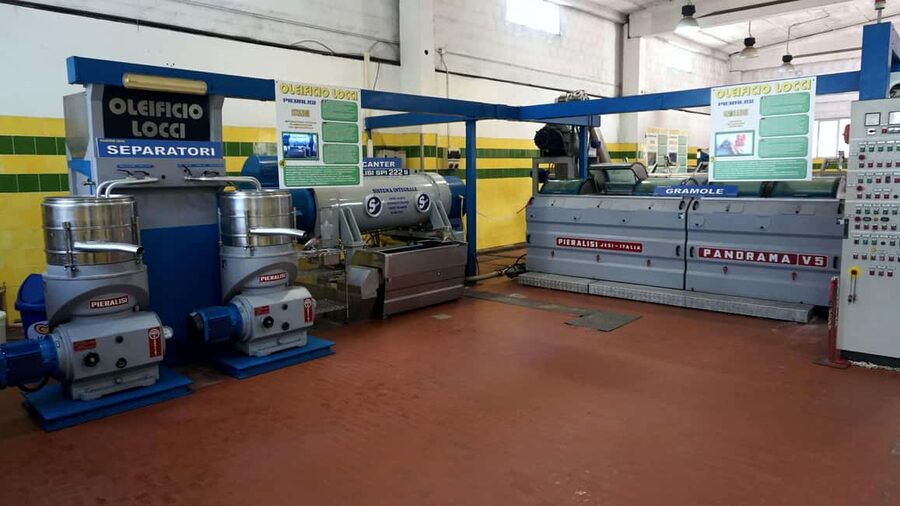
The most unusual part of this Cagliari food outing is the underground cistern, where old oil lamps and storage vessels show how Sardinians once protected their most valuable kitchen staple. Above ground, you see a working family mill and a private collection built around 400 years of olive oil making.
I like the clear, useful tasting lesson and the chance to try three distinct products, including the lemon-infused Limolio and the spicy Rogo del Tempio. I also like the easy setting: it is about 20 minutes from Cagliari by car, with free parking in Dolianova. One thing to check before booking is the timing, since the activity is listed as one hour in some places but the full program is described as 90 minutes.
Key points to know
- A working family mill: Olio del Tempio processes fruit from about 6,000 olive trees across a 20-hectare estate.
- A rare museum visit: Sa Mola de Su Notariu contains an old stone mill, antique presses, tools, and an underground cistern with oil lamps.
- Three very different tastings: Try classic extra virgin olive oil, lemon-fused oil, and a hot Sardinian herb blend.
- A proper local snack spread: Carasau bread, Sardinian sausage, olives, cheese, pizza, and sparkling wine accompany the tasting.
- A practical Cagliari side trip: Drive in about 20 minutes, or take bus line 108 from central Cagliari in about 54 minutes.
- A useful souvenir stop: You can buy the oils directly at the mill, with a stated 20 percent saving compared with online prices.
A family mill with 400 years behind it
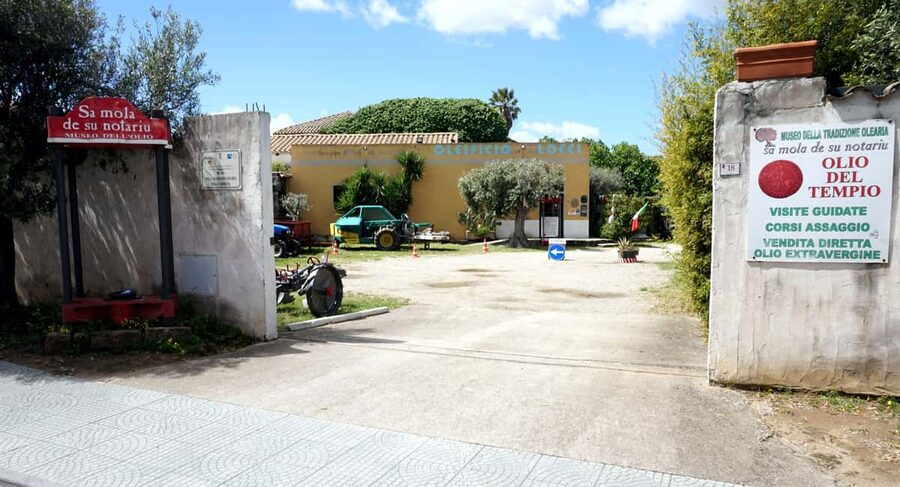
Olio del Tempio is in Dolianova, a small town close enough to Cagliari for an easy half-day outing. The experience begins at Museo dell’Olio Sa Mola de Su Notariu, which also serves as the home of the mill and shop.
The family story reaches back to 1600. That long connection matters because this is not only a tasting room assembled for day visitors. You are seeing a business that still produces and sells extra virgin olive oil, while preserving the tools and spaces used by earlier generations.
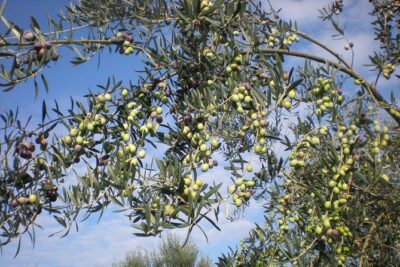
The present-day estate has about 6,000 olive trees spread across 20 hectares. The oil is certified extra virgin, and the tour explains how the fruit moves from harvest to production and bottling. You are not asked simply to taste a green liquid and take someone’s word for its quality. The aim is to show you what the mill does and give you a framework for judging oil at home.
Francesco Locci leads the experience. His style, based on the available information, is friendly and personal rather than stiff or overly formal. He speaks English, French, and Italian, which makes this a useful choice if your group does not speak Italian.
More Farm Visits in Italy:
- Sorrento Farm and Food Experience including Olive Oil, Limoncello, Wine tasting
★ 5.0 · 2,524 reviews - Alghero: Wine and Olive Oil Tasting at a Local Farm
★ 4.8 · 294 reviews - Organic cooking class with a sommelier in an Olive and wine farm
★ 5.0 · 69 reviews
The working mill in about 10 minutes
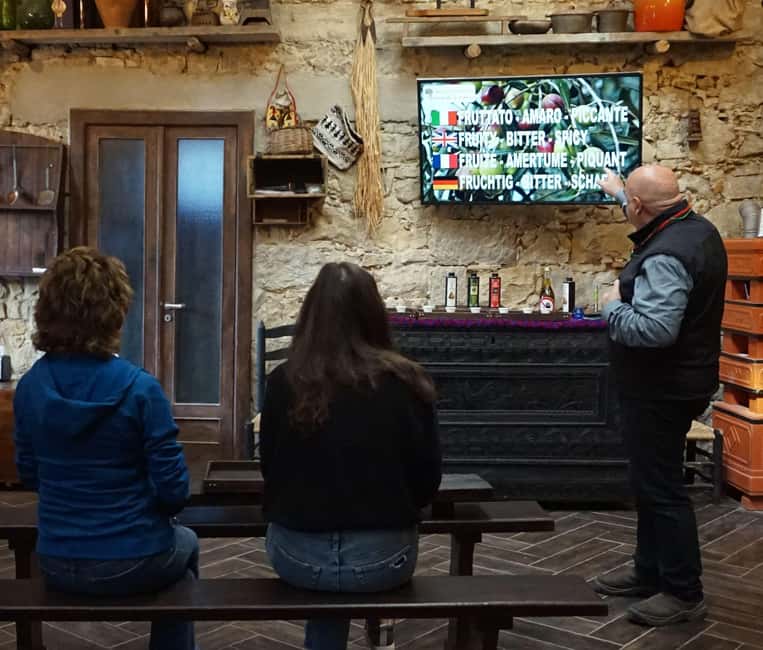
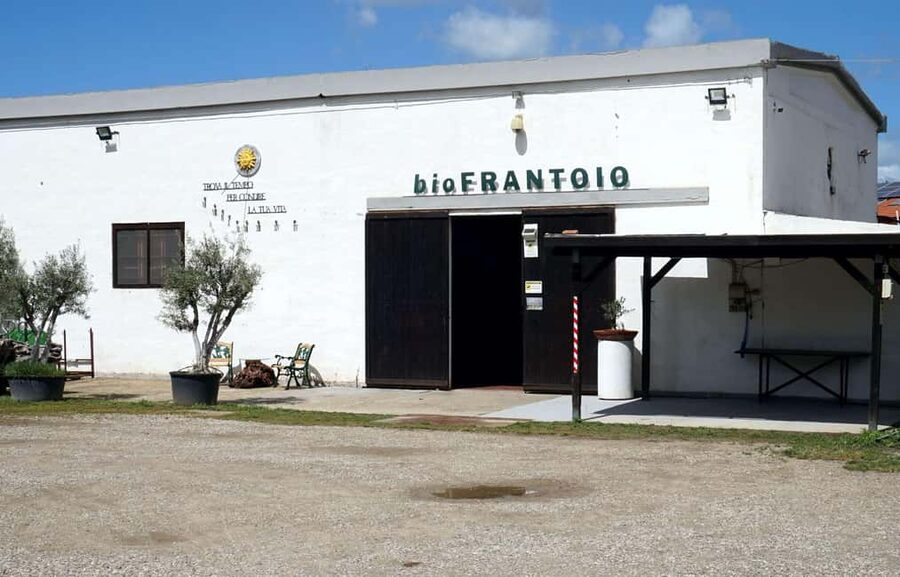
The first part is a short guided look at the production area. Video presentations help explain the complete process, from the olives on the trees to the finished bottle. The tour is not a long industrial visit, so you should not expect an hour of machinery demonstrations.
That short format is part of the appeal for a busy Cagliari schedule. You get the basic chain of production without giving up most of your day. If you are already an olive oil enthusiast and want a technical seminar on extraction temperatures, storage chemistry, or harvest timing, this may feel light. For most food-focused visitors, it gives enough background to make the tasting more meaningful.
The estate’s scale also adds context. A family mill working with thousands of trees is different from a tiny farm with a few dozen plants. You can connect the bottles on the shop shelves with a real agricultural operation, rather than treating the oil as a generic Sardinian souvenir.
One useful suggestion from past participants was that the tour could spend more time on the olive tree itself. I agree. The production lesson is the stronger part, while anyone eager to learn about varieties, pruning, flowering, and harvesting may want to ask Francesco extra questions.
Sa Mola de Su Notariu and the old stone mill
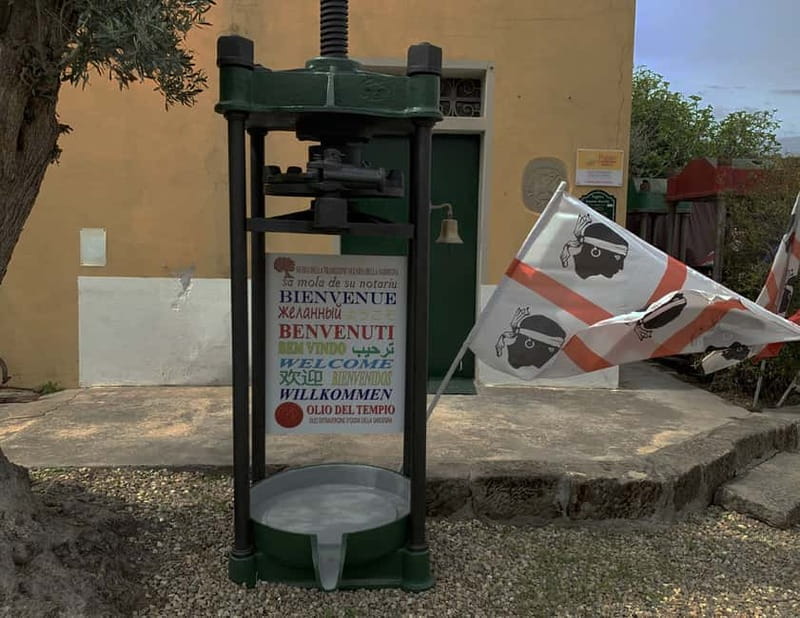
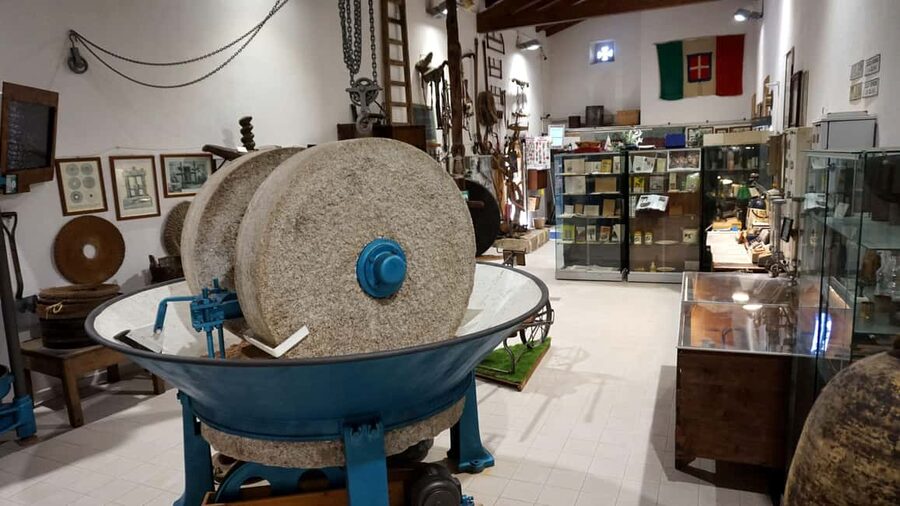
The museum gives the outing its strongest sense of place. Sa Mola de Su Notariu is presented as Sardinia’s only olive oil museum, with a collection of old tools, presses, and equipment from the family’s past.
The central object is the original stone mill, described as dating to the 17th century. The experience information also highlights a 7th century stone mill, so the historical dating is not completely consistent across the descriptions. The safe expectation is an old Sardinian stone milling installation, preserved as part of a remarkable family collection rather than a modern replica.
This matters because olive oil production is easy to reduce to a bottle label and a tasting glass. The museum shows the work behind it: heavy equipment, storage vessels, and the practical tools that once made oil for cooking, trade, and daily life.
You will also see artifacts tied to oil lamps. Olive oil was not only food. It provided light, so its storage affected household life in a very direct way. That connection makes the museum more interesting than a room filled with old agricultural objects without explanation.
The museum portion is compact, but it gives the tasting a useful historical frame. I would pay attention here if you are interested in how food shaped ordinary life, not just in how modern producers market premium oil.
Down into the underground cistern
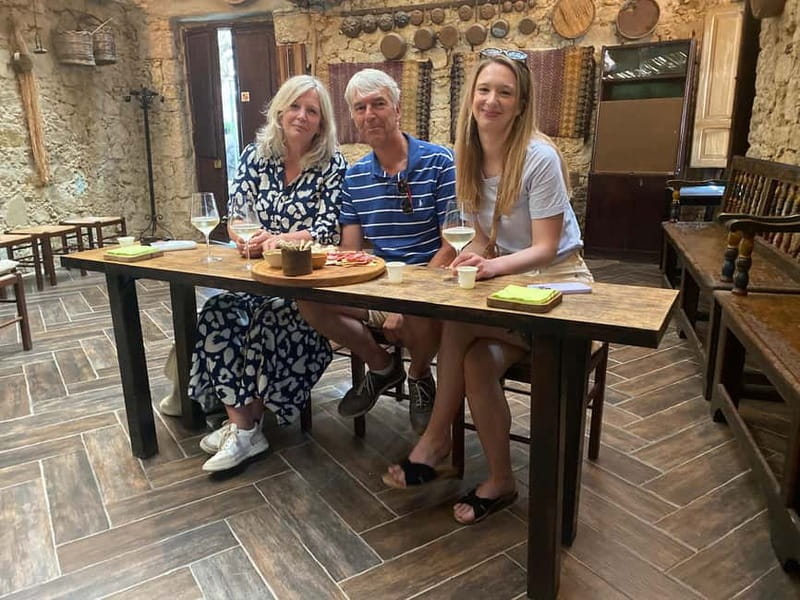
The underground storage area is the most distinctive stop. You descend into an old cistern that contains oil lamps, amphorae, and other artifacts connected with storing and preserving oil.
This is a small space with a strong visual effect. A cistern is not a decorative cellar. It tells you that temperature, darkness, and secure storage were important long before modern stainless steel tanks and branded packaging. Oil spoils when handled poorly, so the old storage system is part of the lesson.
The cistern visit also breaks up the tasting in a good way. Instead of sitting at a table for the entire program, you move through several settings: the working mill, the museum, the underground vault, and then the tasting area.
If you have limited mobility, the activity is listed as wheelchair accessible, but the cistern is still worth asking about when you arrive. The supplied information does not explain the exact route or whether every underground feature is accessible in the same way.
A few more olive oil tours around Italy worth a look
- Olive oil tasting in Sorrento
★ 5.0 · 434 reviews - Sorrento: Lemon, Olive Oil and Wine Tasting Tour with Lunch
★ 5.0 · 300 reviews - Ostuni: Masseria tour among thousand-year-old olive trees with oil tasting
★ 4.8 · 261 reviews - Balestrate: Olive Grove Tour with Wines & Olive Oil Tasting
★ 5.0 · 241 reviews
Learning to taste extra virgin olive oil
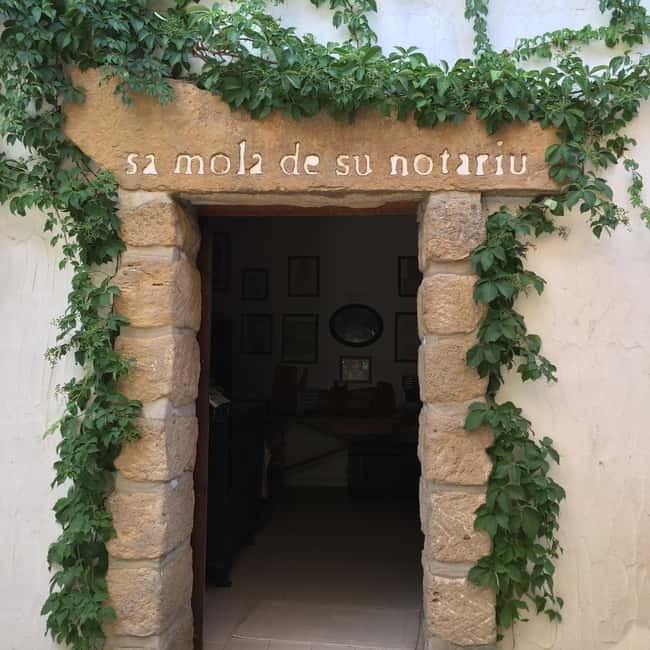
The tasting class is the heart of the visit. The lesson uses slides and guided sampling to help you recognize the qualities of premium extra virgin olive oil. You learn to notice fruitiness, bitterness, and spiciness rather than treating all oil as one flat flavor.
That is valuable at home. Many people buy oil by the bottle shape, the label, or the price and then pour it into a hot pan without considering flavor. A basic tasting vocabulary helps you choose an oil for a salad, a piece of fish, grilled meat, or simple bread.
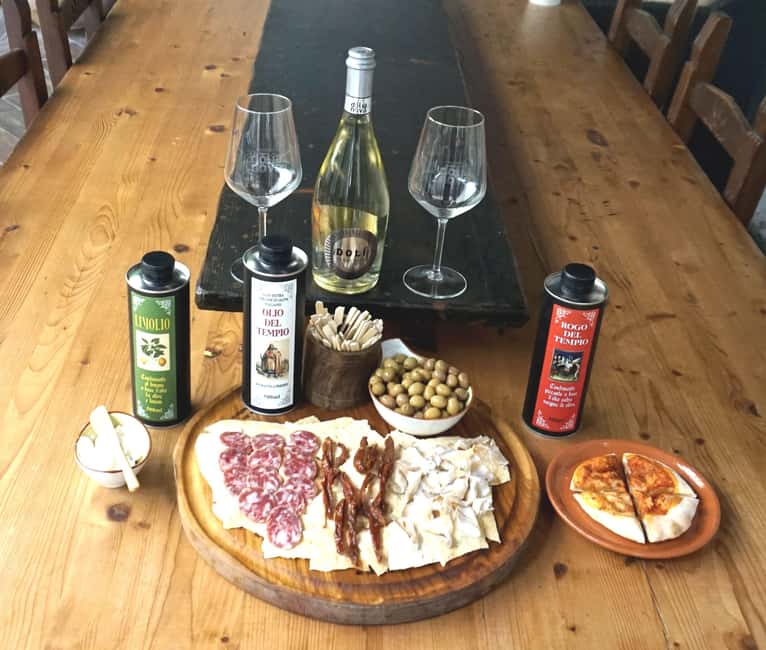
The three products are deliberately different:
- Olio del Tempio EVO: This is the classic extra virgin oil, with a balance of fruitiness, bitterness, and peppery heat. It is the most flexible option for dipping, drizzling, and everyday cooking.
- Limolio: This combines olives with lemon zest. The bright citrus character suits seafood carpaccio, raw fish, salads, caprese, and grilled vegetables.
- Rogo del Tempio: This is a spicy blend made with nine Sardinian herbs. Its heat and herb notes are aimed at grilled meats, pizza, pecorino, and roasted potatoes.
The contrast between the three products gives you more than a single sample of house oil. You can compare a daily-use EVO with two flavored products designed for particular dishes. Limolio is the likely favorite if you cook fish or vegetables, while Rogo del Tempio is the more assertive choice for cheese, meat, and pizza.
Do not expect every bottle to suit every dish. The classic EVO is the best starting point if you want one useful purchase. The flavored oils make sense when you already know how you will use them.
Carasau, sausage, olives, and sparkling wine
The food pairing makes this more than a technical class. The table includes carasau bread, natural olives, cured Sardinian sausage, and sparkling wine. Additional tasting details include cheese and a small pizza.
Carasau is Sardinia’s famous paper-thin crispbread. It is an ideal tasting partner because it gives the oil a clean, crunchy base without adding a strong flavor of its own. Tear off a piece, add a little oil, and pay attention to what changes between the three bottles.
Salsiccia sarda brings salt and savory richness. Cheese adds another useful test, especially for the spicy herb oil. Pizza and roasted potatoes are also practical pairings because they show how a flavored oil can finish a familiar dish without replacing the main ingredients.
The sparkling wine is served chilled as a local hospitality touch and palate cleanser. It is not a full wine tasting, and you should not book this expecting a winery visit. The focus remains olive oil, with food and wine used to make the lesson more relaxed and social.
The portions are described as a family-style platter, with enough variety to make the 90-minute visit feel like a small meal. If you are arriving hungry, think of it as substantial tasting food rather than a formal lunch.
Buying oil directly at the mill
The last part includes time for shopping. This is where the visit can become either useful or expensive, depending on your luggage and cooking habits.
Buying directly from the mill lets you take home the exact products you tasted. The stated direct-purchase price is 20 percent below the online price, so the shop can improve the value of the outing if you already planned to buy Sardinian oil.
I would not buy several bottles simply because the flavors are new. Start with one classic EVO if you want an everyday oil, then add Limolio or Rogo del Tempio only if the tasting gives you a clear use for them. Bottles can also be awkward souvenirs, so pack them carefully and check your airline rules if you are flying.
The shopping time is listed as about 20 minutes. That is enough to ask questions, compare products, and make a calm choice instead of rushing out with the first bottle you see.
Getting there from Cagliari
By car, the mill is about 20 minutes from Cagliari. You can park in the museum’s lot, with a large parking area in central Dolianova. That makes this a particularly easy choice for anyone renting a car or combining the visit with other stops in southern Sardinia.
Public transport takes longer. Bus line 108 connects the center of Cagliari with the area in about 54 minutes. Since the activity itself is short, check the departure times carefully so the trip does not become much longer than the visit.
Transfers from Cagliari and nearby parts of southern Sardinia are available as an optional extra. They are not included in the $64 price, so ask for the transfer cost before booking if you do not want to drive or use the bus.
The activity requires at least two people. Private tours are available, which may suit couples or families who want a more personal pace. Dogs are welcome, and water bowls are provided.
Is $64 a fair price?
At $64 per person, this is not the cheapest food stop near Cagliari. You are paying for a guided mill visit, a museum and cistern experience, a tasting lesson, food, sparkling wine, and time in the shop.
The value is strongest if you care about learning how to taste oil and want a food experience tied to a real family business. The price is less compelling if you only want a quick sample and a snack. In that case, a market visit or casual meal will cost less.
The included food helps. You are not paying $64 for three tiny spoonfuls of oil. You receive a spread of Sardinian products, and the visit lasts about 90 minutes according to the detailed program. Free parking and the possible 20 percent shop saving improve the practical value.
Because the booking information also gives a one-hour duration, I would confirm the exact schedule when you reserve. The detailed sequence includes a 10-minute mill tour, a 20-minute lesson and tasting, 20 minutes for food and wine, and 20 minutes of shopping, which suggests a longer visit once transitions are included.
Who should book this experience?
I would recommend it to food-focused visitors who have two or three spare hours around Cagliari. It suits couples, families, cruise passengers, and anyone who wants a local activity without committing to a full day in the countryside.
It is especially good for you if you:
- Want a short outing with a strong connection to Sardinian food.
- Enjoy tasting lessons that give you something useful to take home.
- Like small family businesses more than large tourist attractions.
- Plan to buy olive oil and want to taste before choosing.
- Need English, French, or Italian guidance.
- Are traveling with a dog.
I would think twice if your schedule is so tight that the 20-minute drive each way feels rushed, or if you want a long agricultural tour among the olive trees. The main experience is indoors and focused on production, history, tasting, and shopping.
Should you book the Cagliari olive oil farm visit?
Book it if you want a friendly, compact food experience that teaches you what you are tasting. The old mill, underground cistern, and oil lamp collection give it more character than a standard shop sampling, while the carasau, sausage, cheese, olives, pizza, and sparkling wine make the lesson easy to enjoy.
The best plan is to arrive with time for the full program, especially if you want to ask questions or shop. Check the exact duration, confirm transport if you are not driving, and treat the tasting as both a meal and a buying guide.
For $64, I see good value for a couple or small group that appreciates Sardinian food and wants a souvenir with a story behind it. If you only want a cheap snack, choose something else. If you want to understand why a good bottle of extra virgin olive oil costs more, this is a smart short trip from Cagliari.
FAQ
How far is the olive oil mill from Cagliari?
The mill is about 20 minutes from Cagliari by car. It is located in Dolianova.
Can I reach the mill by public transport?
Yes. Bus line 108 runs from central Cagliari, and the journey takes about 54 minutes.
How long does the activity last?
The detailed program describes a 90-minute experience. Some booking information lists the duration as one hour, so confirm the exact timing when you reserve.
What oils will I taste?
You will taste three products: Olio del Tempio EVO, Limolio made with olives and lemon zest, and Rogo del Tempio, a spicy blend with nine Sardinian herbs.
What food is included?
The tasting includes Sardinian cured sausage, natural olives, carasau bread, sparkling wine, and regional snacks. Cheese and a small pizza are also included among the tasting foods described for the experience.
Is parking available?
Yes. You can park for free in the museum’s parking lot in Dolianova.
What languages are offered?
The live guide is available in English, French, and Italian.
Is the activity wheelchair accessible?
Yes, the activity is listed as wheelchair accessible. Ask ahead about access to the underground cistern if that part is important to your visit.
Can I cancel or pay later?
You can cancel up to 24 hours in advance for a full refund. Reserve now and pay later is also available.
Just added around Italy
- Vernazza (5 Terre): olive grove tour and oil and wine tasting★ 5.0 · 9 reviews
- Trevi: Guided tour and tasting at Frantoio Gaudenzi★ 5.0 · 3 reviews
- Trieste’s Essence: Wine and Olive Oil Tasting★ 5.0 · 3 reviews
- Umbria: E-Bike Rental and Fresh EV Olive Oil Tasting★ 5.0 · 4 reviews
- Valpolicella Wine and Olive Oil Tasting with Lunch from Verona★ 5.0 · 2 reviews
- Half-Day Chianti Wine and Olive Oil Tour from Viareggio★ 4.0 · 5 reviews
- Umbria: Guided tour to Traditional Olive Oil Mill and Tasting★ 5.0 · 2 reviews
- From Venice: Olive Oil & Wine Tour in the Venetian Hills★ 5.0 · 9 reviews
Farms, compared.
Sorrento Farm and Food Experience including Olive Oil, Limoncello, Wine tasting
Read our review →
Road-trip to Lasithi, Zeus Cave & Olive Mill Farm
Read our review →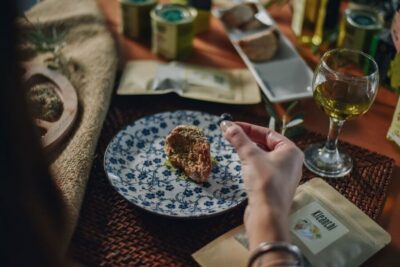
Olive Farm Tour with Tasting of Local Delicacies
Read our review →
Lassithi, Zeus Cave, Olive Mill Farm & Knossos Combo Tour
Read our review →
Traditional Olive Grove and Dragon Fruit Farm Tour
Read our review →
Cooking Class and Olive Oil Tasting at a Family Farm
Read our review →
Road-trip to Lasithi, Zeus Cave, Vidiani, Krasi & Olive Mill Farm
Read our review →Browse the lists this tour appears in