
REVIEW · ITALY
Frantoio Rosso Ipogeo Martina Franca: visit to the medieval oil mill
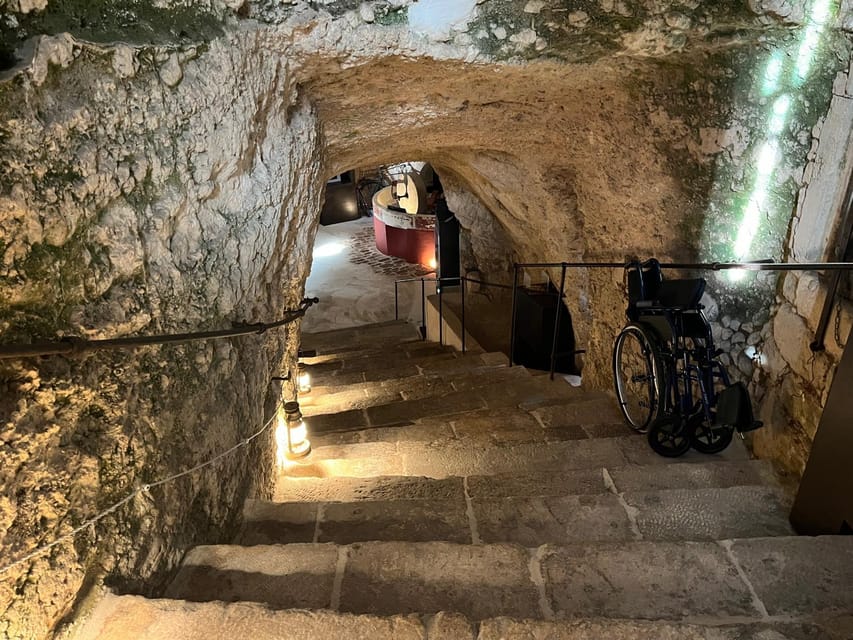
An underground oil mill is not the usual Apulia sightseeing stop. At Frantoio Rosso Ipogeo, you walk through a hollowed rock space that traces oil production from lamp fuel to food. I like the fossils in the walls and the way the site connects geology with daily work. I also like the careful restoration, which gives the old mill a useful new life for events and tastings.
The main catch is simple: the $8 ticket covers an independent visit, not the guided explanation or tastings. If you want the full story in English, French, Spanish, or Italian, check the extra cost and availability before booking. A few visitors also found the organization less polished than the setting deserves.
Key points about Frantoio Rosso Ipogeo
- Fossil-marked underground stone: See the rock from the period when this area lay beneath the sea.
- Oil for lamps before oil for food: Learn how the mill supplied lamp oil exported across Europe during the 18th and 19th centuries.
- A small community once lived around production: The mill shaped work and daily life during the oil-making months.
- Later conversion to edible oil: See how production changed through the 1960s, when food oil became the focus.
- A good-value base ticket: Entry costs $8 per person, but tours and tastings are separate.
- Accessible central location: Reach the mill from Martina Franca’s center, near the Church of San Francesco, or from the road to Alberobello.
Entering the underground mill in Martina Franca
Frantoio Rosso Ipogeo is at Via Alberobello 16 in Martina Franca. You can reach it from the center, near the Church of San Francesco, or approach from the state road leading toward Alberobello. That makes it an easy addition to a day in the town, especially if you are already exploring the white-stone streets and nearby Valle d’Itria.
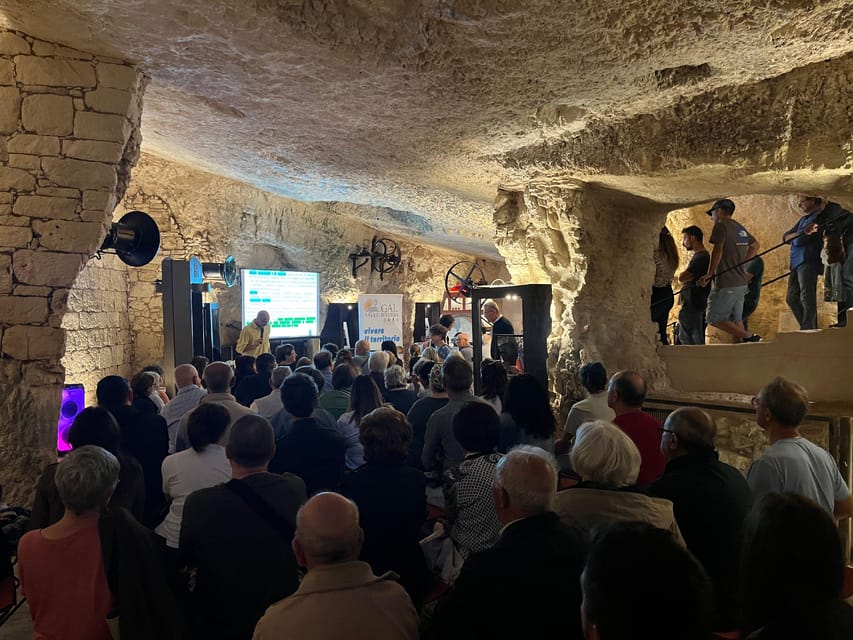
The first surprise is the setting itself. This is not simply an old room with a few tools placed against the wall. The oil mill was cut into a distinctive rock formation, and the rock tells part of the story before the machinery does.
Look closely at the exposed stone. Fossils remain embedded in it, reminders of a time when the area was covered by the sea. Water slowly wore away the rock and helped form the hollowed structure that later became useful to people. I like this opening because it gives you two histories at once: the slow work of geology and the much faster work of human industry.
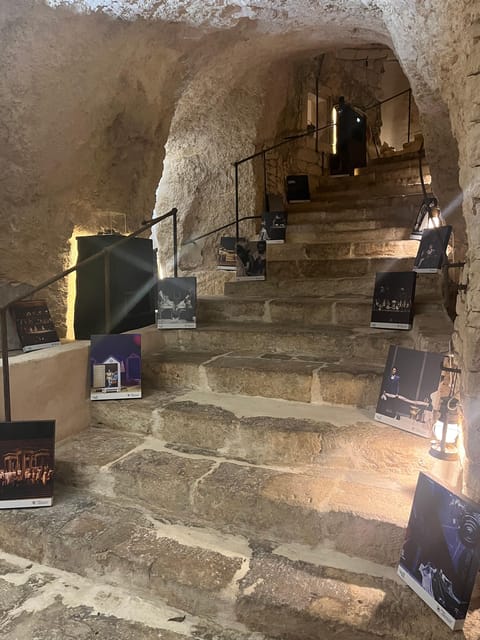
The lighting in the restored mill helps draw attention to the stone. Its color changes the mood of the underground rooms, while modern oil lamps made with a 3D printer offer a playful link between old production and new technology. It is an unusual detail, but it makes the renovation feel active rather than frozen in the past.
More Olive Mill Visits in Italy:
- Bardolino: Lake Garda Oil Mill Tour with Olive Oil Tasting
★ 4.9 · 205 reviews - Olive Oil Tours and Tasting at Frantoio di Montalcino
★ 5.0 · 85 reviews - Lecce to Galatina E-Bike: Olive Mill & Wine Tasting + Taxi back
★ 5.0 · 54 reviews
Three eras of oil production underground
The visit moves through several stages, and the sequence matters. You are not looking at one unchanging mill. You are following a business that adapted as the market changed.
Lamp oil in the 18th and 19th centuries
The earliest production period presented here focused on oil used for lamps and lanterns. Before widespread electric lighting, oil was an essential source of illumination. The mill produced a product that had value well beyond Martina Franca and was shipped throughout Europe.
That export story gives the site a wider purpose. This was not only a local workshop serving nearby households. It was part of a trade network, and the oil helped light homes and public spaces far from Apulia.
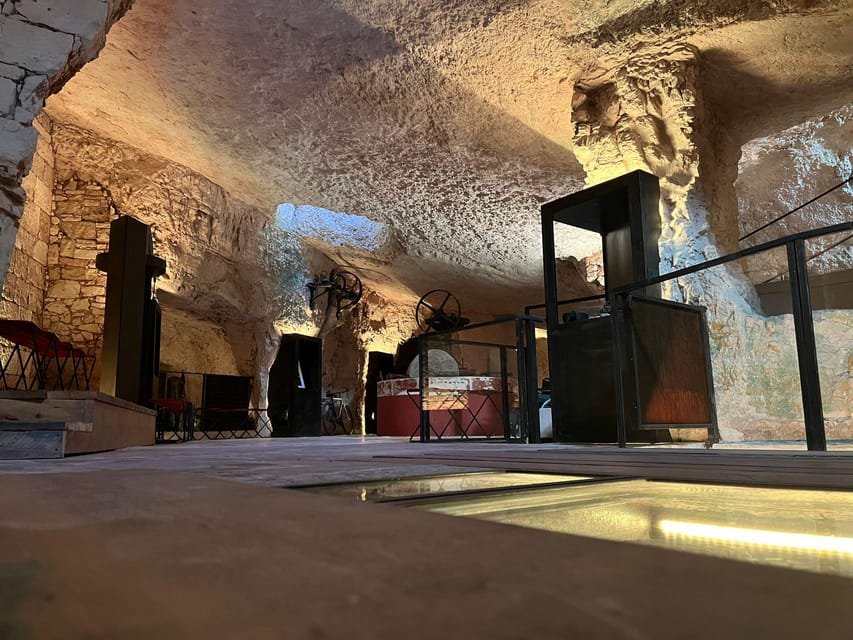
Machinery, workstations, and objects found in the mill help explain how this work was done. The displays are most useful when you take your time and connect each object with the labor it required. The independent visit gives you freedom to move at your own pace, but it also means you may need to read carefully and form some of the connections yourself.
A guide can make a difference here. Guided visits are available in Italian, English, French, and Spanish, but they are not included in the basic entry price. If the history of technology and trade interests you, paying for the explanation may be worthwhile.
Life inside the mill
Oil production was seasonal, and the mill became a workplace that shaped an entire community during its active months. People spent the production period inside the underground space, working and living around the needs of the mill.
This is one of the most human parts of the visit. The machinery matters, but so does the pattern of life it created. The mill was a workplace, a meeting place, and a setting for long stretches of shared labor.
You also hear about the months when production stopped and the other activities that filled the year. That broader view helps you picture the mill as part of a local economy rather than as an isolated industrial building.
The information provided does not give every detail of those daily routines, so do not expect a full open-air museum recreated around you. Instead, think of this as a compact historical visit where the stone, tools, and explanation suggest how people organized their lives around oil.
A few more olive oil tours around Italy worth a look
- Sorrento Farm and Food Experience including Olive Oil, Limoncello, Wine tasting
★ 5.0 · 2,524 reviews - Olive oil tasting in Sorrento
★ 5.0 · 434 reviews - Sorrento: Lemon, Olive Oil and Wine Tasting Tour with Lunch
★ 5.0 · 300 reviews - Alghero: Wine and Olive Oil Tasting at a Local Farm
★ 4.8 · 294 reviews
Edible oil through the 1960s
In the final working period, production changed from lamp oil to edible oil. The mill remained important, but the purpose of its product shifted with changing needs and technology.
The displays show modifications made for food production, including greater care in the milling process. Oil was not just a commodity. It also carried sacred meaning, which adds a cultural layer to the practical story of pressing and processing.
The mill continued producing edible oil until the 1960s. That date helps place the site in a recent past, rather than an impossibly distant one. The workers, tools, and methods belong to the era of grandparents and great-grandparents, not only to medieval legend.
Why the rock matters as much as the machinery
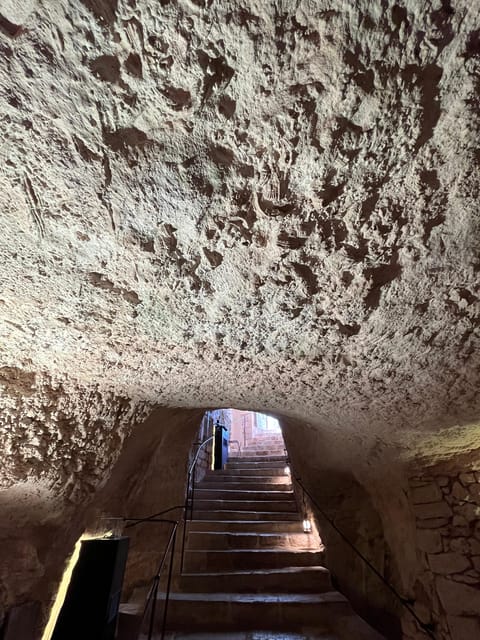
The name Frantoio Rosso Ipogeo refers to an underground oil mill, and the underground setting is the heart of the experience. The rock is not a decorative backdrop. It determined the shape of the rooms and offered a naturally sheltered place for production.
I find the geological beginning especially useful for understanding Apulia. You are looking at a region shaped by ancient sea beds, limestone, erosion, and human excavation. The fossils give you something concrete to look at, rather than a long explanation about geological time.
The stone also changes how the old work feels. In a conventional museum, a machine can seem detached from its original setting. Here, the workstations remain tied to the carved rooms, so you get a better sense of how the physical space directed the work.
Still, expectations matter. This is not a large industrial museum with a huge collection of operating equipment. One rating described the museum as limited in its connection to modern olive-oil production. That is fair. The focus is on the former mill and its local story, not on a full technical lesson about how contemporary olive oil is made today.
Restoration, lighting, and the mill’s new life
The old oil mill has been renovated for modern use. Today it can host cultural activities, including musical and theatrical events, as well as tastings. That gives the building a second purpose without wiping away its working past.
The lighting is part of the presentation. Colored illumination brings out the shapes of the underground rooms and the texture of the stone. For some visitors, this will add atmosphere. If you prefer untouched archaeological sites, the modern lighting and event setup may feel less raw.
I see the renovation as a sensible compromise. The site is preserved, but it is not treated like a sealed box. A building with space for performances and food events has a reason to remain part of local life.
The 3D-printed oil lamps are another small but memorable touch. They imitate the older function of the site while showing how digital tools can help interpret the past. It is a modest detail, yet it neatly joins the mill’s first era with its present use.
What the $8 price really includes
At $8 per person, the basic ticket is inexpensive for an unusual cultural stop. It includes entry for an independent visit, toilets, Wi-Fi, and a station for users with disabilities. The main value comes from the setting and the chance to see a preserved underground mill without committing to a long tour.
But do not read the $8 price as an all-inclusive food experience. A guided tour is not included. Neither are the oil tasting, samples of typical products, or purchases of local olive oil.
That distinction is important because the activity is often described with food and tasting language. If you simply want to see the mill, the entry price is reasonable. If your goal is to taste several oils and local foods, budget extra and confirm what is available on your date.
One visitor specifically wished that a couple of tastings had been included. I understand the complaint, since olive oil is central to the story. Still, the basic ticket is clearly priced as museum entry, not as a tasting menu.
The best value depends on your aim:
- Choose the basic entry if you want a short cultural stop between sights in Martina Franca.
- Add the guide if you care about the production process, export trade, and community life.
- Add tasting only if you want to connect the old mill with Apulia’s food traditions.
- Bring comfortable shoes, since the visit takes place in an underground historic structure.
Independent visit or guided explanation?
The independent format gives you control. You can pause at the fossils, examine the machinery, and spend more time in the rooms that interest you. This works well if you have already read about Apulian oil production or if you are fitting the mill into a busy day.
The tradeoff is that some of the story may remain in outline. The site covers geology, lamp oil, export trade, working life, edible oil, religious meaning, and restoration. That is a lot for a small visit. Without a guide, you may not catch every connection.
Guided service is available in English, Spanish, Italian, and French. The host or greeter may also use those languages, though some content is presented in its original language. If you are not comfortable reading historical material on your own, check the language arrangement before you arrive.
The people who handle the visit have generally been praised for being friendly, available, and able to explain the site in French. One French-language visit was described as especially pleasant and informative. At the same time, one booking received a middling assessment for organization, so I would allow a little flexibility rather than planning the rest of your day down to the minute.
The one-hour visit and the rest of your day
The listed visit in Martina Franca lasts about one hour. That makes the mill easy to combine with a walk through town, a meal, or a drive toward Alberobello.
I would treat the one-hour figure as a useful guide, not a stopwatch. An independent visit may be shorter if you move quickly. It may take longer if you read everything, arrange a tasting, or join a guided explanation.
The location is also useful on a rainy or very hot day. Underground spaces offer a different setting from the town’s streets, and the visit gives you a cultural activity that does not depend on a long outdoor walk.
Wheelchair access is listed, along with a station for users with disabilities. Since the building is historic and underground, I would still confirm the exact route and facilities if you have specific mobility needs.
Who will enjoy this Martina Franca stop?
I would recommend Frantoio Rosso Ipogeo to you if you like small museums with a strong sense of place. The geology, old work areas, and changing use of oil give the visit more substance than a simple display of agricultural tools.
It is also a good choice for people interested in food culture but who want context before tasting. The oil samples and local products are not included, yet the visit explains why oil mattered to the area and how production changed over time.
Families with older children may find the fossils and underground rooms more engaging than a standard history display. The 3D-printed lamps can also help younger visitors see the link between an old product and modern design.
I would be less enthusiastic if you want a full tour of present-day olive farming or a large collection of working machinery. This is a compact historical site. It tells the story of one mill, its stone, its workers, and its changing product.
Should you book Frantoio Rosso Ipogeo?
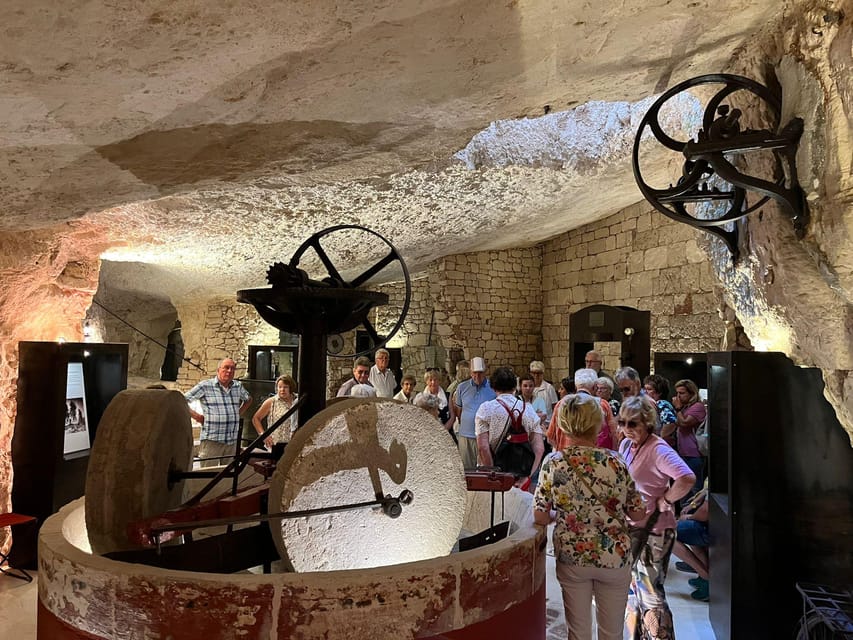
Book it if you are spending time in Martina Franca and want an affordable, distinctive stop with a real connection to local work. The $8 entry price is fair for an independent visit, and the underground setting, fossil-filled rock, and changing oil production give you plenty to notice in about an hour.
Before booking, decide if you want only entry or the fuller version with a guide and tastings. The strongest experience comes when you treat the mill as both a small museum and a food-history stop. If you expect a modern olive-oil factory tour with tastings included, you may find the basic ticket too limited.
FAQ
Where is Frantoio Rosso Ipogeo?
It is at Via Alberobello 16 in Martina Franca, Apulia. You can reach it from the town center near the Church of San Francesco or from the state road to Alberobello.
How much does entry cost?
The listed price is $8 per person. This covers entry for an independent visit.
How long does the visit last?
The Martina Franca visit is listed as lasting about one hour. The booking is valid for one day, with the available starting time shown when you check dates.
Is a guided tour included?
No. The basic ticket includes an independent visit. Guided service is separate and is available in Italian, English, French, and Spanish.
Are oil tastings included?
No. Oil tasting, samples of typical products, and purchases of local olive oil are not included in the entry ticket.
Is the site wheelchair accessible?
Yes. The activity is listed as wheelchair accessible and includes a station for users with disabilities.
What should I bring?
Bring comfortable shoes. The visit takes place in an underground historic oil mill.
Just added around Italy
- Vernazza (5 Terre): olive grove tour and oil and wine tasting★ 5.0 · 9 reviews
- Trevi: Guided tour and tasting at Frantoio Gaudenzi★ 5.0 · 3 reviews
- Trieste’s Essence: Wine and Olive Oil Tasting★ 5.0 · 3 reviews
- Umbria: E-Bike Rental and Fresh EV Olive Oil Tasting★ 5.0 · 4 reviews
- Valpolicella Wine and Olive Oil Tasting with Lunch from Verona★ 5.0 · 2 reviews
- Half-Day Chianti Wine and Olive Oil Tour from Viareggio★ 4.0 · 5 reviews
- Umbria: Guided tour to Traditional Olive Oil Mill and Tasting★ 5.0 · 2 reviews
- From Venice: Olive Oil & Wine Tour in the Venetian Hills★ 5.0 · 9 reviews
Olive Mill Visits, compared.
Knossos-Zeus Cave -Old Traditional Villages-Olive Oil Factory
Read our review →
The Governor’s Olive Mill Tour with Olive Oil Tasting
Read our review →
Road-trip to Lasithi, Zeus Cave & Olive Mill Farm
Read our review →
LA Almazara LA Organic, Olive Oil Museum and Tasting
Read our review →
Lassithi, Zeus Cave, Olive Mill Farm & Knossos Combo Tour
Read our review →
Zeus Cave, Lassithi Plateau, and Olive Factory Tour
Read our review →
Browse the lists this tour appears in