
REVIEW · ITALY
Cagliari Olive Oil Farm & Tasting (Since 1600, 20 Minutes Away)
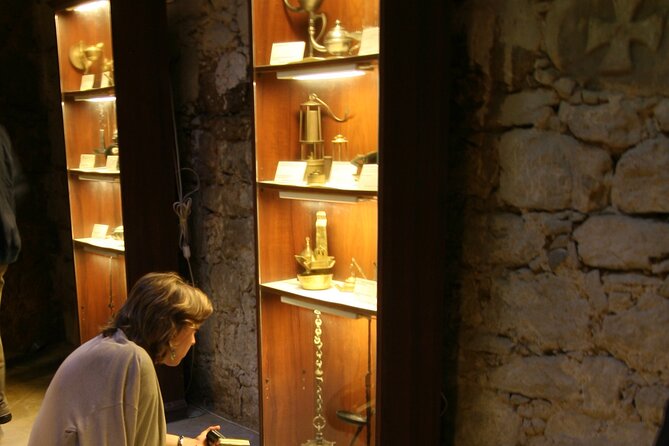
This is not just an olive oil tasting. Near Dolianova, about 20 minutes from Cagliari, Francesco takes you through a working mill, a family museum dating back 400 years, and an underground oil cistern lit by ancient oil lamps. Then you sit down with Sardinian food and learn how to judge extra virgin olive oil for yourself.
I like two things right away: the family connection feels genuine, and the tasting uses food you will actually find in Sardinia, from carasau bread to cured meats and goat cheese. I also like the small group limit of 10, which leaves room for questions. The main thing to consider is timing: the tour is described as about one hour in the booking details, while the masterclass program is listed as 90 minutes, so allow extra time.
Key points to know
- Francesco leads a family-based lesson on olive oil production, tasting, and local food.
- The underground cistern and old oil lamps add a memorable historical touch to the mill visit.
- Three house oils are tasted, including lemon-infused oil and a spicy blend with nine Sardinian herbs.
- Food pairing is substantial, with meats, olives, carasau bread, goat cheese, pizza, and sparkling wine.
- The group is capped at 10 people, and tours are offered in English at 10am, noon, 3pm, and 5pm.
- You can buy directly from the producer, with a 20 percent discount on site.
A family olive oil lesson in Dolianova
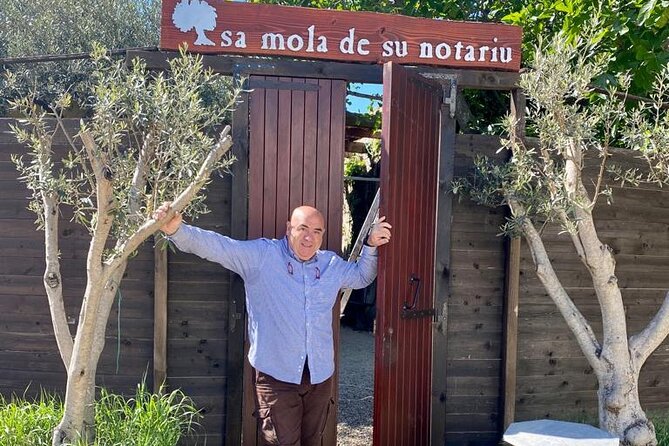
Sa Mola de su Notariu, the oil museum and mill, gives this experience a clear sense of place. You are not sitting in a generic tasting room with anonymous bottles. You are visiting a Sardinian family business that connects old farming methods, museum pieces, and current production.
Francesco is the key to the experience. He is the owner and guide, and his enthusiasm comes through in the way he explains the work. He also has a warm, witty manner, which helps keep the technical parts from feeling like a lecture.
I especially like that questions are welcome. One family with teenagers found the visit engaging for the whole group, and even a language barrier did not stop the guide from making sure everyone could follow along. That tells me the presentation is flexible rather than rigid.
The setting is in Dolianova, in the province of South Sardinia. From Cagliari, the drive is roughly 20 minutes, making this a practical half-day outing or an easy add-on to a day in the nearby countryside.
More Farm Visits in Italy:
- Sorrento Farm and Food Experience including Olive Oil, Limoncello, Wine tasting
★ 5.0 · 2,524 reviews - Alghero: Wine and Olive Oil Tasting at a Local Farm
★ 4.8 · 294 reviews - Organic cooking class with a sommelier in an Olive and wine farm
★ 5.0 · 69 reviews
Stop one: Sa Mola de su Notariu Oil Museum
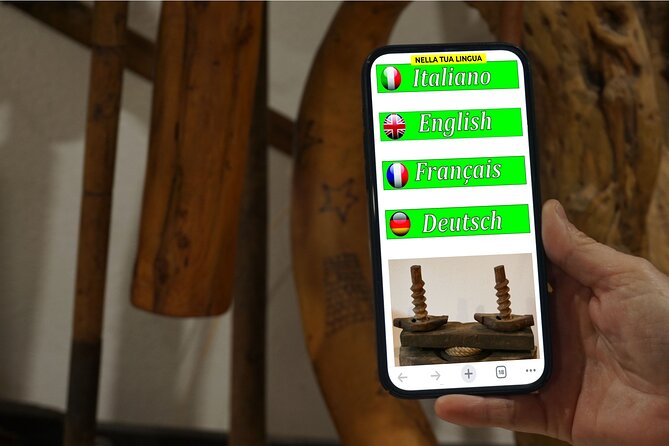
The museum is the first major stop. Its focus is the history of the family and the local oil trade, with about 400 years of family background tied to the site.
You can expect a mix of information boards, photographs, machinery, and explanations from Francesco. A short film is also part of the presentation. This combination works well because you are not asked to absorb everything from a spoken talk alone. The visual material helps show how olives move from grove to mill and how the finished oil is handled.
The museum also gives the tasting some useful context. You first see the tools and working methods, then you taste the result. That sequence matters. Olive oil can seem like a simple table ingredient, but the flavor depends on how olives are picked, processed, and stored.
The most unusual part is the underground oil cistern. Ancient oil lamps are still associated with this space, giving you a physical link to the older side of production. It is a small detail, but it makes the visit more memorable than a standard room filled with old equipment.
You should not expect a large museum complex or a long archaeological visit. This is a focused stop built around the family mill and the making of olive oil. If you want a broad history of Sardinia, this will feel narrow. If you want to understand one traditional food and the people who produce it, the focus is a strength.
Stop two: watching the mill at work
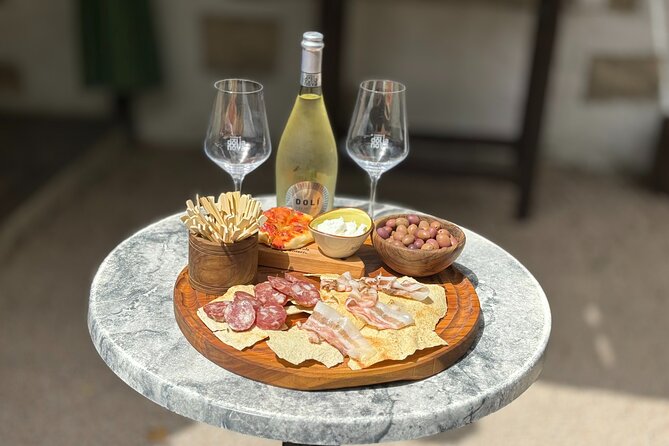
The live mill production tour is the practical heart of the visit. The exact amount of activity you see may depend on the production season, but the program is designed to show how extra virgin olive oil is made.
This is useful because the phrase extra virgin is often treated as a label rather than a quality standard. Francesco explains what to look for and how to recognize a good oil. You learn to pay attention to aroma, flavor, and defects instead of choosing a bottle only by its packaging or price.
The production tour also helps explain why freshness matters. Freshly made oil has a character that can be lost when a bottle sits too long or is stored poorly. The lesson gives you tools you can use later at home, not just information that ends when the tasting is over.
The experience has been particularly praised for teaching people how to test the oil they already have in their kitchens. That is one of the best reasons to book it. You leave with a way to compare oils rather than simply knowing which house product you liked best.
The underground cistern and the older side of oil making
Many food tours stay at the table. This one gives you a physical look at the storage side of the business. The underground cistern adds another layer to the production story, since oil had to be stored safely after pressing.
The ancient oil lamps are an unusual feature and help you picture the working environment of earlier generations. I would not treat this as a major attraction on its own, but it is exactly the kind of small, specific detail that gives the visit personality.
The family museum is also valuable because it connects the current business to earlier generations. You are not only being shown a product for sale. You are being shown how olive oil has remained part of the family’s work over centuries.
A few more olive oil tours around Italy worth a look
- Olive oil tasting in Sorrento
★ 5.0 · 434 reviews - Sorrento: Lemon, Olive Oil and Wine Tasting Tour with Lunch
★ 5.0 · 300 reviews - Ostuni: Masseria tour among thousand-year-old olive trees with oil tasting
★ 4.8 · 261 reviews - Balestrate: Olive Grove Tour with Wines & Olive Oil Tasting
★ 5.0 · 241 reviews
Tasting three oils with Sardinian food
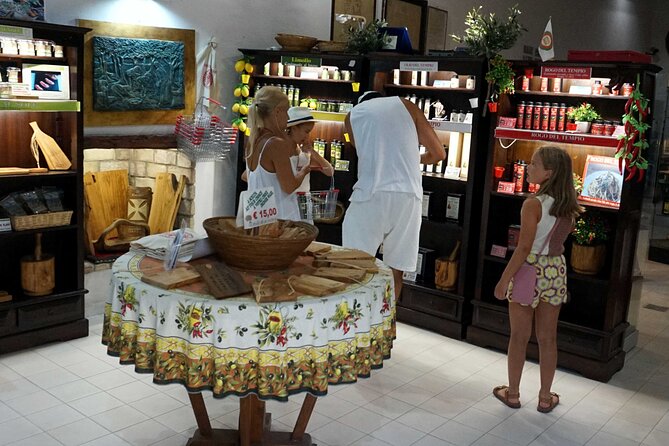
The tasting is built around three house products, each with a different use.
Olio del Tempio is the plain extra virgin olive oil. This is the best oil to taste first because it gives you a baseline for the texture, aroma, and finish of a standard Sardinian EVO.
Limolio combines olive oil with lemon. It is suggested with seafood, salads, and fish carpaccio. At the table, it is served with fresh goat cheese, which gives you a simple way to see how the citrus note changes a mild food.
Rogo del Tempio EVO is the bolder option. It contains nine Sardinian herbs and has a spicy character. It is paired with small pizzas, and the suggested uses include grilled meat, pizza, and pecorino cheese.
The order makes sense. You move from classic oil to lemon flavor and then to the spicy herb version. That lets you compare oils by purpose instead of asking which one is simply best.
The food is more than a token snack. The spread includes cured Sardinian meats, natural olives, carasau bread, fresh goat cheese, and pizzette. Sparkling wine is also served. This is important at a $66.26 price because you are paying for instruction, a production visit, and a proper regional tasting, not just three small samples.
The sample menu lists stuzzichini, olives, salumi, carasau bread, goat cheese with Limolio, and pizzette with the spicy oil. The meal is not presented as a full restaurant lunch, but it should be enough to make the tasting feel generous and complete.
Why the food pairings make the lesson better
Olive oil is easier to understand when you taste it with familiar foods. Carasau bread shows the oil’s texture and basic flavor. Goat cheese lets you notice the lemon oil without too many competing flavors. Pizza gives the spicy herb oil a natural match.
The cured meats, olives, and sparkling wine also make the setting more social. You are not expected to sit silently and take notes. You can ask questions, compare reactions, and enjoy the food as part of the lesson.
The pairing also gives you practical ideas for using the products at home. The lemon oil is not limited to this tasting room. It makes sense with fish, salads, and carpaccio. The herb oil has a clearer role with grilled meat, cheese, and pizza.
I would pay attention to the tasting rather than rushing toward the shop. Try each oil on its own first, then with food. That simple habit helps you notice which flavors are coming from the oil and which come from the pairing.
What the $66.26 price gets you
At $66.26 per person, this is not the cheapest food stop near Cagliari. Its value depends on what you want from the outing.
If you only want to buy a bottle of olive oil, the price is too high. If you want a short cultural visit, a production explanation, a family museum, an unusual old cistern, guided tasting, food, wine, and the chance to shop directly from the producer, the price is more reasonable.
The direct buying option adds practical value. You receive a 20 percent discount on site, so the tasting can also help you decide what to take home. You may find bottles, olive salt, and other local products in the shop. Buying directly also avoids guessing from a supermarket shelf after you have already learned how the oil tastes.
The small group limit matters here. With no more than 10 people, the guide can respond to questions and keep the tasting personal. A large coach group would change the feel of this visit, so the group size is one of its better features.
The tour is also offered four times a day, at 10am, noon, 3pm, and 5pm. That gives you useful flexibility around a Cagliari sightseeing schedule. Since the activity requires at least two people, it is not intended as a solo booking unless another participant joins.
Timing, transport, and practical planning
The meeting point is Sa Mola de su Notariu Oil Museum, Olio del Tempio, at Viale Europa 18 in Dolianova. The activity ends at the same place.
The location is near public transportation, but the supplied details do not specify a particular bus route or travel time. If you are staying in Cagliari, check the route before booking rather than assuming the 20-minute driving time will match public transport.
The program is described in two ways: the general duration is about one hour, while the masterclass details describe 90 minutes. The museum, mill, tasting, food, and shopping can easily make the visit feel longer than a quick tasting. I would keep at least 90 minutes free, and more if you plan to browse and buy products afterward.
Tours are offered in English. Reviews also describe the guide giving a good French explanation, but English is the stated tour language. If language is important to your group, confirm what will be available at your chosen time.
Mobile tickets make arrival simple. Confirmation is provided when you book. Service animals are allowed, and the venue is near public transportation.
Free cancellation is available up to 24 hours before the start time. Cancellations or changes inside that window are not refunded or accepted. The activity can also be changed or refunded if poor weather affects the visit or if the minimum number of participants is not reached.
Who will enjoy this Dolianova outing
I would recommend this to food-focused visitors who want something rooted in Sardinia rather than another standard city walk. It works especially well for couples, families, and small groups who enjoy tasting local products and asking questions.
Families should give it serious thought. The combination of machinery, a hidden underground space, food, and a hands-on tasting gives younger visitors more variety than a museum talk alone. One family with two teenagers found the experience engaging, which is a good sign for parents planning a food-based activity.
It also suits cooks and anyone who wants to become a better olive oil shopper. The lesson is not limited to the three house products. It teaches you how to judge oils you may encounter back home.
I would be less likely to recommend it if your schedule is already packed with major archaeological sites or if you do not care about food production. The experience has a narrow subject. That is its appeal, but it also means the visit will not suit every first-time Sardinia itinerary.
Should you book this olive oil experience?
I would book it if you have a free half-day near Cagliari and want a personal introduction to Sardinian food. Francesco’s role as owner and guide, the family museum, the old cistern, and the substantial tasting give the visit more substance than a shop counter sample.
The strongest reason to go is the practical lesson. You learn how to taste oil, how to compare it, and how to pair different styles with food. The 20 percent shop discount is useful if you already plan to bring edible souvenirs home.
Before booking, allow 90 minutes or more, check how you will reach Dolianova, and remember that the activity needs at least two participants. For food lovers, families, and curious cooks, this is a small-scale experience with real local character. For anyone looking only for a quick bottle purchase, save the money and visit the shop another way.
FAQ
Where does the olive oil experience take place?
It takes place at Sa Mola de su Notariu Oil Museum and Olio del Tempio, Viale Europa 18, 09041 Dolianova, Sardinia.
How far is the site from Cagliari?
The olive oil mill is about 20 minutes from Cagliari.
How long does the experience last?
The booking information gives an approximate duration of one hour, while the masterclass program is described as 90 minutes. Allow at least 90 minutes if you also plan to shop.
What time can I book the tour?
Available start times are 10am, noon, 3pm, and 5pm.
Is the tour offered in English?
Yes. English is the stated language for the experience.
What oils will I taste?
You will taste Olio del Tempio extra virgin olive oil, Limolio made with olive oil and lemon, and Rogo del Tempio EVO made with nine Sardinian herbs and a spicy flavor.
What food is served?
The tasting includes cured Sardinian meats, olives, carasau bread, fresh goat cheese, pizzette, and sparkling wine.
How many people can join?
The group has a maximum of 10 travelers, and the activity is offered from a minimum of two people.
Can I buy olive oil at the end?
Yes. You can buy the oils and other products directly on site, with a 20 percent discount.
What is the cancellation policy?
You can cancel up to 24 hours before the start time for a full refund. Changes or cancellations made less than 24 hours before the experience are not accepted or refunded.
Just added around Italy
- Vernazza (5 Terre): olive grove tour and oil and wine tasting★ 5.0 · 9 reviews
- Trevi: Guided tour and tasting at Frantoio Gaudenzi★ 5.0 · 3 reviews
- Trieste’s Essence: Wine and Olive Oil Tasting★ 5.0 · 3 reviews
- Umbria: E-Bike Rental and Fresh EV Olive Oil Tasting★ 5.0 · 4 reviews
- Valpolicella Wine and Olive Oil Tasting with Lunch from Verona★ 5.0 · 2 reviews
- Half-Day Chianti Wine and Olive Oil Tour from Viareggio★ 4.0 · 5 reviews
- Umbria: Guided tour to Traditional Olive Oil Mill and Tasting★ 5.0 · 2 reviews
- From Venice: Olive Oil & Wine Tour in the Venetian Hills★ 5.0 · 9 reviews
Farms, compared.
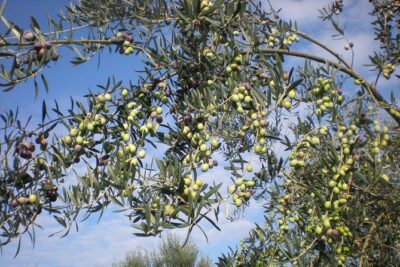
Sorrento Farm and Food Experience including Olive Oil, Limoncello, Wine tasting
Read our review →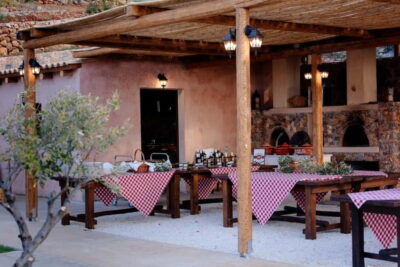
Road-trip to Lasithi, Zeus Cave & Olive Mill Farm
Read our review →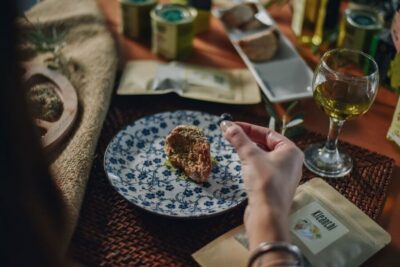
Olive Farm Tour with Tasting of Local Delicacies
Read our review →
Lassithi, Zeus Cave, Olive Mill Farm & Knossos Combo Tour
Read our review →
Traditional Olive Grove and Dragon Fruit Farm Tour
Read our review →
Cooking Class and Olive Oil Tasting at a Family Farm
Read our review →
Road-trip to Lasithi, Zeus Cave, Vidiani, Krasi & Olive Mill Farm
Read our review →Browse the lists this tour appears in