
REVIEW · SPAIN
Jaén: Guided Olive Mill Tour with Olive Oil Tasting
The most interesting part of this Jaén experience is that it shows olive oil as a working trade, not just a pretty bottle on a shop shelf. At Oleícola San Francisco, you’ll see where olives arrive, how machinery separates oil from fruit, and how older methods compare with modern production. I especially like the family-run setting and the chance to taste three oils after learning how their aromas and flavors differ.
I also like the strong value: the 1.5-hour visit costs $21 and includes the tasting, with two small award-winning oil samples to take away. Guides such as Luis, Manolo, and Ana have a close connection to the mill, which makes the visit personal. The main drawback is location. You need a car or bicycle to reach the mill in Begíjar, and production is most visible from mid-October through December.
Key points to know before you go
- See old and modern olive-oil methods: The tour compares traditional equipment with the machinery used today.
- Taste three gourmet extra virgin oils: The tasting helps you notice differences in aroma, flavor, and texture.
- Meet family members and mill staff: Guides including Luis, Manolo, and Ana explain the process in a warm, practical way.
- Plan around the harvest season: Mid-October through December is the best period to see the mill operating during production.
- Allow time for the shop: You can buy oils, olives, tapenades, olive-oil chocolates, beauty products, and other local goods.
- Combine it with Baeza or Úbeda: The mill is 6 kilometers from Baeza, 18 kilometers from Úbeda, and 30 kilometers from Jaén.
Why an olive mill belongs on your Jaén itinerary
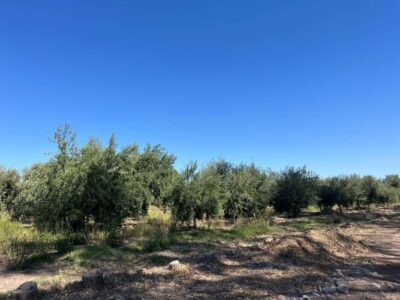
Jaén is one of Spain’s great olive-oil regions, and the countryside around Baeza and Úbeda is covered with olive groves. It is easy to admire the rows of trees from a road or hilltop, but much harder to understand what happens after the olives leave the branches.
This visit fills in that missing piece. You’ll learn how the fruit is received, milled, separated, stored, and prepared for sale. The explanations also cover the difference between olive-oil qualities and why handling, timing, and extraction methods affect the final product.
I like this kind of stop because it gives meaning to everyday food. After the tour, you’ll look at a bottle of extra virgin olive oil with more questions: Where did it come from? How was it extracted? Was it stored well? What flavors should I notice?
The mill is described as the first tourist olive mill in Jaén, and it has been welcoming visitors for years. It remains a working producer, not a museum built only for sightseeing. That means the visit has a useful link to present-day farming and food production.
More Olive Mill Visits in Spain:
- Ronda: LA Almazara LA Organic, Olive Oil Museum and Tasting
★ 4.6 · 435 reviews - Guided Tasting Tour in 16th century House and Olive Oil Factory
★ 5.0 · 169 reviews - Visit Oil Mill Museum and Olive Oil Tasting in Ronda
★ 4.5 · 105 reviews
Arriving at Oleícola San Francisco in Begíjar
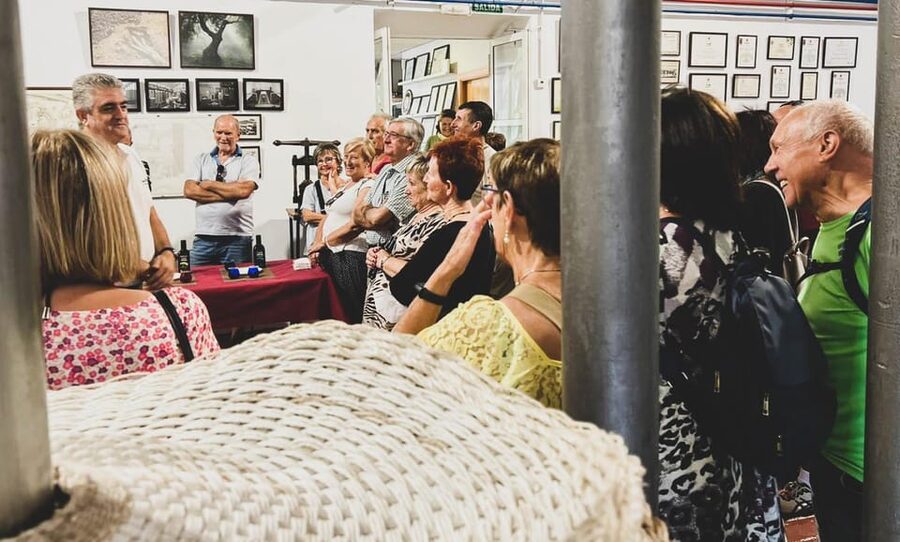
The mill is in Begíjar, about 6 kilometers from Baeza. It is also 18 kilometers from Úbeda and 30 kilometers from Jaén, so it fits best into a day that already includes one of those towns.
You cannot reach the mill by regular public transport according to the information provided. Plan to arrive by car or bicycle, and check the exact meeting point for the option you book. The out-of-town setting is the main practical tradeoff, but it also places the visit close to the olive-growing area that gives Jaén its identity.
If you are staying in Baeza, the short drive makes this a sensible add-on. From Úbeda or Jaén, allow extra time for the journey. Do not treat the 1.5-hour tour as the entire outing. With driving and a look around the shop, you’ll want to set aside a larger part of the day.
The mill is open daily, including Saturdays, Sundays, and holidays. English, French, and Spanish tours are available, but you should request an English or French visit one week ahead. The stated starting time for English and French tours is 12:30.
Walking through the mill, from olives to oil
The visit begins outdoors and continues through the indoor facilities. This gives you a useful sense of scale before the technical explanations begin.
You’ll learn about the reception of the olives when they arrive at the mill. From there, the guide explains the stages of extraction and points out the equipment used at each step. The process is easier to understand when you can see the machinery rather than simply hear a list of terms.
One of the best parts is the comparison between old and new techniques. Earlier equipment helps explain how olive oil was produced for generations, while the modern machinery shows how today’s producers work to control quality and efficiency.
The exact machinery in operation can depend on the season. A visit during the harvest period, from about mid-October to the end of December, gives you the best chance of seeing active production. Outside that period, the tour still explains the process and shows the facilities, but you should not expect every stage to be running.
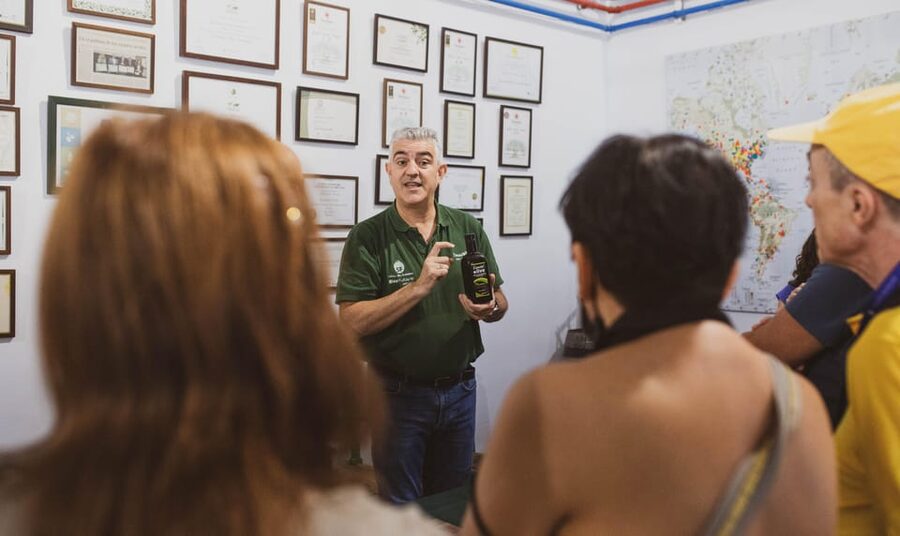
Your guide may be a member of the family or a mill worker. Luis and Manolo have led visits in the past, and Ana has also guided the tour. The useful difference here is that the explanation comes from people connected to the business, rather than from a guide with only a general script.
The cellar and the story behind storage
The tour includes a look at the cellar where the oil is stored. This is a small but important part of the visit because oil quality does not depend only on harvesting and extraction. Storage also matters.
The cellar gives the production story a clear final stage. You see that the process does not end when oil comes out of the machinery. It must then be kept and handled carefully before bottling and sale.
A film about the world of olive oil is also included. The film is available in Spanish, English, and French, along with the guided explanations. If you have little background in olive farming, this helps place the mill in a wider context.
The tour does not appear to be designed as a long technical class. At 1.5 hours, it gives you a solid introduction without taking up an entire afternoon. I see that as a good balance for a food-focused stop, especially if you are also visiting Baeza or Úbeda the same day.
More Olive Oil Tastings in Spain:
- Guided tour and olive oil tasting in Alhaurin el Grande (Málaga)
★ 5.0 · 200 reviews - Visit of the olive grove, olive oil tasting and snack
★ 4.9 · 111 reviews - Olive Oil tasting breakfast & Tour in Cordoba
★ 4.5 · 84 reviews - Extra Virgin Olive oil tasting
★ 4.9 · 79 reviews
The three-oil tasting is the real payoff
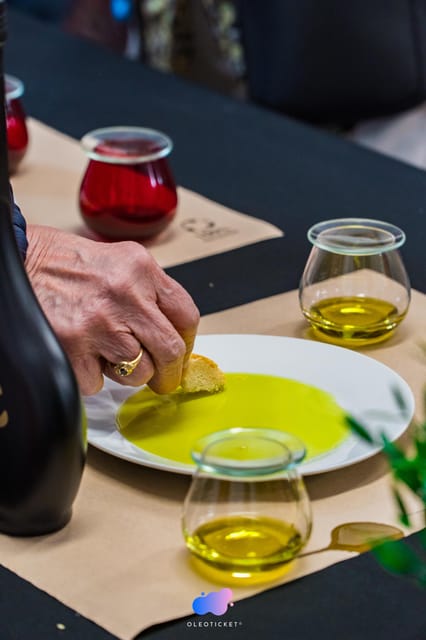
The final stop is the tasting room, where you sample three extra virgin olive oils from the Gourmet Trio called Esencial Olive. This is more useful than simply dipping bread into one oil and being told it is good.
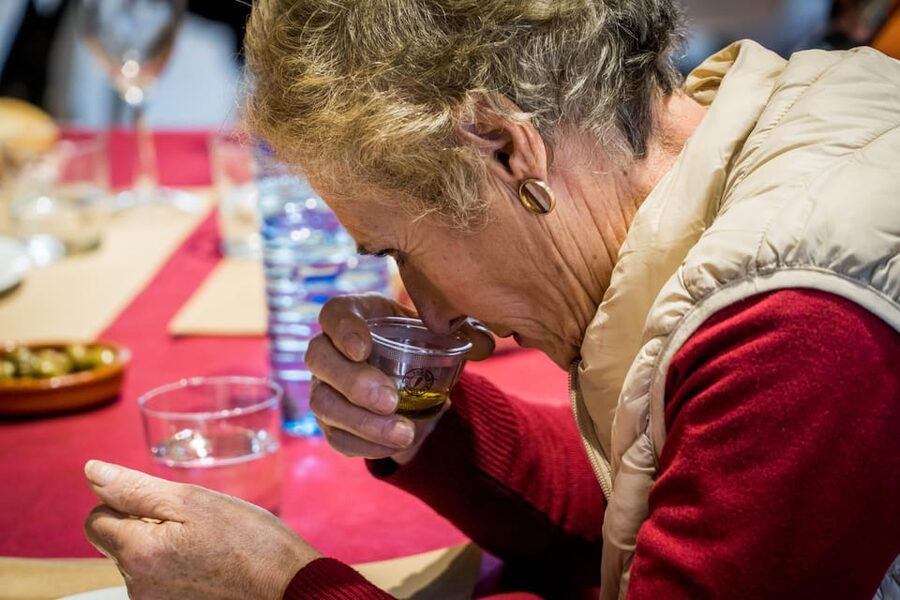
You’ll have a chance to notice different aromas and flavors. The tasting is meant to help you identify sensory differences, so pay attention to the guide’s explanation rather than rushing through the samples.
I recommend treating the tasting like a small lesson. Smell each oil first, then taste it slowly. Notice how the oils differ in fruitiness, sharpness, and finish. You do not need expert vocabulary. The point is to understand that extra virgin olive oil is not one uniform product.
The tasting is included in the $21 price, which makes the visit particularly good value. Two additional samples of award-winning extra virgin oils are provided as a gift, giving you something small to take home or use later.
The oil is available in the on-site shop, and the tasting can help you decide what suits your cooking. You may find that one oil works better as a finishing oil while another seems more useful for everyday meals. The tour does not require you to buy anything, but the tasting makes the shop more useful than a simple souvenir stop.
The family business adds a personal touch
Oleícola San Francisco began as an artisanal local producer and now sells premium oils recognized in international competitions. That growth gives the visit two sides: you learn about a small family business, but you also see a producer with a serious focus on quality.
The family connection is one of the strongest reasons to choose this mill. Manolo and Luis have been praised for spending extra time with small groups, explaining the equipment, answering questions, and helping visitors understand the products in the shop. Ana has also been described as bringing the tour to life.
Small groups may receive particularly personal attention, though group size is not specified. You should not assume every visit will be private. Still, the family-run nature of the business means the tour is likely to feel less formal than a large factory visit.
This is also a good stop for families. Children under 8 enter free, and the tour includes machinery, old production methods, a film, and a tasting. The tasting will naturally appeal more to adults, but the physical process can hold a child’s interest better than a lecture about agriculture.
Shopping beyond the oil bottles
After the tasting, you can visit the themed shop. It sells olive oil products along with olives, tapenades, beauty items, chocolates made with olive oil, and local goods such as wine.
This is helpful if you want edible souvenirs but do not want to spend time searching through several shops in town. Olive oil can also be easier to choose here because you have just tasted some of the products and heard how they are made.
Remember to think about transport and luggage before buying large quantities. The supplied information does not specify shipping arrangements, though one past visitor arranged for oil to be sent home. Ask the shop directly about current shipping options if you are interested in ordering after your visit.
The shop adds a few minutes to the stop, but it is not the main reason to come. Book the tour for the production story and tasting first. Think of the shop as a useful extra.
How much time and money should you allow?
The listed price is $21 per person for a 1.5-hour visit. That includes the guided tour and tasting of three extra virgin oils. You also receive two small samples of award-winning oil.
For an attraction that combines a working food producer, historical equipment, a film, a cellar visit, and a structured tasting, I consider that a fair price. It is especially good value if you already plan to visit Baeza or Úbeda and can add the mill without a long detour.
The value depends partly on your interest. If you enjoy cooking, local food, agriculture, or Spanish traditions, you’ll get much more from the visit than someone who only wants a quick photo stop. The tour explains enough to make the tasting meaningful, which is where many olive-oil visits earn their price.
You can cancel up to 24 hours before the visit for a full refund, and the reserve-now, pay-later option keeps your schedule flexible. These terms are useful in Jaén, where a driving day may change depending on your route.
Accessibility, languages, and practical limits
The mill has adapted facilities and access for groups and people with reduced mobility. It is wheelchair accessible, which makes this a more workable choice than some rural food visits.
Tours are offered in Spanish, English, and French. If you need English or French, request it at least one week before the visit. English and French tours start at 12:30, so check the available time when booking.
Pets are not allowed, and smoking is prohibited. Children under 8 can enter free. Transfers are not included, so you must arrange your own ride to Begíjar.
The biggest planning issue is still transport. The mill is only reachable by car or bicycle, and the meeting point may vary depending on the booking option. Confirm those details before setting off from Baeza, Úbeda, or Jaén.
Who will enjoy this olive-oil tour most?
I would choose this tour if you want to understand one of Andalusia’s central foods rather than simply taste it. It suits people who enjoy local producers, traditional methods, food shopping, and short cultural visits with a practical focus.
It is also a smart stop for cooks. The three-oil tasting gives you a basic vocabulary for choosing extra virgin oils, and the shop lets you continue the lesson through products you can take home.
Families can consider it too, especially because children under 8 enter free. The old equipment and working machinery give younger visitors something to look at, though the level of interest will depend on the child.
I would be more cautious if your itinerary has no car or bicycle. The mill’s rural location is not a minor detail. It is also less ideal if you want to see the full production process in action but are visiting outside the mid-October to December harvest period.
Should you book Oleícola San Francisco?
Book it if you are staying near Baeza, Úbeda, or Jaén and want a direct look at Andalusia’s olive-oil culture. The tour is short, fairly priced, family-run, and practical. The old-versus-modern equipment comparison and the three-oil tasting give it more substance than a quick factory visit.
Try to schedule it during the harvest season if seeing active production matters to you. Request English or French early, and arrange your car or bicycle before the day begins.
Skip it only if reaching Begíjar would make your route awkward or if olive oil has no real interest for you. For most food-minded visitors with a vehicle, this is an easy way to turn a familiar Spanish ingredient into a much clearer part of your trip.
FAQ
How long does the olive mill tour last?
The guided tour lasts 1.5 hours.
How much does the tour cost?
The listed price is $21 per person.
What does the tasting include?
The experience includes a tasting of three extra virgin olive oils from the Esencial Olive Gourmet range. Two samples of award-winning extra virgin oil are also provided as a gift.
Which languages are available?
The tour and film are available in Spanish, English, and French. Request an English or French tour one week ahead. Those tours start at 12:30.
How do I reach the olive mill?
Oleícola San Francisco is in Begíjar and is reachable only by car or bicycle. It is 6 kilometers from Baeza, 18 kilometers from Úbeda, and 30 kilometers from Jaén. Transfers are not included.
Is the mill accessible for visitors with reduced mobility?
Yes. The mill has adapted facilities and access for groups and people with reduced mobility, and the activity is wheelchair accessible.
Just added around Spain
- XXI Century Olive Oil Mill Tour★ 5.0 · 3 reviews
- Visit to an olive oil mill and oil tasting with aperitif and food and wine pairing.★ 5.0 · 2 reviews
- Ulldecona: Guided Tour of the Millenary Olive Trees of Arión★ 5.0 · 2 reviews
- Treurer: Tapas Gourmet and Extra Virgin Olive Oil★ 4.7 · 3 reviews
- Olive Oil and Winery Tour from Zaragoza City★ 5.0 · 4 reviews
- Olive Oil Private Full-Day Tour with Tasting in Valencia★ 5.0 · 2 reviews
- Olive Oil Factory from Seville Private Tour★ 5.0 · 2 reviews
- Olive Oil Tasting Experience in Sevilla★ 5.0 · 2 reviews
Olive Mill Visits, compared.
Knossos-Zeus Cave -Old Traditional Villages-Olive Oil Factory
Read our review →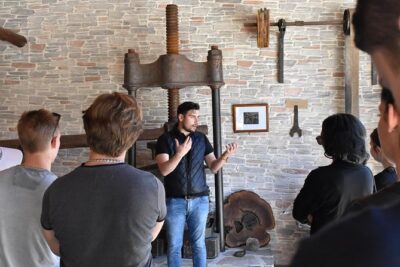
The Governor’s Olive Mill Tour with Olive Oil Tasting
Read our review →
Road-trip to Lasithi, Zeus Cave & Olive Mill Farm
Read our review →
LA Almazara LA Organic, Olive Oil Museum and Tasting
Read our review →
Lassithi, Zeus Cave, Olive Mill Farm & Knossos Combo Tour
Read our review →
Zeus Cave, Lassithi Plateau, and Olive Factory Tour
Read our review →
Browse the lists this tour appears in