
REVIEW · OSTUNI
Puglia Olive Oil Tasting Experience with Olive Grove Walk
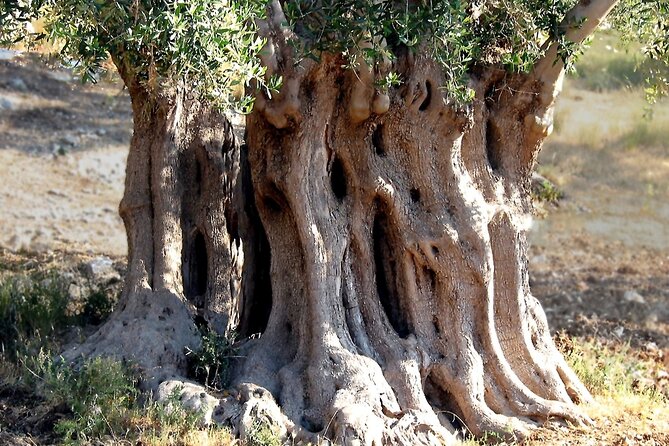
The oldest olive trees are the main event here. Some are said to be 1,200 to more than 2,000 years old, with thick, twisted trunks that look more like sculpture than farm plants. You also go below ground into an old olive mill, then taste three extra virgin oils.
I like the mix of outdoor scenery and working history, and I like that this is a private tour, so your group can ask questions without being lost in a crowd. The main drawback is length: some visits finish in about an hour, which can make the $44.46 price feel high if you want a long farm visit or a full meal.
Key points to know before you book
- Ancient trees: Walk among remarkable olive trees, some estimated at 1,200 to more than 2,000 years old.
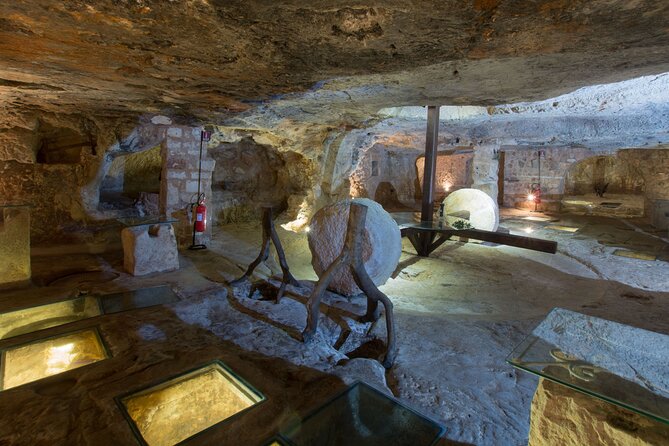
- Underground mill: See the old cellar or underground press where olives were once processed.
- Three-oil tasting: Learn how to taste and compare different extra virgin olive oils.
- Private setting: Only your own group takes part, with an English-speaking guide.
- Easy timing: Meet at 11 a.m. at Masseria Valente and finish back at the same place.
- Short format: The advertised visit is about 90 minutes, though some past visits have taken less than an hour.
Ancient olive trees near Ostuni
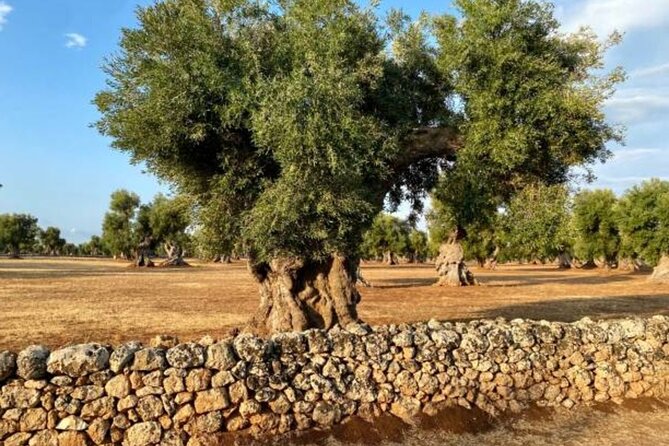
This is not a standard tasting held around a table in a shop. The visit begins outside, at Masseria Valente in Contrada Valente, near Ostuni. You walk among old olive trees before learning how their fruit becomes oil.
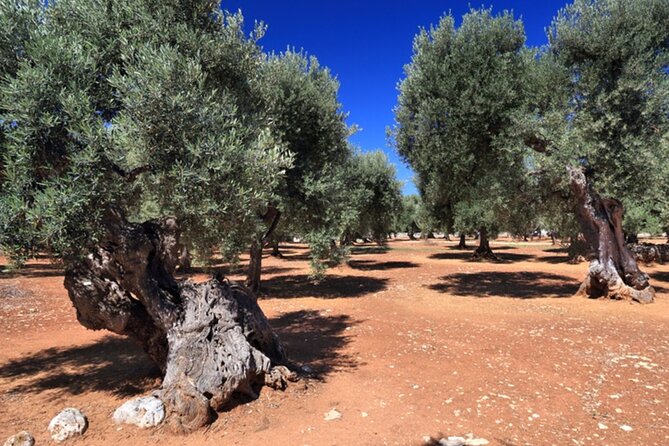
The trees are the reason to come. Puglia is known for its olive groves, but age is hard to grasp until you are beside one of these huge trunks. Some trees have hollow centers, broad limbs, and knots shaped by centuries of growth. A few are described as 1,200 years old, while one account places some of the oldest trees at more than 2,000 years.
I like this opening because it gives the tasting a sense of place. You are not simply sampling a product with a Puglia label. You are seeing the trees, the soil, and the old methods connected to it.
The walk is scenic rather than strenuous. The available details do not give a distance or a difficulty rating, so you should not book it as a serious hike. Think of it as a gentle stroll through an olive grove, with stops for explanation and photographs.
Your guide explains local olive growing, oil production, and the role of olive trees in Apulian life. The guide’s enthusiasm is one of the strongest parts of the visit, and the English is described as very good. That matters here, because the value of the tour depends on understanding what you are seeing, not just looking at unusual trunks.
More Olive Oil Tastings in Italy:
- Olive oil tasting in Sorrento
★ 5.0 · 434 reviews - Alghero: Wine and Olive Oil Tasting at a Local Farm
★ 4.8 · 294 reviews - Ostuni: Masseria tour among thousand-year-old olive trees with oil tasting
★ 4.8 · 261 reviews
Below ground at the old olive mill
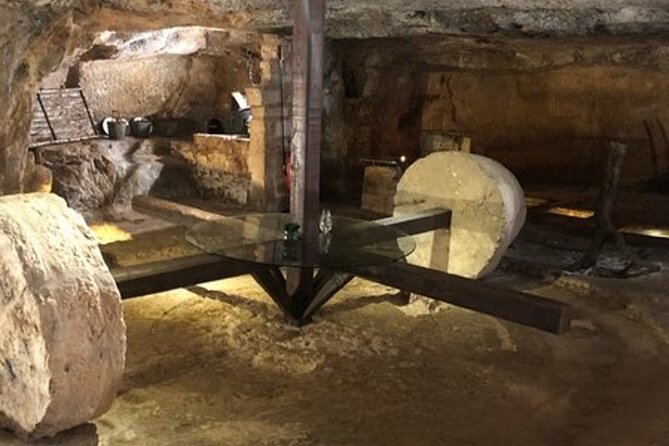
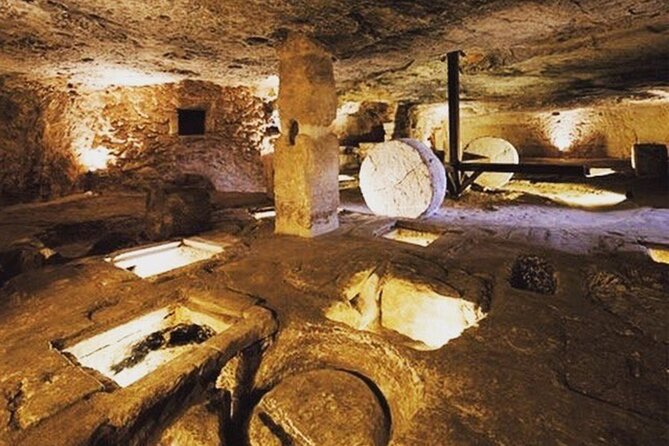
The next stop is the historic underground olive mill, also called an old cellar or press. This is where the tour shifts from nature to working history.
Traditional mills were often built below ground or partly cut into the local rock. The cooler conditions helped with storage and production, while the underground rooms provided shelter from the heat. Here, you see the old-style press and the spaces where oil was once made.
The mill is no longer operating, so do not expect a demonstration of modern machinery or a live production line. Its value is visual and historical. You get a better sense of the labor involved before today’s stainless-steel equipment and automated systems.
I would pay close attention to the guide’s explanation at this point. The old press means more when you understand how many olives were needed, how much work went into pressing them, and how important oil was to household life and trade. The tour includes stories about Puglia’s cultural past, so this is more than a quick peek into a stone room.
The underground space may be the most distinctive part of the visit, but it also contributes to the short format. You are seeing one historic mill, not a large museum with several rooms and exhibits. If you want a detailed technical lesson on milling, ask questions as you go.
Tasting three extra virgin olive oils
The final part is an expert-led tasting of three extra virgin olive oils. This is a useful number: enough to compare, but not so many that your palate becomes tired.
You learn to notice differences among oils rather than treating them as one generic ingredient. The guide discusses production and local varieties, then helps you appreciate how oils can vary in aroma, flavor, and finish. The exact varieties are not specified, so you should not book expecting a particular named cultivar or a take-home bottle.
For many people, this tasting will be the most practical part of the tour. Once you know what to look for, you can make better choices at a market or restaurant. You may also find that the oil you prefer is not the mildest one. Extra virgin oil can have a peppery bite, a grassy note, or a more rounded taste, and the tasting gives you a chance to compare those qualities side by side.
The setting adds to the pleasure. After walking among old trees and seeing the underground press, the oil in your glass has a clear connection to the place. You are tasting the end product after seeing part of its story.
Do not expect this to replace a full food tour. Meals are not included, and the supplied details do not promise bread, local dishes, wine, or dessert. If you want lunch, plan it separately at the property or elsewhere, but do not assume it forms part of the ticket.
The private format and guide
This is a private activity, so only your group participates. That is a real advantage for a subject that invites questions. You can ask the guide to explain a tree, repeat a tasting point, or spend more time on the old press without worrying about holding up a large group.
The guide is described as passionate about both the trees and oil production. That enthusiasm comes through in the strongest accounts of the visit. The English is also reported as very good, which makes the tour suitable for visitors who want more than a quick visual stop.
The guide’s role is especially important because the experience is compact. With a lively and clear explanation, 60 to 90 minutes can feel focused. Without that context, the walk and mill could feel like a brief look around.
No guide name is provided in the booking information, so I would not plan around meeting a particular person. The key point is the English-language guiding and the private arrangement.
More Olive Grove Walks in Italy:
- Balestrate: Olive Grove Tour with Wines & Olive Oil Tasting
★ 5.0 · 241 reviews - Bologna: Olive Grove and Vineyard Tour with Product Tastings
★ 4.8 · 109 reviews - Balestrate Olive Grove Tour: Wine and Olive Oil Tasting
★ 5.0 · 105 reviews - Guided tours of the olive grove with oil tasting.
★ 5.0 · 67 reviews
Is the price fair?
The listed cost is $44.46 per person. That is not an outrageous price for a private visit with a guide, but it is more than I would pay for a very short walk and a three-oil tasting alone.
The value depends on what you want. You are paying for several parts together:
- A guided walk among very old olive trees
- Access to an underground historic mill
- Explanations of production and local traditions
- A private English-language visit
- A tasting of three extra virgin oils
If the visit runs close to the advertised 90 minutes, the price is easier to defend. If it ends in less than an hour, you may feel you have paid mainly for the setting and the guide rather than for a substantial activity.
There is also a price and timing inconsistency in the supplied information. The main details give a cost of $44.46 and an approximate duration of 90 minutes, while the provider has stated a price of €37 and a 60-minute listing in response to a complaint. Check the current price, currency, and expected length at booking. That small step can prevent an avoidable disappointment.
For comparison, a visitor who wants a full meal, a farm lunch, or a longer production tour should look elsewhere. If you mainly want a clear introduction to Puglian olive oil in a private setting, the price may work for you.
Meeting at Masseria Valente
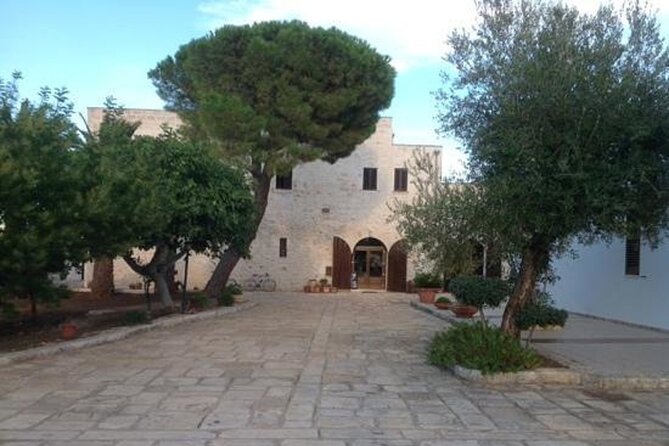
The meeting point is Masseria Valente, SP21, 72017 Contrada Valente, Ostuni BR. The start time is 11 a.m., and the activity returns you to the same place.
Transportation is not included. It may be available on request, but you should arrange this before the day of the visit. Do not assume that a taxi, shuttle, or transfer from Brindisi is part of the price.
The property itself is described as having a charming hotel, a pool, and a restaurant designed in the form of trulli. Those features are part of the setting, not stated inclusions of the tour. You can use them to understand the atmosphere of the meeting place, but confirm separately if you plan to eat or stay there.
A late-morning start works well if you are staying near Ostuni and want to combine the visit with other plans. Since the tour ends back at the starting point, it is simple to continue by car afterward. The information does not state how long the transfer takes from Brindisi, so allow extra time and arrange your own transport.
The activity requires good weather. If poor weather causes cancellation, you are offered another date or a full refund. You can cancel for a full refund up to 24 hours before the start time, but changes or cancellations inside that window are not accepted.
Who will enjoy this visit most?
I would recommend this experience to you if you have a real interest in food origins, farming, or local history. It is also a good fit if you want a quiet activity between visits to Ostuni, Alberobello, or other Puglian towns.
Families may like the unusual trees and underground rooms, though the information does not give a child age range or a special children’s program. Couples and small groups should appreciate the private format. Service animals are allowed.
This is less suitable if you want a full-day activity. It is also not the right choice if your main goal is to buy a large selection of oils, eat a farm lunch, or watch an active mill at work. None of those features is included in the stated program.
The short length can be a benefit when your schedule is crowded. You get a local food lesson without giving up an entire day. Just keep your expectations in line with the format: this is a compact introduction, not an extensive agricultural visit.
Practical advice for making the most of it
Arrive ready to walk outdoors, even though the route is not described as strenuous. Wear sensible shoes for the olive grove and underground mill. The information does not specify shade, seating, or ground conditions, so comfort matters more than dressing up for the tasting.
Ask questions during the walk. The ancient trees are easy to photograph, but the guide’s explanations are what connect them to the oil in your glass. Ask about the age of the trees, how the old press worked, and why the three oils taste different.
Keep time in mind when planning your day. The official estimate is about 90 minutes, but accounts of the visit range closer to an hour. Leave some flexibility before your next reservation, especially if you are arranging a meal or transport.
You should also confirm the final price and duration before paying. The conflicting figures are not a reason to dismiss the tour, but they are a reason to remove uncertainty before you arrive.
Should you book the Puglia olive oil tasting?
Book it if you want to see remarkable old olive trees, step into an underground mill, and learn the basics of extra virgin olive oil from an enthusiastic English-speaking guide. The private format and strong sense of place make it more personal than a simple tasting counter.
Skip it if $44.46 feels too high for a visit that may last about an hour, or if you expect lunch, extensive milling demonstrations, or a large tasting session. The best choice is to confirm the current price and duration first.
For the right visitor, this is a pleasant and memorable slice of Puglia: short, focused, and tied closely to the trees that have shaped the region for centuries.
FAQ
Where does the olive oil tasting begin?
The activity begins at Masseria Valente, SP21, 72017 Contrada Valente, Ostuni BR, Italy.
What time does the tour start?
The scheduled start time is 11 a.m.
How long does the experience last?
The advertised duration is approximately 1 hour and 30 minutes. The available information also includes a provider clarification referring to a 60-minute listing, so confirm the expected length when booking.
Is transportation included?
No. Transportation to the meeting point is not included, though it may be available on request.
What does the tasting include?
The experience includes an expert-led tasting of three extra virgin olive oils, along with explanations about production, local traditions, and different oil varieties.
Can I cancel for a refund?
Yes. You can cancel at least 24 hours before the start time for a full refund. Cancellations or changes made less than 24 hours before the start time are not accepted. If poor weather causes the activity to be canceled, you are offered another date or a full refund.
More Walking Tours in Italy
- Puglia: Olive Oil Tasting Experience with Olive Grove Walk
★ 4.6 · 49 reviews - DISCOVER SORRENTO, food &Walking tour . Lemons-cheese&olive oil
★ 4.5 · 34 reviews - Alberobello : Group or Private Walking Tour & Olive Oil Tasting
★ 4.5 · 16 reviews - Villa Castelli: Highlights Walking Tour w/ Olive Oil Tasting
★ 4.8 · 12 reviews
Just added around Italy
- Vernazza (5 Terre): olive grove tour and oil and wine tasting★ 5.0 · 9 reviews
- Trevi: Guided tour and tasting at Frantoio Gaudenzi★ 5.0 · 3 reviews
- Trieste’s Essence: Wine and Olive Oil Tasting★ 5.0 · 3 reviews
- Umbria: E-Bike Rental and Fresh EV Olive Oil Tasting★ 5.0 · 4 reviews
- Valpolicella Wine and Olive Oil Tasting with Lunch from Verona★ 5.0 · 2 reviews
- Half-Day Chianti Wine and Olive Oil Tour from Viareggio★ 4.0 · 5 reviews
- Umbria: Guided tour to Traditional Olive Oil Mill and Tasting★ 5.0 · 2 reviews
- From Venice: Olive Oil & Wine Tour in the Venetian Hills★ 5.0 · 9 reviews
Olive Grove Walks, compared.
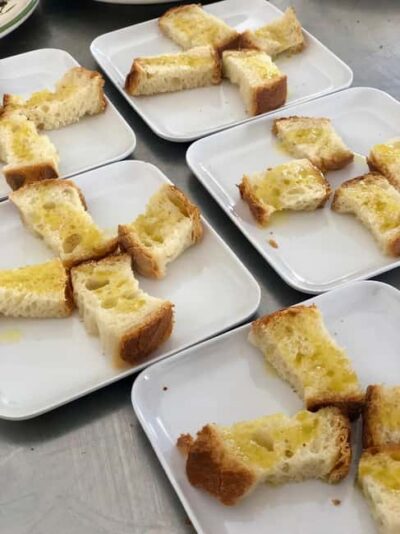
Masseria tour among thousand-year-old olive trees with oil tasting
Read our review →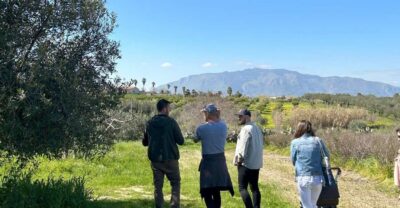
Olive Grove Tour with Wines & Olive Oil Tasting
Read our review →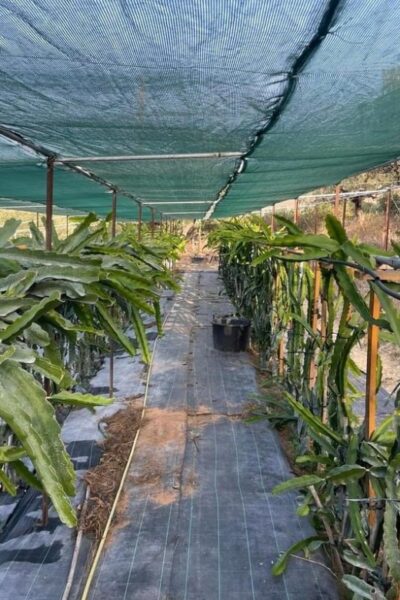
Traditional Olive Grove and Dragon Fruit Farm Tour
Read our review →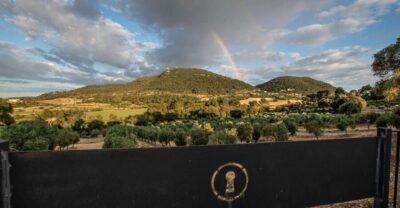
Visit of the olive grove, olive oil tasting and snack
Read our review →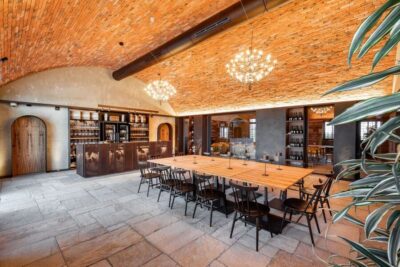
Olive Grove and Vineyard Tour with Product Tastings
Read our review →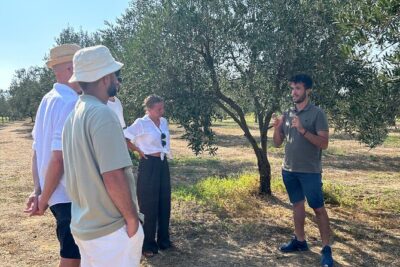
Balestrate Olive Grove Tour: Wine and Olive Oil Tasting
Read our review →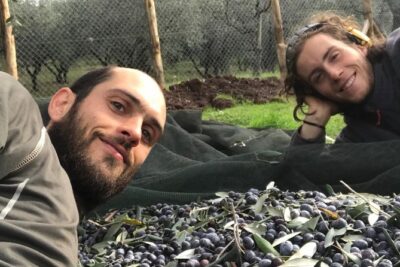
Guided tours of the olive grove with oil tasting.
Read our review →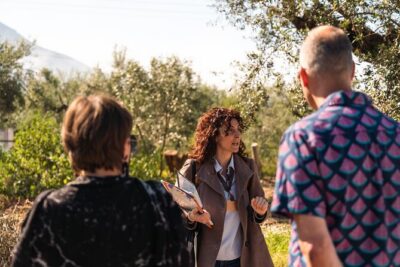
Organic Olive Grove tour & Olive oil tasting & lunch in Kalamata!
Read our review →Browse the lists this tour appears in