
REVIEW · CRETE
Pallada Semi-Private Olive Oil Tours in Sternes, Chania
Pallada’s tour begins among Greek olive trees, herbs, flowers, and vegetables, then moves into a working olive mill. That order matters. You first see where the fruit grows, then follow it through the machinery before sitting down to taste the finished oil.
I like the small maximum of eight people, since it gives you room to ask questions. I also like the tasting lesson: you sample four extra virgin oils and learn how to tell them apart, rather than simply pouring oil onto a saucer and calling it lunch. The main consideration is timing. At about 90 minutes, this is a focused introduction, not a full-day visit to Crete’s olive-growing countryside.
Key points to know before you book
- A botanical walk comes first: Pallada Kèpos includes olive varieties, native Cretan plants, flowers, herbs, and a small vegetable garden.
- You see real production equipment: The tour explains each stage inside the modern olive mill.
- Four oils are tasted: You learn a basic tasting method and compare oils made in-house.
- The group is capped at eight: This suits people who want direct conversation with the guide.
- Bill has led the tour: His explanations cover growing, harvesting, production, and cooking uses.
- Dakos finishes the visit: The traditional Cretan starter comes with the olive oil of your choice.
Starting among Sternes’ olive trees
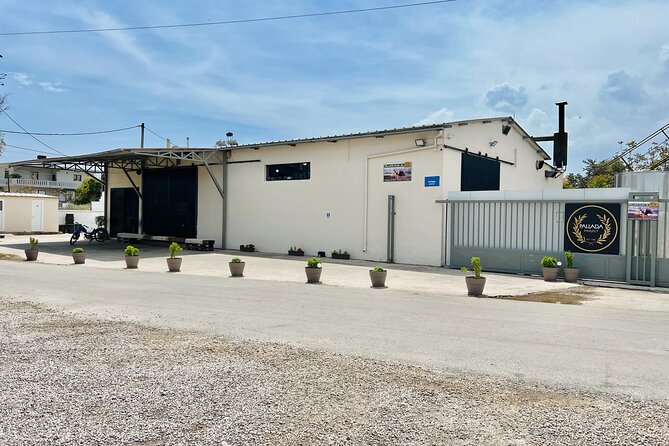
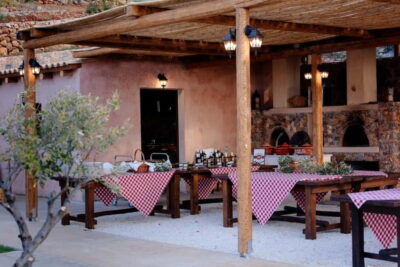
Pallada Olive Oil & Tours is at an unnamed road in Sternes, in the Chania area of Crete. The meeting point is also where the tour ends, so you do not need to arrange a second pickup point after the tasting.
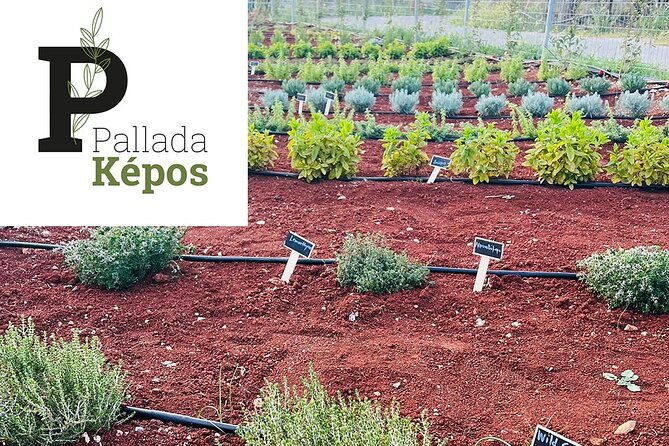
The visit opens at Pallada Kèpos, a small botanical park set among olive groves. This is a useful beginning because olive oil can seem like a finished product with no connection to farming. Here, you start with the trees, the fruit, and the plants that grow around them.
You’ll see several Greek olive tree varieties, along with native herbs and flowers of Crete. A small vegetable garden adds a practical touch. This is not presented as a grand public garden. It is a compact setting tied to the farm and the mill, which keeps the focus on local food and cultivation.
Your guide explains how the trees are cared for, how the olives develop, and what happens during cultivation and harvest. If you are new to olive farming, this is where the tour gives you the basic vocabulary and sequence you need before entering the factory.
The outdoor section also gives you a chance to ask questions early. Bill has been praised for explaining the process clearly and for answering many questions in a friendly way. The guide’s personal connection to olive farming helps turn technical points into everyday examples.
More Private Tours in Crete:
- PRIVATE-Knossos Palace-Zeus Cave-Olive Oil Tasting-Old Villages
★ 5.0 · 81 reviews - PRIVATE-Zeus Cave-Knossos-Olive oil Factory-Traditional Villages.
★ 5.0 · 69 reviews - Rethymno: Private Winery & Olive Oil Tasting Tour with Lunch
★ 5.0 · 56 reviews
Following the olives into the mill
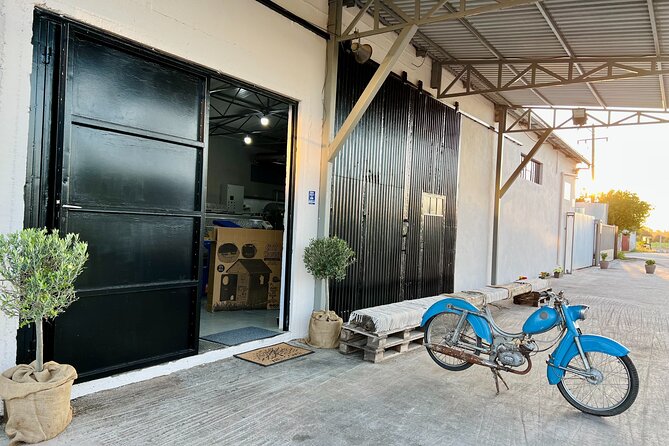
After the grove, you move into Pallada’s olive mill facilities. This is the practical center of the visit. You walk among modern production equipment while the guide explains the stages of olive oil production in order.
The value here is seeing the machinery rather than hearing only a general description. You can connect the fruit you just saw on the trees with the work required to produce the oil in the bottle.
The tour explains the full production process, from the harvested olive fruit through the steps that lead to finished oil. The supplied details do not specify the exact machinery or seasonal operating conditions, so you should think of this as an educational walk through the facilities, not a guarantee that every machine will be running during your visit.
That distinction is worth keeping in mind. The mill visit is strongest for people who want to understand how olive oil is made. If you mainly want a scenic orchard stroll, the botanical park may be your favorite part. If you cook often, the production explanation gives the tasting more meaning later.
The short format keeps the visit manageable. You are not spending half a day inside a factory, but you also are not rushing straight to a sales counter. The 90-minute schedule gives each part of the experience a clear place: grove, mill, tasting, and food.
Learning how to taste extra virgin olive oil
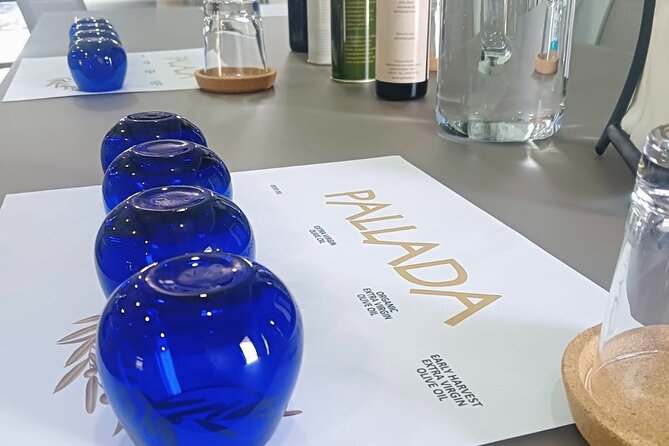
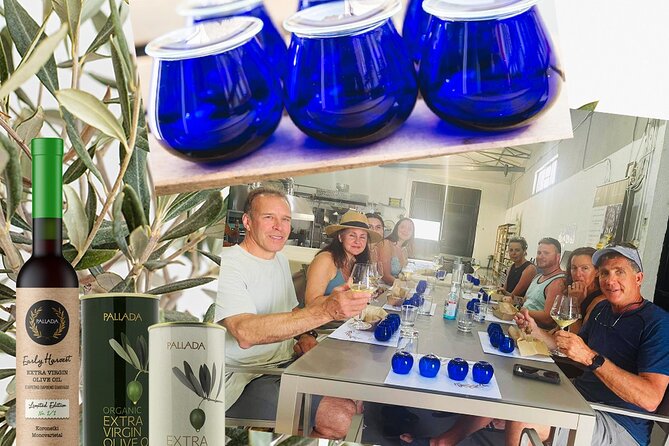
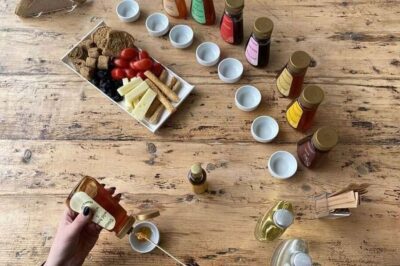
The tasting is more than a sample at the end. You learn how to taste an extra virgin olive oil and then compare four different oils made in-house.
That comparison is the heart of the visit. One oil can seem mild, grassy, peppery, fruity, or more bitter than another. The point is not to declare one universally best. It is to notice differences and decide what you prefer for bread, salads, vegetables, or cooking.
Several people have singled out the tasting lesson as especially useful. The tour helped them understand how to distinguish oils, and one participant who enjoys cooking considered it a particularly good fit. That makes sense: the session gives you a skill you can use after returning home.
You should arrive ready to pay attention to small contrasts. Taste each sample on its own before thinking about the food. Notice the aroma, the feel in your mouth, and the finish. The guide will explain the process, so you do not need to arrive with formal tasting experience.
The tour does not promise a broad regional tasting from many producers. All four oils are made in-house, which gives the session a clear focus but limits the comparison to Pallada’s own production. If you want to compare oils from several islands or brands, this is not that kind of event.
Still, four samples are enough to make the lesson useful. You will not simply hear that extra virgin oils differ. You will have several examples in front of you and a chance to connect the explanation with your own senses.
Ending with Cretan dakos
The final food is Cretan dakos, a traditional starter served with the olive oil of your choice. Dakos is a natural match for this tour because the dish lets the oil play a clear role rather than hiding it in a complicated recipe.
This is also a pleasant way to end a lesson-heavy visit. After walking through the olive grove and mill, you sit down with a simple Cretan preparation and decide which oil suits your taste. The food is made with Cretan-quality products, keeping the ending tied to the same local food culture introduced at the start.
The menu is limited. Dakos is the stated starter, and the available information does not list a larger meal, dessert, or drinks. You should book this as an olive oil visit with a traditional bite, not as a full culinary lunch.
That small plate still adds value. At $41.94 per person, the price covers a guided farm and mill visit, an educational tasting of four oils, and food. The value is strongest if you care about how Cretan products are grown and made. It is less compelling if you want a long meal or a broad cooking class.
A few more olive oil tours around Crete worth a look
- Crete: Quad Safari, Olive Mill with Tasting & Ghost Village
★ 4.9 · 1,004 reviews - From Chania: Olive Oil, Wine, Cheese & Honey Tasting Tour
★ 4.6 · 490 reviews - Crete: Road-trip to Lasithi, Zeus Cave & Olive Mill Farm
★ 4.4 · 451 reviews - From Chania: Wine and Olive Oil Tasting Tour with Snacks
★ 4.8 · 354 reviews
Why a group of eight changes the visit
The maximum group size is eight people. That is small enough to keep the tour conversational, especially during the tasting when several people may want to ask about flavor and quality.
A small group also matters in the mill. You should have a better chance of hearing the explanation and seeing the equipment without being separated from the guide. It is not a private tour, but it is much more personal than a large coach-group stop.
Families can participate, and most people can take part. Service animals are allowed. The experience is offered in English, so English-speaking visitors can follow the explanation without needing a translation service.
The small format does not mean the schedule will change around each person. The advertised duration is about one hour and 30 minutes, and the tour begins and ends at the same Sternes meeting point. Plan on giving the visit that full block of time.
Who will get the most from Pallada
I would choose this tour if you want a short, food-centered activity near Chania that explains one of Crete’s most important products. It suits people who enjoy meeting local producers, asking questions, and learning a useful tasting skill.
It is also a good match for cooks. The four-oil comparison can help you think about how oil behaves in simple dishes, and the dakos gives you a direct way to try the oil with food.
Families may appreciate the compact schedule. A 90-minute activity is easier to fit between other plans than a long farm excursion. Children who enjoy plants, machines, or tasting may find enough variety here, though the experience is clearly built around explanation rather than entertainment.
You should think twice if you need a fully specified menu, a long countryside drive, or a large number of producers for comparison. The visit centers on Pallada’s own grove, mill, oils, and Cretan starter.
The location is near public transportation, according to the supplied details, but no transport route or pickup service is specified. You need to make your own way to Pallada Olive Oil & Tours in Sternes unless your booking confirmation says otherwise.
Price, timing, and booking details
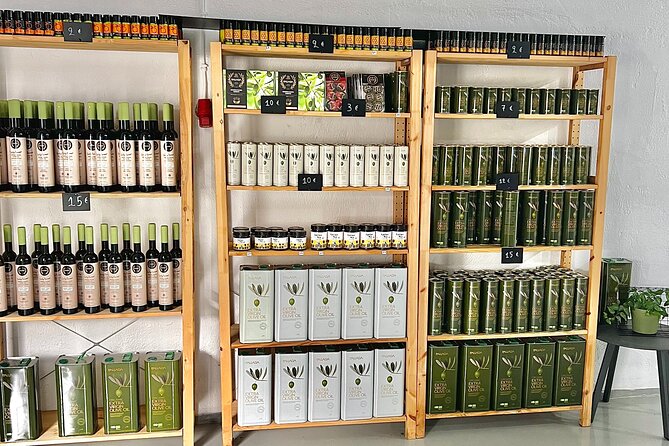
The listed price is $41.94 per person. For that amount, you receive about 90 minutes with a guide, a botanical walk, a visit to the mill, four oil samples, and dakos. I consider that fair value for a small-group food experience, especially because the tasting includes instruction rather than only free samples.
The tour is often booked about 21 days ahead. That does not guarantee that you must book three weeks early, but it is a useful sign if your dates in Chania are fixed. The group limit is only eight, so popular times can fill before larger activities do.
Confirmation is sent within 48 hours of booking, subject to availability. The experience is offered in English and uses a mobile ticket.
Cancellation is free if you cancel at least 24 hours before the local start time. A cancellation inside that 24-hour window is not refunded, and changes made during that period are not accepted. Keep that rule in mind before booking it alongside another fixed activity.
What the strongest praise tells you
The clearest strength is the teaching. The most positive feedback focuses on learning about olive growing, harvesting, production, and the differences between oils. That tells you what to expect from the tone: this is not just a pretty stop with a quick sample.
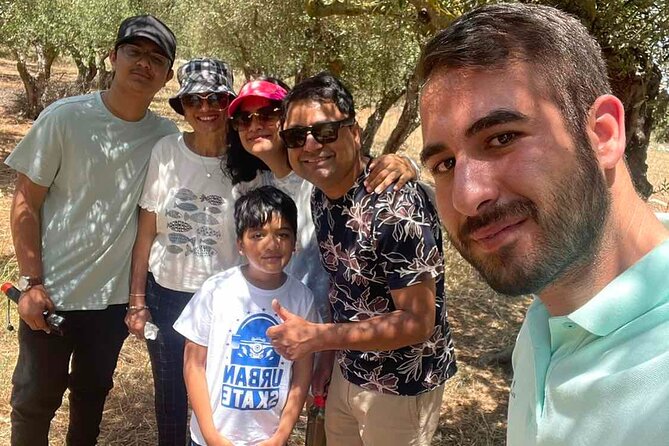
Bill is specifically praised for giving a clear overview, answering questions, and making the tasting educational. His role appears especially valuable for people who want plain explanations rather than a formal lecture.
The other strong point is the personal scale. A group of eight or fewer allows the guide to respond to individual questions. That is useful when you are trying to understand why one oil tastes sharper or more fragrant than another.
The one less enthusiastic rating still describes the visit as a small olive oil factory with a friendly local olive farmer leading the tour. I read that as a useful description of the experience’s character. It is small and personal, not a polished theme park attraction or a major industrial museum.
Should you book this olive oil tour?
Book Pallada if you want a short, practical introduction to Cretan olive oil and prefer a small group to a large organized stop. The combination of olive trees, production equipment, four tastings, and dakos gives the visit a logical shape, and the price is reasonable for what is included.
I would especially recommend it to cooks, food lovers, families seeking a manageable activity, and anyone curious about how a local product reaches the table. You should skip it if your priority is a long meal, several independent olive oil producers, or a full-day rural excursion.
For most people with an open 90-minute slot near Sternes, Pallada offers a focused look at a central part of Cretan food culture. Bring your questions, pay attention during the tasting, and give yourself enough time to reach the meeting point.
FAQ
Where does the Pallada olive oil tour start and finish?
The tour starts at Pallada Olive Oil & Tours on an unnamed road in Sternes, 731 00, Greece. It ends back at the same meeting point.
How long does the experience last?
The tour lasts approximately one hour and 30 minutes.
How much does the tour cost?
The listed price is $41.94 per person.
How many people can join the tour?
The maximum group size is eight people.
What language is the tour offered in?
The experience is offered in English.
How many olive oils will I taste?
You will taste four different extra virgin olive oils made in-house and learn how to distinguish their differences.
What is the cancellation policy?
You can cancel for a full refund up to 24 hours before the local start time. Cancellations or changes made less than 24 hours before the start are not accepted for a refund.
Just added around Crete
- 1 hour and 30 minutes wines and olive oil tasting in Greece★ 5.0 · 2 reviews
- Crete in a Day: Knossos, Soap Workshops, Olive Oil & Wine Tasting★ 5.0 · 5 reviews
- Traditional Olive Oil Making at Spiridi Olive Oil Farm – Crete★ 5.0 · 3 reviews
- Full Day Spinalonga Elouda Agios Nikolaos Olive factory Tour★ 4.5 · 5 reviews
- PRIVATE Workshop ESSENTIAL OILS & OLIVE OIL Factory with TASTING★ 5.0 · 5 reviews
- Guided Tasting of 3 Extra Virgin Olive Oils at Douloufakis Winery★ 5.0 · 2 reviews
- Shore Escape: Chania, Monastery & Olive Oil Tasting★ 5.0 · 6 reviews
- Private Guided Tour to Lasithi Plateau Villages & Olive Oil Mill★ 5.0 · 5 reviews
Crete Olive Oil Tours, compared.
Road-trip to Lasithi, Zeus Cave & Olive Mill Farm
Read our review →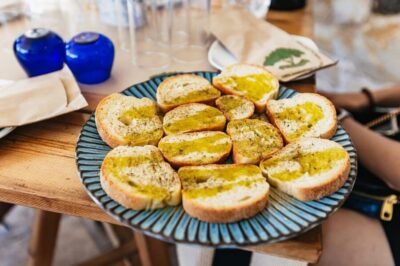
Zeus Cave, Lassithi Plateau, and Olive Factory Tour
Read our review →
Full-Day Cretan Wines, Olive Oil, Raki and Food Tour
Read our review →
Richtis Waterfall Full-Day Tour with Olive Tasting
Read our review →Browse the lists this tour appears in