
REVIEW · CRETE
Shore Escape: Chania, Monastery & Olive Oil Tasting
Crete reveals itself best in small pieces, and this private tour strings together four useful ones: village life, monastic tradition, olive oil, and Chania’s Venetian harbor. You move from quiet country lanes to one of the island’s most appealing towns without having to arrange transport yourself.
I like the private format, which lets your guide adjust the pace for your group, and I like the way olive oil is treated as part of daily Cretan life rather than as a quick shop stop. The included Greek coffee or fresh orange juice in the village is a nice local touch.
The main drawback is time. Five and a half hours gives you a good introduction, but only 90 minutes in Chania and 30 minutes at the monastery mean you will need to keep moving. The price, $762.51 for up to three people, also makes the most sense for a small group sharing the cost.
Key points to know before booking
- Four very different stops: A traditional village, Saint George Monastery, Kanakis Olive Mill, and Chania give the tour a broad Cretan focus.
- Private touring for up to three people: Your group travels alone, with an English-speaking guide and a flexible pace.
- A practical olive oil lesson: You see how oil moves from grove to bottle, then taste the finished product.
- Chania time is focused: The 90-minute visit covers the Old Town and Venetian Harbor, but it is not enough for a full city day.
- Comfortable transport is included: The air-conditioned vehicle has USB sockets, bottled water, and child seats on request.
- Pickup is arranged personally: The company confirms the meeting details with you before the tour, so you do not need to find a public departure point.
Why this route works in half a day
Many Crete excursions chase one major sight and spend much of the day on the road. This one has a more useful rhythm. You begin with a village, see the island’s religious and agricultural past at the monastery, learn about olive oil at a working mill, and finish in Chania, where several centuries of outside influence meet in a compact old center.
That range is the real value. You are not only looking at buildings. You are getting a sense of how Cretan food, faith, village life, and trade fit together.
The private setup matters here. Your guide can explain local details as you go, answer questions, and adjust the time spent at each stop when possible. Cherry Travel has used guides such as Alexander and Elena on its wider Crete excursions. The guide assigned to your date may be different, but the company’s service is built around personal pickup, local recommendations, and private touring rather than a large coach group.
The start time is 10:00 a.m., and the total duration is about five hours and 30 minutes. That makes this a sensible choice for a port call, a free morning followed by dinner, or a day when you want to see Chania without giving up the rest of your schedule.
More Olive Oil Tastings in Crete:
- From Chania: Wine and Olive Oil Tasting Tour with Snacks
★ 4.8 · 354 reviews - Olive Oil Tasting Tour
★ 5.0 · 195 reviews - Crete: Richtis Waterfall Full-Day Tour with Olive Tasting
★ 4.8 · 188 reviews
A traditional village and the slower side of Crete
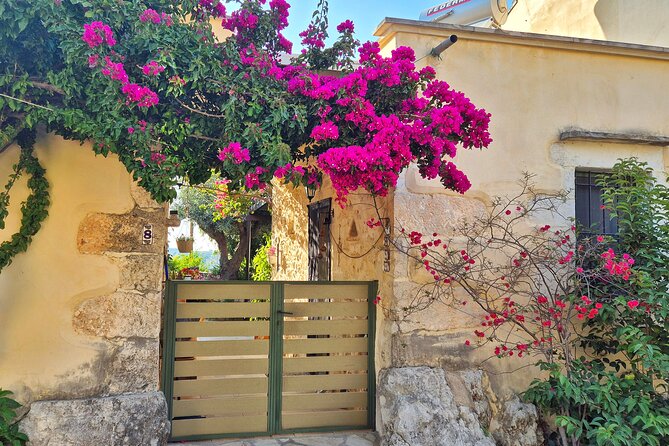
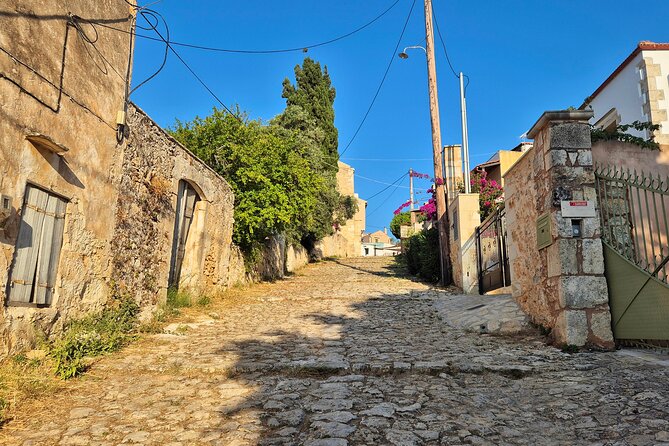
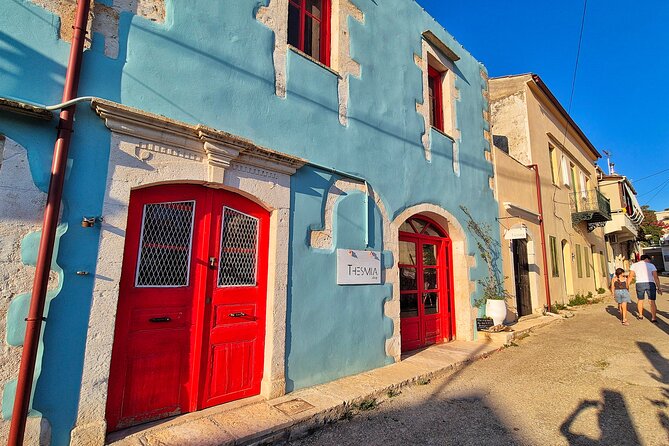
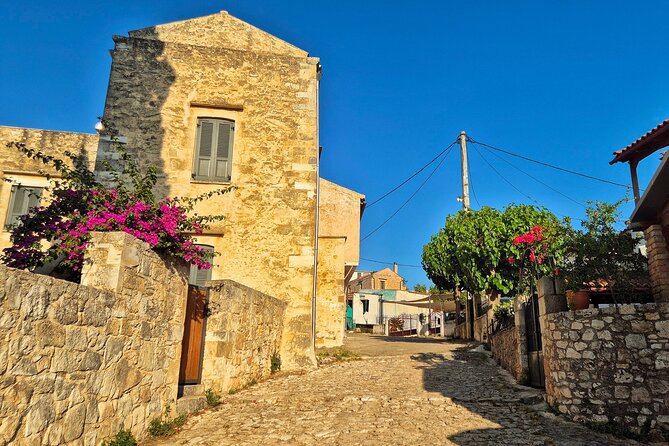
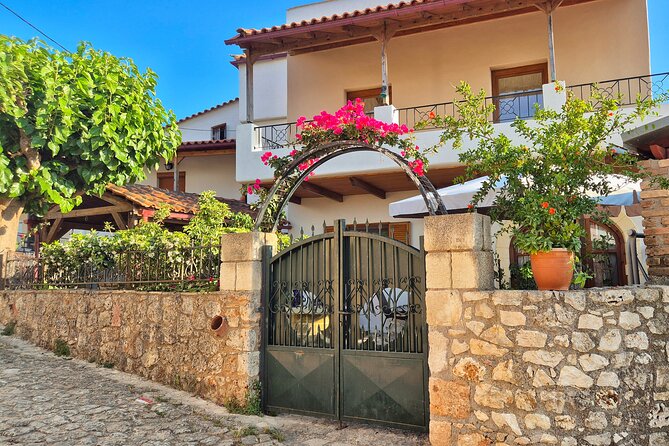
The first stop lasts about an hour and takes you into a traditional Cretan village in the 730 08 area. The description points to narrow lanes, stone houses, flowering courtyards, and a pace shaped by local routines rather than sightseeing crowds.
This is where the tour starts to feel personal. Instead of beginning with a major monument, you see the ordinary setting that gives the island its character. The included Greek coffee or fresh orange juice adds a simple social detail. It is not just a refreshment break. It gives you a moment to sit, look around, and begin the day at a Cretan pace.
You can expect to walk through lanes and open areas, so sensible shoes will help. The available information does not specify a café, meal, or formal village demonstration, so you should think of this as a guided visit rather than a cooking or craft workshop.
I especially like this opening for visitors who want more than postcard views. A large town can show you architecture, but a small village offers clues about everyday life: the shape of the homes, the shaded courtyards, and the way old and new sit together.
The tradeoff is that the village is described in general terms rather than with one named landmark. If you prefer a tour built around famous ruins, this may feel understated. If you like places where the setting matters as much as the attraction, it is a good beginning.
Saint George Monastery and an old olive press
The next stop is Saint George Monastery, a 17th-century religious site surrounded by olive groves and quiet countryside. The visit lasts about 30 minutes, so expect a short, focused look rather than a long monastery tour.
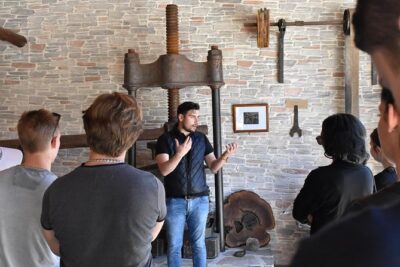
The most interesting feature is the old olive press. It connects the spiritual life of the monastery with the agricultural work that supported it. That link prepares you well for the next stop at Kanakis Olive Mill, where olive oil is still the focus, but in a modern family business.
The monastery preserves original stone architecture and carries a sense of rural isolation. You may find the silence more memorable than any single object. This is a place for slowing down, noticing the building materials, and considering how religious centers once served as working parts of local communities.
The short visit also keeps the tour moving. Thirty minutes is enough for an introduction, photographs, and an explanation from your guide, but it will not satisfy someone hoping to study every corner of the site. The tour information does not list an admission charge, so the visit is included without a separate ticket cost.
Dress respectfully for a religious site. The supplied details do not state a formal dress code, but modest clothing is a sensible choice at a monastery.
Kanakis Olive Mill turns lunch-table culture into a lesson
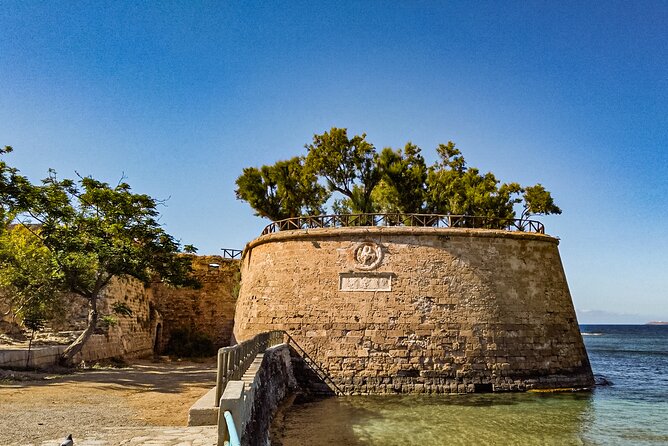
At Kanakis Olive Mill, you visit a family-owned olive oil factory for about 50 minutes. This is the tour’s most hands-on food stop, although the activity is centered on learning and tasting rather than a full meal.
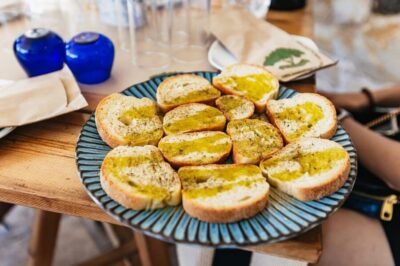
You will follow the process from olive grove to bottle and taste extra virgin olive oils made in Crete. A good tasting gives you a better idea of why olive oil is more than a cooking ingredient here. You can compare flavors, notice texture, and connect the product to the groves and old press you have just seen.
The tasting is included. Dinner is not, so plan to eat later or arrange another meal during your stay. The tour includes bottled water, but there is no indication that food beyond the village drink is provided.
I like the order of these stops. Seeing an old press at Saint George Monastery first gives the mill visit some context. You are not looking at production as an isolated commercial activity. You have already seen how olive growing has been tied to Cretan rural life for generations.
The mill is also a useful shopping stop for anyone who wants to take olive oil home, though the supplied information does not promise a retail purchase option. Ask your guide what is available rather than assuming you can buy or ship bottles.
Because the tour is private, this is a good moment to ask questions. You can ask your guide or the mill staff about tasting notes, storage, or how the oils differ. The exact depth of the demonstration may depend on the day and the operation at the mill, so do not expect a lengthy factory visit.
A few more olive oil tours around Crete worth a look
- Crete: Quad Safari, Olive Mill with Tasting & Ghost Village
★ 4.9 · 1,004 reviews - From Chania: Olive Oil, Wine, Cheese & Honey Tasting Tour
★ 4.6 · 490 reviews - Crete: Road-trip to Lasithi, Zeus Cave & Olive Mill Farm
★ 4.4 · 451 reviews - The Terra Creta Olive Oil Experience Tour
★ 4.7 · 344 reviews
Chania in 90 minutes: harbor first, side streets second
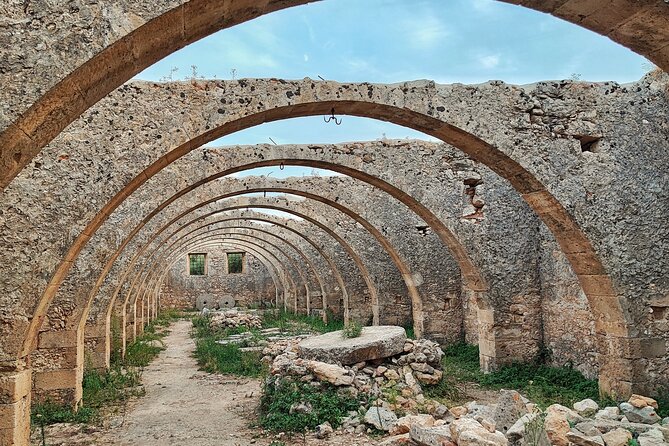
Chania gets the longest stop, at about 90 minutes. That is enough for a strong first look at the Old Town, but you should set your priorities before you arrive.
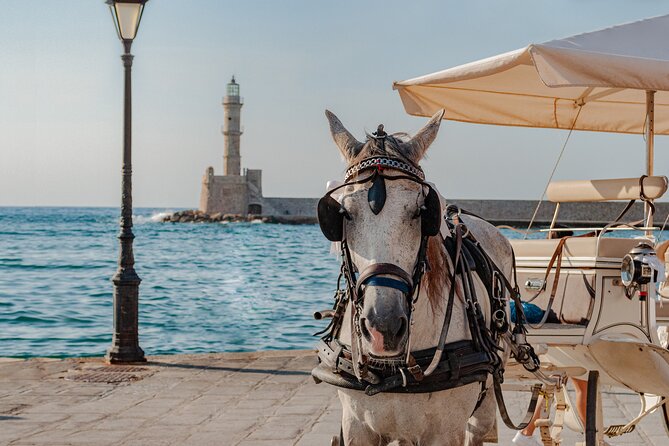
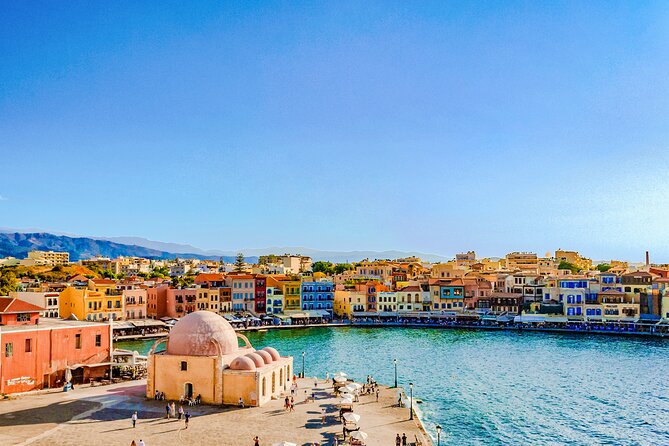
Begin at the Venetian Harbor, the city’s most recognizable area. Pastel buildings line the waterfront, cafés fill the edges, and the 16th-century lighthouse gives the harbor its familiar profile. It is an easy place to get your bearings and a good setting for photographs.
Then follow your guide into the Old Town. The lanes bring together Venetian, Ottoman, and Byzantine influences, with old townhouses, churches, courtyards, leather shops, markets, and small artisan stalls. The appeal is in the changes from one street to the next. A grand waterfront view can quickly give way to a narrow lane with a more local feel.
The tour description highlights Chania as a meeting point between East and West. That is useful context, but you do not need a long lecture to notice it. The architecture shifts, the street plan changes, and the harbor reflects the city’s long connection with outside powers and trade.
Ninety minutes will not cover every lane or museum. You probably will not have time for a relaxed café meal, extended shopping, and a full museum visit all at once. I would use the time for a walking circuit, the harbor, a few side streets, and one quick stop for a purchase or photograph.
If you want a deeper Chania experience, treat this excursion as an introduction and return independently later. The guide can recommend restaurants and attractions elsewhere in Crete, which is useful if you have another free afternoon.
The vehicle and guide make the day easier
Pickup is offered, but the company arranges the exact details with each group before the tour. That is helpful if you are staying at a hotel or need a pickup suited to your location. The listed start time is 10:00 a.m.
Transport is by air-conditioned vehicle with USB sockets. For a warm Cretan day, air conditioning is not a minor perk. The route includes rural roads and several stops, so a comfortable vehicle helps keep the half-day pleasant.
Bottled water is included. Infant seats and child booster seats are available at no extra charge if requested in advance. Most people can take part, although the details do not provide a full accessibility assessment, so contact Cherry Travel if your group has specific mobility needs.
The tour is private, with only your group participating. Up to three people can book for the listed group price. At $762.51, the per-person cost is about $254.17 for three people, before considering any exchange-rate difference or booking fees. For one person, the price is high. For three people who value private transport and a guide, it becomes easier to justify.
You are paying for more than entry tickets. The stops list no admission fees, so the price mainly covers the private vehicle, driver-guide service, planning, pickup, and local interpretation. If you would otherwise hire a car, pay for fuel, navigate unfamiliar roads, and arrange an olive mill visit, the package may offer fair value. If you are comfortable using public transport and exploring Chania alone, it is harder to defend the cost.
What the strong service record suggests
The company’s wider private tours have been led by guides including Alexander and Elena. Their service style centers on historical explanation, local stories, careful driving, and adapting the day to a group’s interests. One family excursion also included children from age five to 20, suggesting that the company is comfortable shaping explanations for mixed-age groups.
That does not guarantee the exact guide or exact conversation on your date. It does tell you what to ask for when booking. If you care most about Cretan history, food, family-friendly pacing, or photography, mention it before pickup.
The strongest pattern is personal attention. The company offers local restaurant and attraction recommendations, communicates before the tour, and provides child seating on request. Those details matter more on a private excursion than they would on a standard bus tour because they are part of what you are paying for.
Who should book this Crete tour?
I would choose this outing if you want a compact introduction to western Crete and prefer someone else to handle the driving. It suits couples, a small family, or a group of up to three friends who want village scenery, food culture, a historic religious site, and Chania in one day.
It is also a good fit if you have already seen major archaeological sites and want something more connected to daily life. The village and olive mill give the day a grounded feel, while Chania supplies the classic urban setting.
I would look elsewhere if your main goal is a long Chania visit, a full meal, extensive shopping, or a major museum. I would also think twice if you are traveling alone and watching your budget closely. The fixed group price is much more attractive when shared by three people.
The tour requires good weather. If poor conditions cancel the outing, you can take another date or receive a full refund. You can cancel for a full refund up to 24 hours before the start time, but late cancellations and changes are not accepted.
Should you book it?
Book this tour if you want a private, well-paced sampler of Crete rather than a single headline attraction. The village, monastery, and olive mill add context to the better-known stop in Chania, and the included tasting gives the route a clear food connection.
The decision comes down to price and priorities. For three people who value comfort, pickup, an English-speaking guide, and a flexible private day, the $762.51 group rate can make sense. For one person, or for anyone wanting several unhurried hours in Chania, the tour is less convincing.
FAQ
How long does the tour last?
The experience lasts approximately five hours and 30 minutes.
What time does the tour start?
The listed start time is 10:00 a.m.
Is hotel pickup available?
Yes. Pickup is offered, and the company arranges the details with each group before the tour.
How many people can join the private tour?
The listed price covers a private group of up to three people.
What language is the tour offered in?
The tour is offered in English.
Is olive oil tasting included?
Yes. Olive oil tasting at Kanakis Olive Mill is included.
What drink is included in the village?
You receive either Greek coffee or fresh orange juice in the village.
Is food or dinner included?
Dinner is not included. The tour information does not list a meal beyond the village drink.
Are child seats available?
Yes. Infant seats and child booster seats are available free of charge when requested.
What happens if bad weather cancels the tour?
If poor weather causes cancellation, you will be offered another date or a full refund.
Just added around Crete
- PRIVATE Workshop ESSENTIAL OILS & OLIVE OIL Factory with TASTING★ 5.0 · 5 reviews
- Guided Tasting of 3 Extra Virgin Olive Oils at Douloufakis Winery★ 5.0 · 2 reviews
- Private Guided Tour to Lasithi Plateau Villages & Olive Oil Mill★ 5.0 · 5 reviews
- Olive oil Tasting and Cretan Cuisine★ 5.0 · 2 reviews
- Wine olive and Food of Crete, Heraklion★ 5.0 · 11 reviews
- Crete Discovery Palace of Knossos, Wine and Olive Oil Experience★ 5.0 · 9 reviews
- Olive Oil Food Pairing in Crete★ 5.0 · 2 reviews
- Cretan Farm Tour with Cheese-Making, Olive Oil Tasting & Picnic★ 5.0 · 10 reviews
Olive Oil Tastings, compared.
The Governor’s Olive Mill Tour with Olive Oil Tasting
Read our review →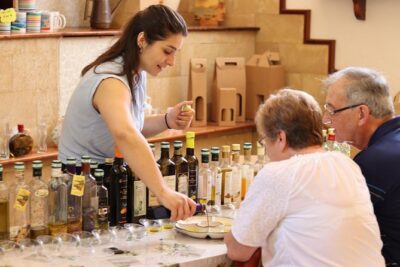
Masseria tour among thousand-year-old olive trees with oil tasting
Read our review →
Olive Grove Tour with Wines & Olive Oil Tasting
Read our review →
Bardolino: Lake Garda Oil Mill Tour with Olive Oil Tasting
Read our review →
Guided tour and olive oil tasting in Alhaurin el Grande (Málaga)
Read our review →Browse the lists this tour appears in