
REVIEW · CRETE
Guided Tasting of 3 Extra Virgin Olive Oils at Douloufakis Winery
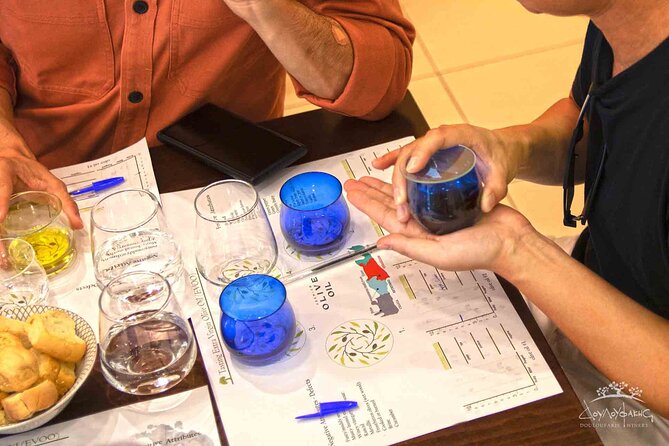
The best part of this one-hour tasting is the side-by-side comparison. You try three Koroneiki extra virgin olive oils from different parts of Crete, so the changes in aroma, fruit, and pepper are easier to notice than they would be with a single bottle.
I like two things here. First, Katerina explains both the tasting method and the traditional production process in plain, useful terms. Second, the small group limit of nine people should give you room to ask questions rather than simply watch a lecture.
The main drawback is that this is an olive oil tasting, not a full winery tour or meal. Water and Cretan rusks are included, but additional food and drinks are not, and you must make your own way to Douloufakis Winery in Dafnes.
Key Points
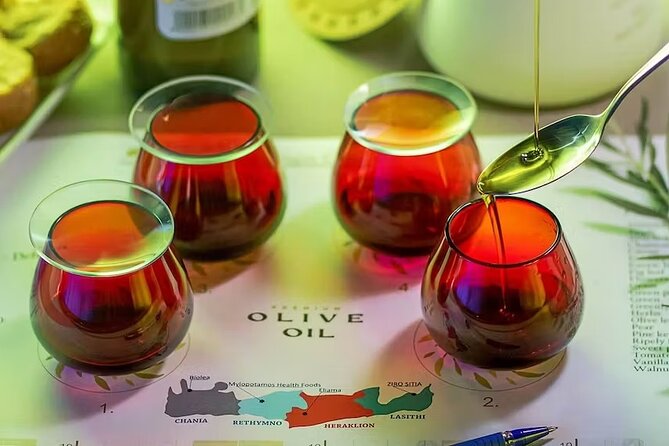
- Three oils, one grape-sized lesson in terroir: Compare Koroneiki oils from Shteia and Agia Varvara to see how place can affect taste.
- Katerina leads the tasting: Learn how to smell, swirl, and identify flavor notes, along with traditional production methods.
- A compact one-hour format: This fits neatly into a day exploring the Heraklion area without taking over your schedule.
- Small group setting: The activity accepts a maximum of nine people, a useful size for questions and discussion.
- Simple Cretan pairings: Water and Cretan rusks are provided, while extra food and drinks cost more.
- Easy arrival by car: Parking is included, but hotel pickup and drop-off are not.
Why Three Koroneiki Oils Make This Tasting Worth Your Time
Olive oil can seem simple until you taste several good examples next to each other. A bottle used for cooking may taste merely oily. A careful tasting reveals fruit, bitterness, grass, herbs, and a peppery finish. Comparing oils in the same sitting helps you notice those differences without relying on a label.
This session focuses on Koroneiki, a well-known Greek olive variety. The oils come from Shteia and Agia Varvara, giving the tasting a clear local comparison. You are not sampling three unrelated products with no context. You are looking at how oils made from the same broad variety can show different character when they come from different places.
That is the real value of the experience. The tasting gives you a small lesson in terroir, the way growing conditions and place influence a food or drink. You do not need prior knowledge. You only need a willingness to smell, taste, and compare.
I also like that the hosts explain what you are doing before asking you to judge the oils. You learn the proper way to smell and swirl, then look for flavor profiles. That approach is more helpful than simply being handed three samples and told which one is best.
More Olive Oil and Wine Tours in Crete:
- From Chania: Olive Oil, Wine, Cheese & Honey Tasting Tour
★ 4.6 · 490 reviews - From Chania: Wine and Olive Oil Tasting Tour with Snacks
★ 4.8 · 354 reviews - Crete: Full-Day Cretan Wines, Olive Oil, Raki and Food Tour
★ 5.0 · 264 reviews
Starting at Douloufakis Winery in Dafnes
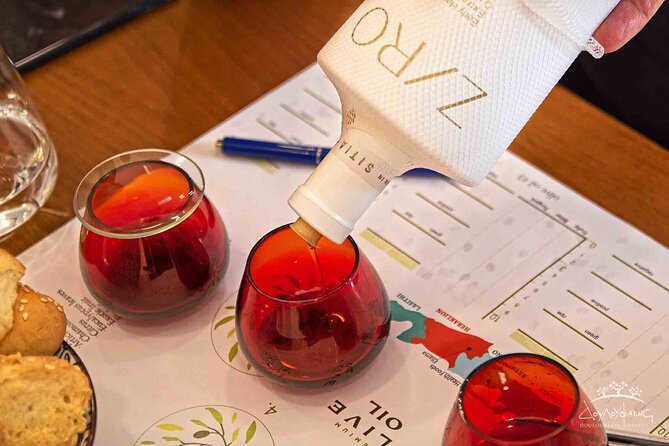
The meeting point is Douloufakis Winery, Dafnes 700 11, Greece. The activity begins and ends at the winery, so there is no complicated transfer between tasting rooms or separate departure points.
Parking is included, which matters if you are driving through the Heraklion area. The winery is also near public transportation, although no specific route or schedule is provided. Hotel pickup and drop-off are not part of the price, so you need to arrange your own transport.
Your mobile ticket is useful for a quick arrival. Confirmation is sent at the time of booking, so you should have the details ready on your phone. Since the location is in Dafnes, check your route before setting out and allow enough time to arrive without rushing the opening explanation.
The one-hour length makes this easy to pair with other plans. You can treat it as a focused stop rather than a full-day outing. If you are building a schedule around several wineries, meals, or archaeological sites, the short format gives you flexibility.
Learning How to Smell, Swirl, and Taste
The first practical lesson is how to approach the oil. Your hosts show you how to smell it, swirl it, and pay attention to what changes as the oil moves around your palate. These steps may sound basic, but they give you a method you can use again at home.
The point is not to act like a professional taster. It is to slow down enough to notice the oil before mixing it with food. You may find fruity notes in one sample, a stronger peppery finish in another, or a different balance of bitterness and aroma.
Katerina is named as one of the hosts, and her part of the session includes explanations of traditional production methods. She also offers practical tips for recognizing differences between oils. That is useful for anyone who buys olive oil and wants to understand more than the words on a label.
A good tasting guide does not tell you what you must taste. Instead, you are given a vocabulary and a process. If you smell something fruity while another person notices herbs, both observations can be useful. The value comes from learning how to pay attention.
Comparing Oils from Shteia and Agia Varvara
The three oils are selected from different regions, with oils from Shteia and Agia Varvara included in the comparison. The session uses those differences to show how origin can affect the final product.
One oil may lean toward fresh fruit, while another may finish with more pepper. The exact impressions will depend on the samples being served, but the purpose is clear: you compare the oils directly rather than trying to remember flavors from separate meals.
This is where the tasting becomes more than a quick sample. You can consider which oil you prefer for dipping, which might suit a salad, and which has enough character to use sparingly over a finished dish. The session does not promise a cooking class, so those food uses are your own conclusions, but the comparison gives you a better basis for making them.
The oils also tell a story about production and place. Katerina explains traditional methods, helping connect the flavor in your glass or tasting cup to the work behind it. You come away with a clearer sense that extra virgin olive oil is not one uniform product.
More Guided Tours in Crete:
- Kleanthi Olive Farm: Guided Tour with Local Delicacies Tasting
★ 5.0 · 51 reviews - Private Guided Tour to Lasithi Plateau Villages & Olive Oil Mill
★ 5.0 · 5 reviews - Guided tour and olive oil tasting in Alhaurin el Grande (Málaga)
★ 5.0 · 200 reviews - Guided Tasting Tour in 16th century House and Olive Oil Factory
★ 5.0 · 169 reviews
Cretan Rusks and the Limits of the Snack
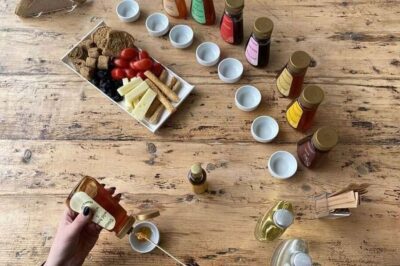
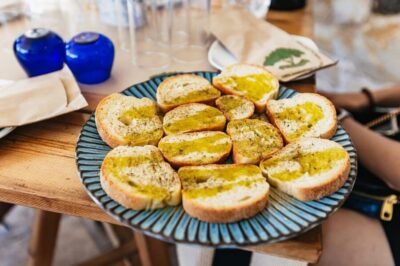
Cretan rusks are included with the tasting, along with water. The rusks give you a simple way to taste the oils with a familiar local food, and they help keep the session from feeling like a series of samples with nothing to accompany them.
Still, keep your expectations in check. This is not advertised as a full meal, and additional food and drinks are not included. If you need lunch or want to sample more local products, plan another stop before or after the winery.
The modest refreshment fits the one-hour format. You are here to focus on the oils, not to spend an afternoon at a long table. For some people, that is an advantage. For others, the lack of a larger food pairing may feel limiting, especially if they expected a complete culinary event.
What the $24.08 Price Buys You
At $24.08 per person, the price is reasonable if you want instruction and comparison rather than just a taste. You are paying for three oils, a guided method, explanations of production, water, Cretan rusks, parking, and a small-group setting.
The value is strongest for people who are curious about buying or using olive oil. A bottle can be expensive, and it is easy to choose based only on packaging or vague claims. Learning how to identify aroma, bitterness, and a peppery finish can help you make better choices later.
The price is less compelling if you only want a quick drink or expect a broad winery visit. The activity centers on olive oil, and the stated duration is about one hour. Wine tasting, a full meal, and hotel transport are not included.
The maximum group size of nine helps support the price. A smaller group usually gives the host more time to answer questions and keeps the tasting personal. The available rating information is very limited, with only two reviews, so I would not treat the perfect score as enough reason to book on its own. The format and contents are the stronger basis for deciding.
Who Will Enjoy This Most
I would choose this tasting if you enjoy food with a story behind it, especially if you are already planning time in or around Heraklion. It suits couples, solo visitors, and small groups who want a quiet, structured activity instead of a large production.
It is also a good choice for first-time olive oil tasters. You do not need specialist knowledge, and the host explains the steps. The comparison between three oils gives beginners something concrete to notice.
Food-focused visitors will get the most from the production discussion and tasting tips. You may also appreciate the session if you are looking for a souvenir beyond the usual postcard. The tasting can help you decide what style of oil you prefer before buying a bottle, although the provided details do not state whether oil purchases are available at the winery.
Families may find the short length manageable, and service animals are allowed. Most people can participate. The activity does not list strenuous walking or any special physical requirement.
Who May Want a Different Winery Stop
You may want another activity if your main goal is a full wine tour, a long meal, or transportation from your hotel. This tasting does not include hotel pickup or drop-off, and the supplied details do not promise a wider winery tour.
It may also feel too brief if you want a full afternoon of agricultural sightseeing. The one-hour schedule is focused and practical, but it leaves little room for a broad program.
If you prefer to taste without instruction, the guided format may feel more structured than necessary. The host takes you through smelling, swirling, and identifying flavors. That is useful for most people, but it is not a casual stop where you simply sample and move on.
Timing, Group Size, and Practical Details
Plan on about one hour at Douloufakis Winery. The activity starts and finishes at the meeting point, which keeps the logistics simple once you arrive.
A mobile ticket is accepted, and confirmation arrives at booking. Parking is included. The location is near public transportation, but you should check the route yourself because no transport schedule is provided.
The maximum group size is nine. That is small enough for a more direct exchange with the host and large enough to have a few different reactions during the tasting. If you want to ask about production or learn how to recognize quality, the group limit is a useful feature.
Free cancellation is available if you cancel at least 24 hours before the local start time. Cancel within 24 hours, and the payment is not refunded. Changes made during that same period are not accepted, so check your plans before the cutoff.
The experience is often booked well ahead, with an average of 48 days in advance. That suggests you should not leave it until the last minute if the date matters to you, though availability can change.
A Better Way to Approach the Tasting
Come ready to compare, not to find a single winner. Start with the aroma, note your first impression, then taste slowly. Pay attention to how the flavor begins and how it finishes.
You can also make a small mental note of which oil feels most useful to you. Perhaps you prefer a softer, fruitier style, or perhaps the peppery finish is what makes an oil interesting. There is no required answer.
Listen closely when Katerina discusses production. The tasting is not only about naming flavors. It is also about understanding how traditional methods and regional differences can shape what reaches your table.
The Cretan rusks are there to help you taste the oil with food, but do not let the snack replace the tasting itself. Try the oils on their own first if the host presents them that way, then use the rusk to see how the character changes.
Should You Book This Olive Oil Tasting?
Book it if you want a short, focused introduction to Cretan olive oil, especially if you value expert guidance and a small group. The three-oil comparison, regional focus, production talk, and practical tasting tips give the $24.08 price a solid purpose.
Skip it if you are searching for a full meal, a wine-centered tour, or hotel transport. The experience is deliberately narrow. That is its strength for curious food lovers, but its limitation for anyone expecting a broad winery visit.
For me, the best reason to book is the chance to taste oils from Shteia and Agia Varvara side by side. You will leave with more than a pleasant snack. You will have a method for smelling, tasting, and judging olive oil the next time a bottle catches your eye.
FAQ
Where does the olive oil tasting take place?
It takes place at Douloufakis Winery in Dafnes 700 11, Greece.
How long does the experience last?
The tasting lasts approximately one hour.
How many olive oils will I taste?
You will taste three extra virgin olive oils made from the Koroneiki variety.
Where do the olive oils come from?
The oils are sourced from Shteia and Agia Varvara.
Who leads the tasting?
Katerina is named as a host who explains the tasting process, traditional production methods, and ways to recognize differences in the oils.
What food and drinks are included?
Water and Cretan rusks are included. Additional food and drinks are not included.
Is parking available?
Yes. Parking is included at the experience.
Is hotel transportation provided?
No. Hotel pickup and drop-off are not included. The winery is near public transportation.
What is the cancellation policy?
You can cancel for a full refund at least 24 hours before the local start time. Cancellations or changes made within 24 hours are not accepted, and the amount paid is not refunded.
Just added around Crete
- PRIVATE Workshop ESSENTIAL OILS & OLIVE OIL Factory with TASTING★ 5.0 · 5 reviews
- Private Guided Tour to Lasithi Plateau Villages & Olive Oil Mill★ 5.0 · 5 reviews
- Shore Escape: Chania, Monastery & Olive Oil Tasting★ 5.0 · 6 reviews
- Olive oil Tasting and Cretan Cuisine★ 5.0 · 2 reviews
- Wine olive and Food of Crete, Heraklion★ 5.0 · 11 reviews
- Crete Discovery Palace of Knossos, Wine and Olive Oil Experience★ 5.0 · 9 reviews
- Olive Oil Food Pairing in Crete★ 5.0 · 2 reviews
- Cretan Farm Tour with Cheese-Making, Olive Oil Tasting & Picnic★ 5.0 · 10 reviews
Olive Oil & Wine Tours, compared.
Sorrento Farm and Food Experience including Olive Oil, Limoncello, Wine tasting
Read our review →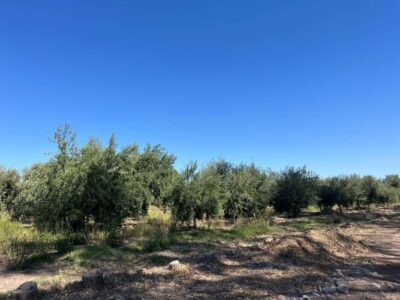
Lemon, Olive Oil and Wine Tasting Tour with Lunch
Read our review →

Browse the lists this tour appears in