
REVIEW · SPAIN
Aires de Jaén: Olive Oil Plantation Tour and Local Meal
The most interesting part of this Andalusian outing is that it treats olive oil as both a farm product and a food worth studying. At Finca Badenes, you see three growing methods, follow the mechanical production process, then learn how to taste extra virgin olive oil properly.
I like the small group of six because it gives you room to ask practical questions. I also like the meal pairing, which turns a technical farm visit into a proper taste of local food. The main catch is timing: the orchard visit and restaurant meal may not run back to back, so you need to allow extra time if you have onward plans.
Key points to know before booking
- Three olive-growing methods: Compare super-intensive, intensive, and traditional cultivation in the same Finca Badenes visit.
- A real EVOO tasting: Sample three oils and learn to notice differences in flavor and quality.
- A look inside production: See how olives become oil through a mechanical process at the mill.
- A meal away from the grove: The final menu is served at a restaurant in town, reported as about 15 minutes from the orchard.
- Small and accessible: The group is limited to six, with Spanish and English guiding and wheelchair access listed.
- Best for curious eaters: This suits anyone who wants more than pretty views and a quick sample of oil.
Walking through Finca Badenes
The tour begins outdoors at Finca Badenes, where the olive trees provide the setting and the guide provides the useful context. Instead of looking at one grove and hearing a general explanation, you compare three forms of cultivation: super-intensive, intensive, and traditional.
That comparison matters. Olive trees can be planted and managed in very different ways, and those choices affect how farmers care for the trees, how harvesting works, and how much land is needed. You get a clearer picture of modern olive farming than you would from a bottle label or a short tasting at a shop.
The field visit also covers olive varieties, local plants, and animal life in the area. The information is aimed at ordinary visitors, not farming specialists, so you can ask basic questions without feeling out of place. One particularly useful part is learning how the trees are planted and harvested, since harvesting methods have a direct connection to the work and cost behind the oil.
If you visit during the olive harvest, you might see the work happening in real time. One visitor happened to watch harvesting during the visit and found it especially interesting. Outside harvest season, a virtual reality presentation fills in some of that picture. The supplied information also notes a desire for more agricultural videos, so the virtual element may be useful, but it should not be confused with seeing the machinery and workers operating in the grove.
The farm setting is a good reason to wear comfortable shoes and clothing suited to walking outdoors. The exact terrain is not described, but this portion takes place in the field rather than entirely inside a visitor center.
A few more olive oil tours around Spain worth a look
- Ronda: LA Almazara LA Organic, Olive Oil Museum and Tasting
★ 4.6 · 435 reviews - Guided tour and olive oil tasting in Alhaurin el Grande (Málaga)
★ 5.0 · 200 reviews - Guided Tasting Tour in 16th century House and Olive Oil Factory
★ 5.0 · 169 reviews
Three ways to grow an olive tree
The three cultivation systems are one of the strongest reasons to choose this experience over a basic oil tasting.
Traditional cultivation gives you the older, more widely spaced orchard style that many people picture when they think of Andalusia. Intensive planting puts trees closer together and uses a more managed layout. Super-intensive cultivation takes the idea further, with very dense planting designed to support efficient harvesting.
You are not simply shown three labels. The guide explains how the systems differ and how the trees are cared for. This is valuable because many olive groves can look similar from a car window, yet the farming methods behind them can be quite different.
I like this part for another reason: it keeps the tour grounded in work. Olive oil often reaches the table in elegant bottles, but the visit shows the decisions that come first, from planting patterns to harvest timing. If you are interested in food production, agriculture, or the practical side of Andalusian life, this is likely the most rewarding section.
The field explanation also gives you better questions to ask later at the oil mill. Once you understand how the olives are grown and harvested, the production process makes more sense.
Inside the oil mill
After the orchard walk, the tour moves to the oil mill area. Here you learn about the mechanical process used to obtain extra virgin olive oil, or EVOO.
The appeal is its directness. You see that quality oil is not created by adding flavors or by some mysterious old-world trick. The olives pass through a controlled production process, and the guide explains the main stages and the choices that affect the result.
The exact machinery and sequence are not set out in the supplied details, so I would not expect a technical factory lecture with every piece of equipment explained. Instead, think of this as a clear introduction to how the mill turns harvested fruit into oil.
The visit has earned especially strong praise for the explanation at the factory. That fits the shape of the experience: the grove explains the raw material, and the mill explains what happens next. Together, the two stops help you connect farming with the bottle on your kitchen shelf.
The timing can vary with the season. During harvest, activity may be visible and the visit can feel more immediate. At other times, the guide and production explanation carry more of the experience.
Learning to taste three EVOOs
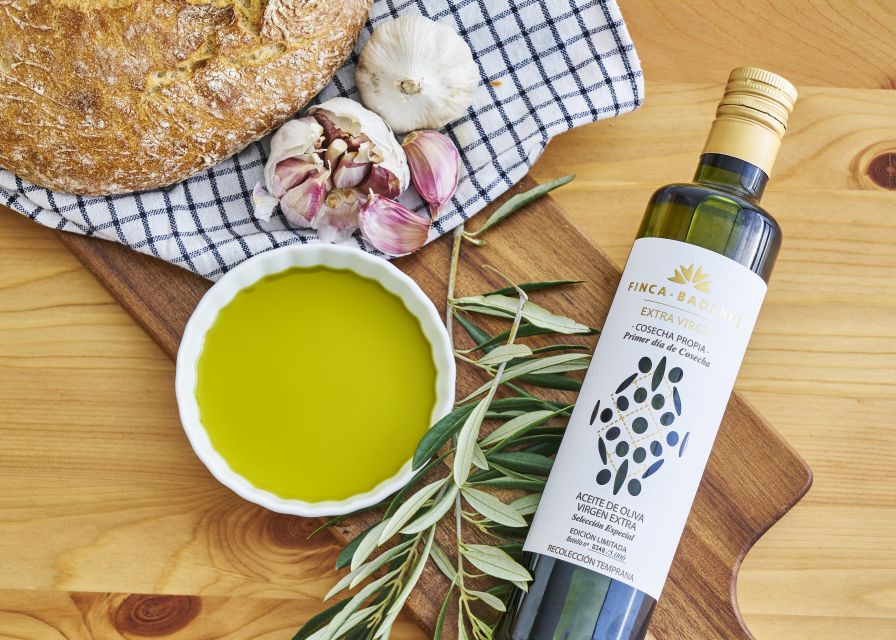
The tasting is more useful than simply dipping bread into oil and choosing the one you like best. A professional from the Aires de Jaén laboratory explains how to carry out an organoleptic tasting, meaning you use your senses to assess the oil.
You sample three EVOOs and learn to notice differences in aroma, taste, and quality. If you normally treat olive oil as one general ingredient, this is the moment when the category starts to make sense. You may leave with a favorite style and a better idea of what you want to buy at home.
The tasting also includes advice on food and wine pairings. That gives the lesson a practical purpose. You are not learning technical terms simply to pass a test. You are learning how to choose an oil for a meal and how to notice when one oil works better with a particular dish.
One useful detail is that there is no shop on site. You may be offered the chance to buy the oil you prefer, reportedly at a lower price than you might find at home, but this is not presented as a full retail stop. If you want to take some home, ask about availability and price during the visit rather than assuming you can browse a large store.
There is one small limitation in the tasting setup. A past visitor felt that bread and cheese would have made the sampling better. That is fair criticism. The focus is the oil itself, and the meal comes later, but people who enjoy generous food pairings may find the tasting spare.
Same groves, a different morning out:
- Oil tourism in Pulpí Discover the World of EVOO
★ 5.0 · 133 reviews - Visit of the olive grove, olive oil tasting and snack
★ 4.9 · 111 reviews - Visit Oil Mill Museum and Olive Oil Tasting in Ronda
★ 4.5 · 105 reviews - Private Tasting of Olive Oil in Córdoba
★ 5.0 · 93 reviews
A traditional meal at a nearby restaurant
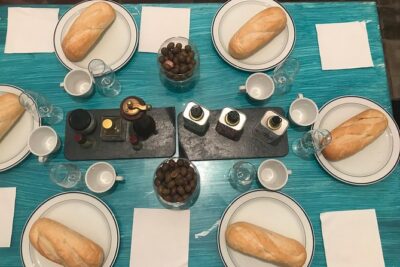
The final part is a tasting menu of traditional local food paired with Finca Badenes EVOOs. The meal is served at a restaurant, not at the orchard. The available information places it about 15 minutes from the grove, and the menu includes AIRES dishes such as cortijeras or country rice.
This is a welcome change of pace after the farm and mill. You have already learned how the oil is produced, so the meal gives you a chance to taste it in a proper food setting. The point is not just to eat lunch. It is to see how the oil fits into traditional Andalusian cooking.
The meal has received particularly strong praise, with one diner calling it better than expected and another describing both the tour and food as wonderful. I would still keep expectations sensible: the precise dishes, serving order, and pairing details are not listed, and the menu can depend on the restaurant’s arrangement.
Plan the day carefully. One booking began at 9:30 and finished the orchard and mill portion around 11:30 or noon, while lunch did not begin until at least an hour later. The restaurant meal itself was in town, rather than on the property. That gap caused one person to skip lunch in order to continue to the next destination.
This is the key practical warning for the tour. The total experience is advertised as four hours, but the field and meal portions may not feel like one continuous block. Ask for the exact start and meal timing when you book, especially if you are driving on to another town, catching a train, or joining a second activity.
What the $58 price includes
At $58 per person, the cost looks fair if you value the complete package rather than treating it as a simple olive oil sample.
You are paying for a guided field visit, explanations of the olive varieties and cultivation systems, information about local flora and fauna, the mill visit, an EVOO tasting, and a traditional meal paired with the farm’s oil. The tour also includes accident and civil liability insurance.
The small group helps the value. With a maximum of six people, you have a better chance to ask about planting, harvesting, or flavor differences than you would in a large coach group. The guide can spend more time on questions, which is especially useful if you have never attended an oil tasting before.
The price is less attractive if you only want a quick look at an olive grove. The experience lasts four hours, and transportation is not included. You must make your own way to Finca Badenes, and the meal takes place at a separate restaurant. Extra services are also excluded.
For me, the meal is what makes the price easier to justify. Without it, you would be paying mainly for the farm visit, mill explanation, and tasting. With it, the outing becomes a half-day food and agriculture experience.
Who will get the most from this visit
This is a good choice for food-focused visitors, curious families, couples, and anyone spending time in Andalusia who wants to understand the region’s most famous agricultural product. It also works well for people who have seen olive groves from the road and want to know what actually happens inside them.
You do not need prior knowledge of olive oil. The tasting lesson starts with the basics, and the guide explains the differences in plain terms. If you already know a great deal about EVOO, the hands-on comparison of cultivation methods and the production visit may be more useful than the introductory tasting language.
The tour is also suitable if you prefer a small setting. Six people is a meaningful limit here, since the subject invites questions and discussion. Spanish and English are available, and the experience is listed as wheelchair accessible.
I would be cautious about booking it as a tightly timed stop between other plans. Transportation is not included, the meal is in a separate location, and the timing may leave a gap between the orchard visit and lunch. Give yourself room.
Practical details that affect the day
The experience lasts four hours, with starting times shown according to availability. Free cancellation is allowed up to 24 hours before the activity for a full refund, and you can reserve without paying immediately. Those policies make it easier to fit the visit into a changing Andalusian schedule.
The guide is available in English or Spanish. The group limit is six people, and wheelchair access is listed. Since the activity includes a field visit, it is sensible to confirm any specific mobility needs before arrival, especially if you need details about the outdoor walking route.
Bring an appetite for the meal, but do not assume it begins immediately after the tasting. The timing example from an actual booking shows why you should check the complete schedule, not only the advertised four-hour duration.
If you are visiting outside the harvest season, expect the virtual reality harvesting experience rather than live harvesting activity. If seeing the harvest is your priority, ask which stage of the season is taking place before you commit.
Should you book Aires de Jaén?
Book it if you want a small, practical introduction to Andalusia’s olive oil culture, especially one that combines farming, production, tasting, and a proper local meal. The best elements are the comparison of three cultivation methods, the clear mill explanation, the three-oil tasting, and the food pairing at the end.
Think twice if you need door-to-door transport, a quick one-hour stop, or a meal served directly among the trees. The restaurant is separate, transport is not included, and the lunch timing may not match your assumptions.
For most food-minded visitors with half a day to spare, the $58 price is sensible. Just confirm the meeting and meal times, then let the grove, mill, and tasting build a fuller picture of the oil you see on every Andalusian table.
FAQ
How long does the Aires de Jaén experience last?
The advertised duration is four hours. Starting times depend on availability.
What languages are available?
The live tour guide is available in English and Spanish.
How many people are in each group?
The experience is limited to six participants.
Is transportation included?
No. Transportation is not included, so you need to arrange your own way to the Finca Badenes area and between any separate locations.
What kinds of olive cultivation will I see?
The field visit covers super-intensive, intensive, and traditional cultivation.
Is the meal served at the olive grove?
No. The meal is served at a restaurant in town. One timing example placed the restaurant about 15 minutes from the orchard, with at least an hour between the end of the tour portion and the start of lunch.
What happens outside the olive harvest season?
A virtual reality experience about harvesting is provided outside the harvest season. The tour also includes explanations of the mechanical oil-making process and an EVOO tasting.
Just added around Spain
- Córdoba: Olive Oil Tasting Experience★ 4.4 · 8 reviews
- Cazorla: Highligts Tour with Olive Oil Tasting★ 5.0 · 2 reviews
- Cazorla: Olive grove and mill tour★ 5.0 · 2 reviews
- Cazorla: Oleotour – Olive Oil Culture Initiation★ 5.0 · 3 reviews
- Olive Oil Tasting and Culinary Day Trip in Carmona★ 5.0 · 2 reviews
- Oleotourism and olive oil tasting in Seville – Private tour★ 5.0 · 7 reviews
- Granada: Tasting of Extra Virgin Olive Oils★ 5.0 · 3 reviews
- Granada in EVOO: Guided tour and unique sensorial tasting★ 5.0 · 6 reviews
Spain Olive Oil Tours, compared.
LA Almazara LA Organic, Olive Oil Museum and Tasting
Read our review →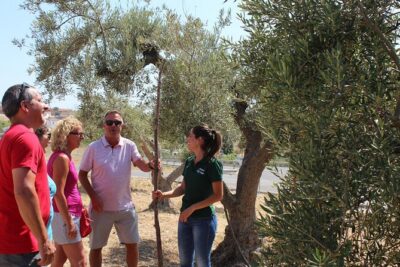
Guided tour and olive oil tasting in Alhaurin el Grande (Málaga)
Read our review →
Guided Tasting Tour in 16th century House and Olive Oil Factory
Read our review →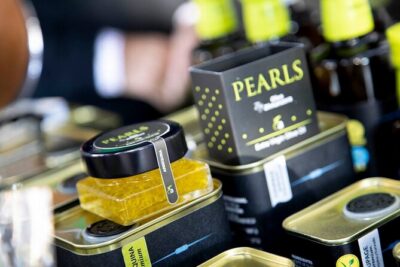
Oil tourism in Pulpí Discover the World of EVOO
Read our review →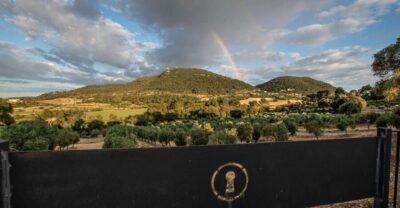
Visit of the olive grove, olive oil tasting and snack
Read our review →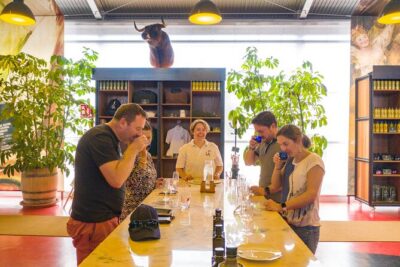
Visit Oil Mill Museum and Olive Oil Tasting in Ronda
Read our review →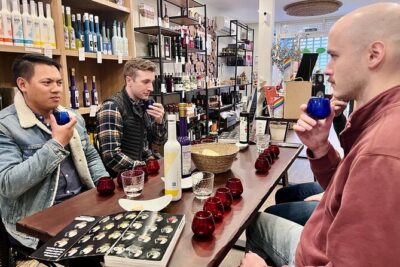
Browse the lists this tour appears in