
REVIEW · ITALY
Discovering extra virgin olive oil
Vieste’s olive oil is not just something poured over bread at dinner. On this private visit, Pierluigi Biscotti explains the year-round work behind it, from pruning old trees to managing insects and soil without giving up organic methods. You then taste the finished oil beside local food and wine.
I especially like the visit to the grove, where some trees are about 600 years old, and the relaxed tasting hosted by Pierluigi and his mother, Anna. The meal sounds generous and personal, with bruschetta, cheeses, cured meats, seafood, several oils, and local wine. The one thing to consider is the fixed evening schedule, from 6 to 8 PM, which may compete with dinner plans in Vieste.
Key points at a glance
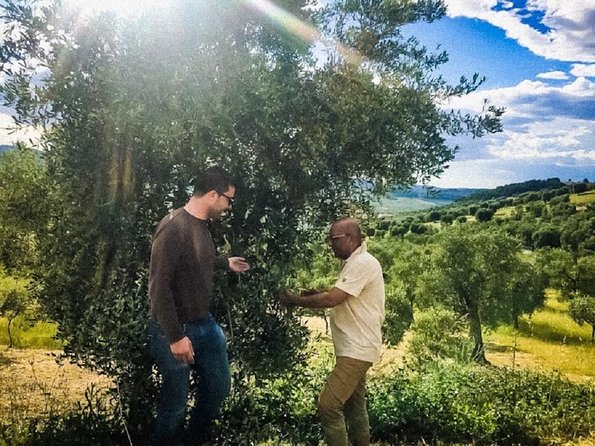
- Ancient olive trees: Walk among groves containing trees said to be roughly 600 years old.
- A working farm, not just a tasting room: Learn how pruning, soil care, harvesting, milling, storage, and organic production fit together.
- Pierluigi leads in English: He explains both traditional farming and newer tools, including drone checks for insect problems.
- A private experience: Only your own group takes part, making it easier to ask questions and set the pace.
- A full Puglian spread: Taste flavored and extra virgin olive oils with bruschetta, cheese, cured meat, seafood, wine, and other local specialties.
- A short evening outing: The experience lasts about two hours and returns to the starting point near Vieste.
Why this Vieste olive oil visit feels different
Many food tastings begin and end at a table. This one starts with the tree. That matters, because good extra virgin olive oil is shaped long before the olives reach the mill.
Pierluigi takes you to an olive grove about five minutes from the meeting point by car. There, you learn how the trees are pruned to support a good crop, how the soil is cared for, and how the farm deals with insects and other problems. One particularly modern detail is Pierluigi’s use of a drone to inspect the trees and look for signs of trouble.
That mix of old and new is the heart of the outing. The trees may be centuries old, but keeping them productive takes present-day planning, careful labor, and attention to environmental limits. You get a better sense of why olive oil is an agricultural product, not simply a regional souvenir.
The experience is also private. Your group is the only group taking part, so you can ask about anything that catches your interest. For some people, that is the best value here. You are not being moved through a large tasting line with a set speech and a quick sample.
A few more olive oil tours around Italy worth a look
- Sorrento Farm and Food Experience including Olive Oil, Limoncello, Wine tasting
★ 5.0 · 2,524 reviews - Olive oil tasting in Sorrento
★ 5.0 · 434 reviews - Sorrento: Lemon, Olive Oil and Wine Tasting Tour with Lunch
★ 5.0 · 300 reviews
Meeting Pierluigi near Vieste
The meeting point is Azienda agricola Pierluigi Biscotti at C da Coppitella, 32, 71019 Vieste FG, Italy. The activity begins and ends there, with the olive grove reached by car during the visit.
The farm is near public transportation, but the supplied information does not give a walking route, a bus number, or parking instructions. I would treat the stated meeting address as important and allow enough time to find it. Your booking confirmation is issued at the time of booking, so keep the address available on your phone.
The start time is 6 PM, and the experience runs for about two hours. That timing works well in the warmer months, when an afternoon outdoors can be tiring. It also leaves you with the rest of the evening in Vieste, though the tasting may function as dinner for some people.
Walking among 600-year-old olive trees
The grove is more than a scenic stop. It is the place where Pierluigi explains the practical work that keeps old olive trees healthy.
You hear about pruning, which helps manage the tree’s shape and production. You also learn how the soil is tended and why organic farming can be difficult in modern agriculture. The point is not to present organic production as effortless. Pierluigi’s explanations focus on the trade-offs involved in caring for the environment while still trying to run a viable farm.
The age of the trees gives the visit a strong sense of time. A 600-year-old olive tree has survived generations of farmers, changing methods, and changing demands. Yet the work continues each year. That long view makes the later tasting more meaningful, since you understand that the oil represents an entire cycle of care.
The grove visit may be the strongest part for anyone interested in farming, conservation, or traditional food. If you only want to sample oil and move on, the agricultural explanations may feel more detailed than necessary. I would choose this outing for the chance to understand production, not just to collect a few flavors.
From harvest to mill and stainless-steel storage
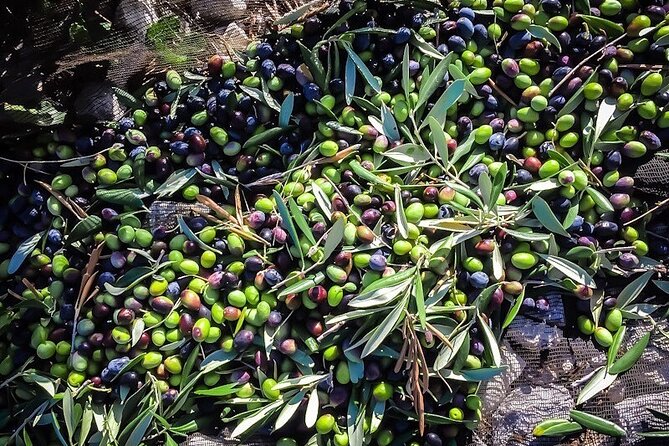
Back at the production area, Pierluigi explains what happens after the olives leave the trees. The process includes harvesting, taking the olives to be pressed, and storing the oil in stainless-steel vats.
That sequence gives you useful context for the tasting. You can ask how the olives move from grove to mill and how the finished oil is kept. The activity description also covers the technique of processing olives in the mill, so this is not limited to farming alone.
The farm’s story reaches from its first years to the present. This family angle adds a human scale to what could otherwise be a technical lesson. You are hearing how one company developed over time, directly from the person involved in its daily work.
I also like that the visit does not separate production from family life. The food served afterward is connected to the same local setting. That makes the tasting feel less like a retail display and more like a chance to understand how oil is used at home.
Same groves, a different morning out:
- Alghero: Wine and Olive Oil Tasting at a Local Farm
★ 4.8 · 294 reviews - Ostuni: Masseria tour among thousand-year-old olive trees with oil tasting
★ 4.8 · 261 reviews - Balestrate: Olive Grove Tour with Wines & Olive Oil Tasting
★ 5.0 · 241 reviews - Bardolino: Vineyard Tour with Wine, Olive Oil & Food Tasting
★ 4.6 · 221 reviews
Tasting extra virgin and flavored oils
The tasting includes the farm’s oil, flavored versions, and local specialties. You may sample several kinds of oil, with different foods showing how each one works at the table.
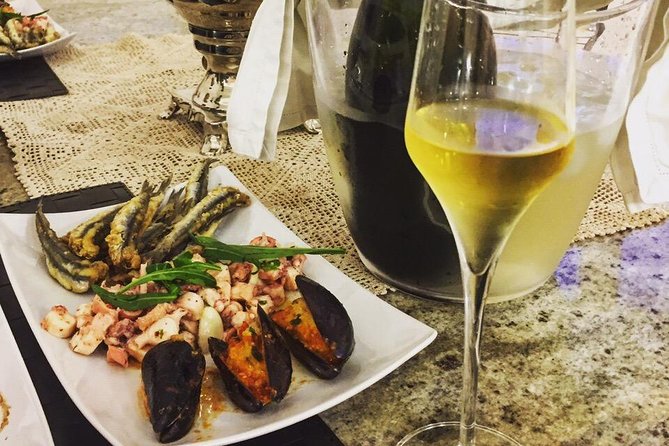
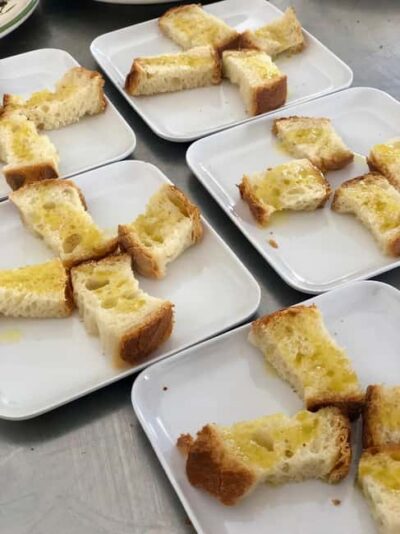
Bruschetta is a natural first match. Bread lets you notice the oil’s aroma, pepperiness, bitterness, and freshness without a complicated dish getting in the way. The tasting then expands to a plate of typical local products, including cheeses, cured meats, and seafood specialties.
You also receive guidance on culinary pairings. This is a practical part of the experience. Instead of treating oil as a single product, you learn that different oils and flavors can suit different ingredients. You can take that lesson home and use it when dressing bread, vegetables, fish, or other foods.
The flavored oils are useful for comparison. They show how added ingredients change the character of the oil, while the plain extra virgin oil gives you a clearer sense of the base product. The precise flavors offered can vary, so do not expect a fixed list beyond the stated flavored variants.
A Puglian meal with Anna
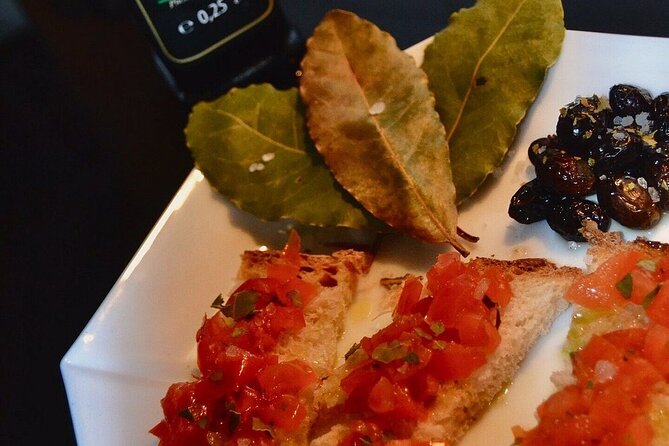
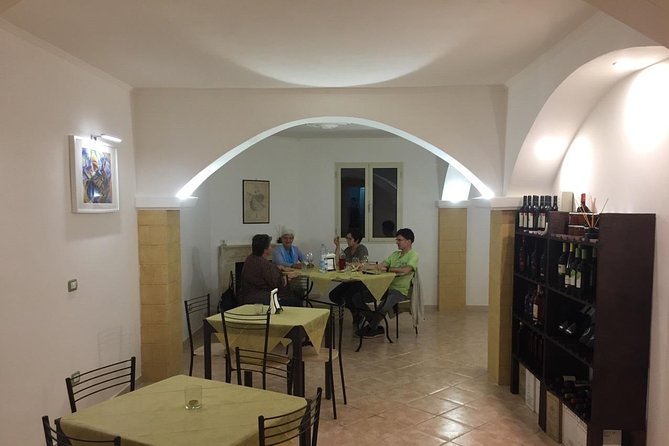
The food is a major part of the evening. Anna, Pierluigi’s mother, prepares a generous spread that can include assorted bruschetta, cheeses, cured meats, olives, seafood, and other local products. Local wine is served alongside the tasting.
The meal has a family feel rather than a formal restaurant format. Food may be prepared at the family property, and the experience includes time for conversation. Several dietary requests have been accommodated, but you should communicate your needs when booking rather than assume every request can be met.
The meal can be substantial enough to replace dinner, especially with wine and several courses of small local specialties. Still, the published menu is described as a plate of typical products and assorted bruschetta, not as a full restaurant menu with guaranteed courses. I would arrive ready for a tasting meal, while keeping expectations flexible.
Local food is not just decoration here. Oil is tasted with the very ingredients it is meant to accompany. Cheese, cured meat, seafood, bread, and wine give you a better idea of how the product fits into everyday Puglian cooking.
What the private format adds
The private format is important at this price. The cost is $60.47 per person, and only your group participates. For a two-hour visit, that is not the cheapest way to taste olive oil, but you are paying for several linked parts: a farm visit, direct instruction from the producer, a production explanation, a guided tasting, food, wine, and personal attention.
A large group tasting could offer similar samples for less. It would not necessarily offer the same chance to ask Pierluigi about pruning, organic farming, drones, old trees, or storage. If you are curious about how food is made, the private setting gives the price a stronger argument.
The value is also better for couples, families, or small groups who would otherwise book separate activities. You are not simply buying a bottle tasting. You are buying access to a working family operation and a conversation about the effort behind the bottle.
The cost may feel high if you are mainly looking for a quick snack or a short stop between sights. In that case, a shop or restaurant would be simpler. Choose this experience for the time and explanation as much as for the food.
How the two-hour schedule works
The evening follows a clear pattern:
- Meet Pierluigi at the farm address at 6 PM.
- Ride by car to an olive grove a few minutes away.
- Learn about old trees, pruning, soil care, organic methods, and pest checks.
- Return to the production area.
- Hear about the family company and olive processing.
- Taste extra virgin and flavored oils with local food and wine.
- Discuss useful oil and food pairings.
- Finish back at the meeting point around 8 PM.
The exact amount of time spent in the grove or at the table can vary. The description promises an explanation of the company, production, and culinary uses, but it does not give a minute-by-minute plan.
This is a compact experience, not a full-day farm visit. Two hours is enough to cover the main stages without taking over your day. It also means the conversation may move quickly if your group asks many technical questions.
English, questions, and the right level of detail
The experience is offered in English, and Pierluigi leads the explanations himself. His style appears to be personal and detailed, with room for questions about the full life of the olive tree, from planting through pressing and storage.
You do not need specialist knowledge to enjoy it. The subjects are practical: how trees are cared for, how olives are harvested, and how oil reaches the table. Still, I would expect more explanation than you might get at a basic tasting counter.
The private setting makes this especially useful for people who like to ask follow-up questions. You can ask why pruning matters, how organic methods affect the work, or how a particular oil might be used in cooking. The experience is less suited to anyone who wants a fast, silent sampling session.
Who should book this experience
I would recommend it to food-focused visitors staying in Vieste, anyone interested in farming, and people who enjoy meeting the family behind a local product. It also suits couples and small groups who value personal attention over a large commercial presentation.
Families can take part, since most people can participate, though the evening includes agricultural explanations and tasting rather than a dedicated children’s program. Guests with dietary needs should contact the provider ahead of time, since some requests have been accommodated.
Wine is part of the tasting, so anyone avoiding alcohol should mention that in advance. The available information does not state substitute drinks or a formal nonalcoholic menu.
The visit is also a good match for anyone who wants a break from Vieste’s usual sights. It takes you just outside town and gives you a look at rural Puglia through one family’s work. You will not see every part of the regional olive industry, but you will gain a close view of one producer’s methods and values.
Booking details and practical cautions
The activity operates Monday through Sunday from 6 to 8 PM. It is listed for operation through October 12, 2026, with the published operating period beginning November 6, 2019.
Free cancellation is available when you cancel at least 24 hours before the local start time. Changes or cancellations made inside that 24-hour window are not accepted for a refund.
The experience is generally easy to join, and confirmation arrives at booking. Since the meeting point is outside central Vieste at a named farm address, I would not wait until 6 PM to begin figuring out transport.
Should you book OlioBiscotti?
Book it if you want to understand olive oil from tree to table and enjoy a generous local tasting afterward. Pierluigi’s personal explanations, the old olive grove, and Anna’s family-style food give the evening more substance than a simple sample flight.
Skip it if you want a very short tasting, a fully fixed restaurant meal, or a daytime activity. The $60.47 price makes the most sense when you value the private farm visit, the English guidance, the food, and the chance to ask questions. For curious eaters, it is a strong two-hour addition to a stay in Vieste.
FAQ
Where does the olive oil experience begin?
It begins at Azienda agricola Pierluigi Biscotti, C da Coppitella, 32, 71019 Vieste FG, Italy.
Where does the activity finish?
The activity ends back at the meeting point.
How long does the experience last?
It lasts approximately two hours.
What time does the experience start?
The published schedule is 6 PM to 8 PM, Monday through Sunday.
Is the experience offered in English?
Yes, the experience is offered in English.
Is this a private tour?
Yes. Only your group participates in the activity.
Who leads the experience?
Pierluigi Biscotti leads the olive-growing, production, and tasting explanations. His mother, Anna, is involved in preparing the food.
What food is included?
The tasting includes a plate of typical local products, assorted bruschetta, cheeses, cured meats, seafood specialties, and other local products.
Is local wine included?
Yes. A choice of local wines is included with the tasting.
Can I cancel for a full refund?
Yes, if you cancel at least 24 hours before the experience’s start time. Cancellations made less than 24 hours before the start time are not refunded.
Just added around Italy
- Vernazza (5 Terre): olive grove tour and oil and wine tasting★ 5.0 · 9 reviews
- Trevi: Guided tour and tasting at Frantoio Gaudenzi★ 5.0 · 3 reviews
- Trieste’s Essence: Wine and Olive Oil Tasting★ 5.0 · 3 reviews
- Umbria: E-Bike Rental and Fresh EV Olive Oil Tasting★ 5.0 · 4 reviews
- Valpolicella Wine and Olive Oil Tasting with Lunch from Verona★ 5.0 · 2 reviews
- Half-Day Chianti Wine and Olive Oil Tour from Viareggio★ 4.0 · 5 reviews
- Umbria: Guided tour to Traditional Olive Oil Mill and Tasting★ 5.0 · 2 reviews
- From Venice: Olive Oil & Wine Tour in the Venetian Hills★ 5.0 · 9 reviews
Italy Olive Oil Tours, compared.
Sorrento Farm and Food Experience including Olive Oil, Limoncello, Wine tasting
Read our review →
Lemon, Olive Oil and Wine Tasting Tour with Lunch
Read our review →
Masseria tour among thousand-year-old olive trees with oil tasting
Read our review →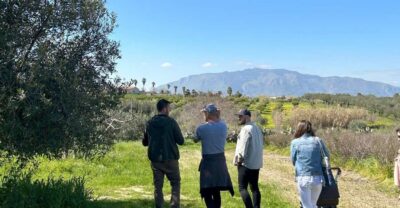
Olive Grove Tour with Wines & Olive Oil Tasting
Read our review →
Bardolino: Vineyard Tour with Wine, Olive Oil & Food Tasting
Read our review →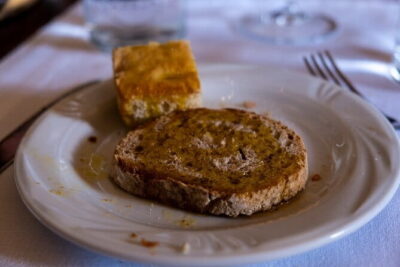
Tuscany Bike Tour with Wine, Oil and Food in the Florentine Hills
Read our review →Browse the lists this tour appears in