
REVIEW · PELOPONNESE
Olive Tour & Tasting
The most appealing part of this 90-minute olive mill visit is its personal scale. Pavlos and Olga welcome you into their traditional factory, explain how olives become oil, and turn the tasting into a useful lesson rather than a quick pour-and-go stop. I like the generous local food spread, and I like that the experience connects olive farming with daily Greek life.
The visit also includes a stop at a waterfall and spring, where you can taste fresh water, adding a small outdoor break to the food-focused program. The main consideration is time: this is a short tour, and the advertised price of $63.67 per person may feel high if you want only a brief tasting instead of a full farm day.
Key points to know before you book
- Pavlos and Olga lead a family-style visit: Expect conversation, practical explanations, and a warm welcome inside the mill.
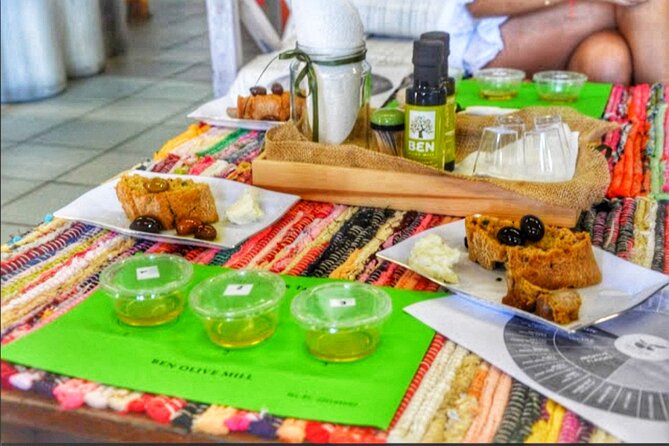
- The tasting comes with real food: Bread, farm olive oil, herbs, Kalamata olives, local cheese, smoked pork, figs, and other snacks make this more than a sip of oil.
- You learn how to compare oils: The tasting covers different qualities, proper storage, and the character of Kalamata oil.
- The waterfall adds variety: After the mill, the outing includes a visit to a waterfall and a taste of spring water.
- It is a private group activity: Only your party participates, which makes questions and conversation easier.
- The meeting point matters: You must reach Ben Olive Mill in Parapougki, in the Peloponnese, at 11:00 a.m.
A family olive mill, not a polished food showroom
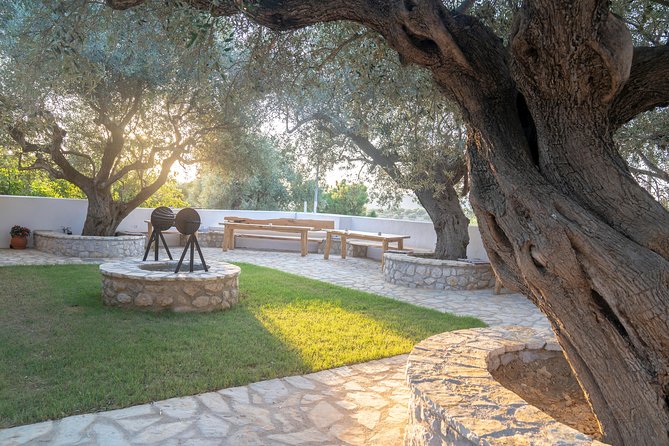
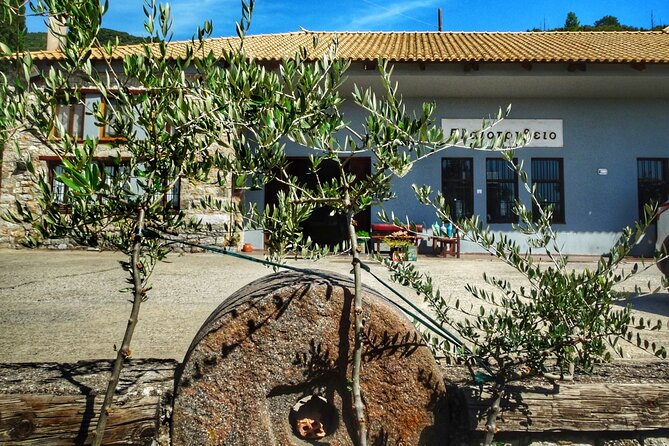
Ben Olive Mill gives you a look at olive oil where it is made and used, not just where it is sold. The experience takes place inside a traditional factory building, with the olive farm and local setting providing the backdrop for the story.
Pavlos handles much of the explanation, while Olga prepares the food and helps create the relaxed mood. Their daughters are also part of the family setting, which gives the visit a genuine home-and-farm feel rather than the atmosphere of a large commercial attraction.
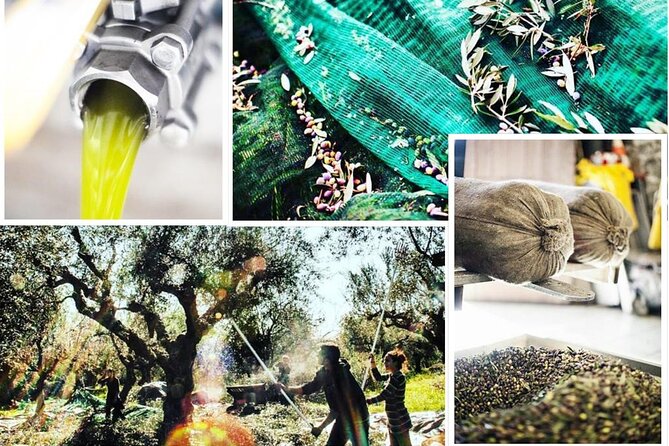
You will hear about olive trees, cultivation, harvesting, and processing. The discussion also reaches into Greek routines and the role of olives in the wider Mediterranean kitchen. That context matters because olive oil in Greece is not simply a cooking ingredient. It appears at the table with bread, herbs, cheese, vegetables, and nearly anything else that can carry a drizzle.
The tone is informal, with room for questions. You should not expect a long technical seminar or a museum-style presentation. Instead, you get a compact introduction from people who work with the product and want you to understand what makes good oil worth seeking out.
A few more olive oil tours around Greece worth a look
- Crete: Quad Safari, Olive Mill with Tasting & Ghost Village
★ 4.9 · 1,004 reviews - Knossos-Zeus Cave -Old Traditional Villages-Olive Oil Factory
★ 5.0 · 694 reviews - The Governor’s Olive Mill Tour with Olive Oil Tasting
★ 5.0 · 502 reviews
What happens during the 90-minute visit
The visit begins at 11:00 a.m. at Ben Olive Mill in Parapougki. Since the activity starts and ends at the same place, plan your route carefully and allow enough time to arrive before the start. No transportation from Kalamata or another town is listed, so you should treat reaching the mill as your responsibility.
The first part focuses on the farm and olive trees. Pavlos explains how the trees are maintained and how the fruit is harvested. You may also hear about the local farming community and the connection between olive cultivation and life in the region.
Next comes the traditional mill building. Here, the focus shifts from tree to finished oil. You learn about the processing stage and how the fruit is handled before the oil reaches the bottle. The exact production details can vary by season, but the main value is seeing the connection between agricultural work and the food on your plate.
The final part is the tasting and local snack service. The scheduled duration is about one hour and 30 minutes, so the visit moves at a fairly brisk pace. Still, the food helps slow things down. It is not just a tiny sample in a plastic cup.
The outing also includes a waterfall visit and a taste of water from the springs. This portion gives you a change of pace after the indoor mill and food tasting. The available details do not specify the waterfall’s name or the length of the stop, so you should view it as a short added visit rather than planning a separate hike around it.
The olive oil tasting is the heart of the experience
The tasting is designed as a funny olive oil tasting lesson, meaning the presentation is light and approachable rather than formal. You compare oils of different quality and learn how to notice differences in taste and character.
That is useful for anyone who has stood in a shop facing a wall of Greek olive oil and had no idea what the labels meant. The visit covers the best way to store oil, an often-overlooked detail. Heat, light, and poor storage can damage quality, so this practical advice can help you protect what you buy at home.
The oil is connected with the Kalamata area, and one of the main products presented is P.D.O. Kalamata oil. P.D.O. refers to protected designation of origin, a certification tied to a defined place and production standard. The visit gives you a chance to taste the product while learning where it comes from.
You are not expected to arrive with a trained palate. The point is to compare, ask questions, and notice what you prefer. I like this approach because it makes tasting less intimidating. You can enjoy the oil simply as food while still learning enough to make better choices later.
If you are visiting during the olive harvest, the experience may have extra appeal. The family has invited visitors to return during harvest and help, but the supplied details do not promise harvest-time participation as part of every booking. Contact the operator if that seasonal detail matters to you.
A traditional lunch replaces the usual tour snack
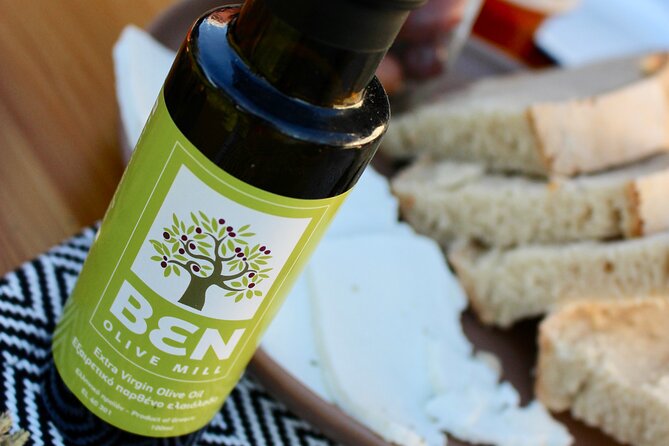
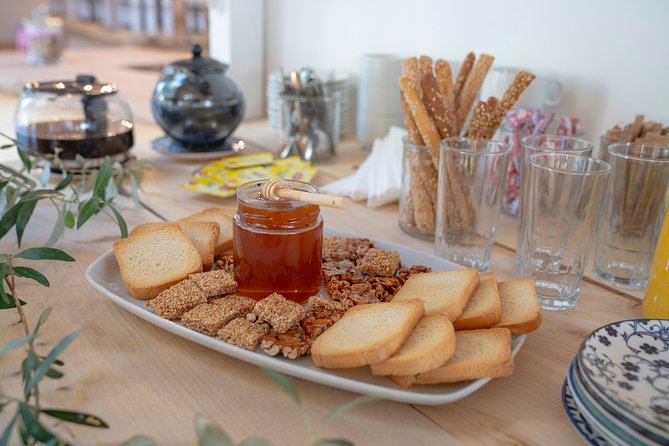
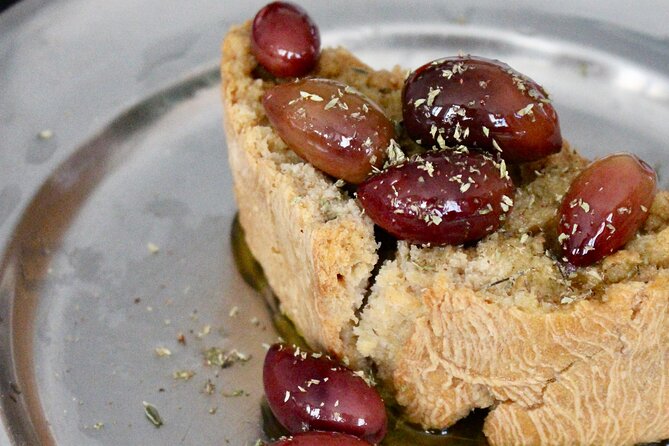
The food is one of the strongest reasons to consider this visit. The sample menu includes traditional bread with olive oil and farm herbs, Kalamata olives, local cheese, smoked pork, figs, oregano, and other homemade or regional items.
This is closer to a generous rural snack or light lunch than to a token refreshment. The food gives you a practical way to taste the oil. Bread and herbs show how it works at the table, while cheese, pork, olives, and figs offer different flavors to compare with it.
Bottled water is included, as is Wi-Fi. Alcoholic drinks are not included, so do not expect wine or beer with the food. That is hardly a flaw for a 90-minute morning visit, but it is worth knowing if you imagined a long countryside lunch.
The food also makes the activity workable for families. Children may not follow every detail about milling, but they can sample bread, olives, cheese, figs, and the different oils. The experience is more adult-focused than a playground stop, yet the tasting gives younger visitors something concrete to enjoy.
Dietary information is not provided. If you have allergies or follow a specific diet, ask ahead about the bread, cheese, smoked pork, herbs, and other items. Do not assume that every part of the traditional spread can be changed.
Same groves, a different morning out:
- From Chania: Olive Oil, Wine, Cheese & Honey Tasting Tour
★ 4.6 · 490 reviews - Crete: Road-trip to Lasithi, Zeus Cave & Olive Mill Farm
★ 4.4 · 451 reviews - Heraklion: Olive Farm Tour with Tasting of Local Delicacies
★ 4.9 · 411 reviews - Lassithi, Zeus Cave, Olive Mill Farm & Knossos Combo Tour
★ 4.6 · 404 reviews
The waterfall and spring add a welcome outdoor pause
After the mill and tasting, the route includes a visit to a waterfall and a chance to taste fresh water from the springs. This small addition broadens the outing beyond food and machinery.
I like the contrast. You start with cultivated trees, a working mill, and a table of local food, then move toward a natural water source. It gives you another way to connect the area with what it produces and preserves.
The details are limited, so keep your expectations measured. There is no stated hiking distance, no named waterfall, and no promise of a long walk. The stop should be treated as part of the short program, not as a full nature excursion.
The description also places the mill on the way to Kalamata, Olympia, and Ancient Messini. That makes the experience potentially useful as part of a larger Peloponnese route, especially if you are already driving through the region. It does not mean the tour provides transport to those destinations. You still need to arrange your own onward travel.
Why the private format changes the experience
This is a private activity, so only your group takes part. That is a major advantage for a small family, couple, or group of friends who want to ask questions without waiting for a large crowd.
At a mill, a private format also helps with the tasting. You can spend more time comparing oils, discussing storage, or asking how the local product is made. The experience remains social, but it is not built around keeping a busload of people moving.
The tradeoff is that a private visit can feel expensive for one or two people. At $63.67 per person, the cost covers the hosts, the guided mill visit, the food, the oil tasting, bottled water, and the added waterfall and spring stop. It also includes the value of a personal introduction to local food culture.
For a couple who would otherwise pay separately for a tasting, a meal, and a guided farm visit, the price can be reasonable. For a solo visitor who wants only a sample of Kalamata oil, it may be harder to justify. Group discounts are available, which could improve the value for a larger party.
The activity is booked about 21 days in advance on average. That suggests you should not leave it until the final morning of your trip, particularly if your Peloponnese route is fixed. Confirmation is provided at booking, and a mobile ticket is available.
Who will enjoy Ben Olive Mill most?
I would choose this for you if you want to understand Greek food through the people who produce it. It suits adults interested in cooking, farming, regional products, and the everyday side of Greece.
It also works well for families. Children may not care about every step of olive processing, but the food tasting, the outdoor stop, and the private format can keep the visit manageable. A family group of four found that the children connected with the tasting, which is a useful sign for parents planning a food-based activity.
The visit is also a good fit for anyone staying near Kalamata or driving through the southern Peloponnese. It can give structure to a morning before you continue toward Kalamata, Olympia, or Ancient Messini.
I would think twice if you want a long agricultural tour, a full meal with drinks, or a detailed production demonstration from harvest through bottling. The scheduled time is only 90 minutes, and the supplied information does not promise transport, a full farm walk, or alcohol.
Most people can participate, according to the activity information. Still, the exact conditions around the waterfall and spring are not detailed, so ask the operator if you have mobility concerns or need a precise description of the walking involved.
Souvenirs and local products to take home
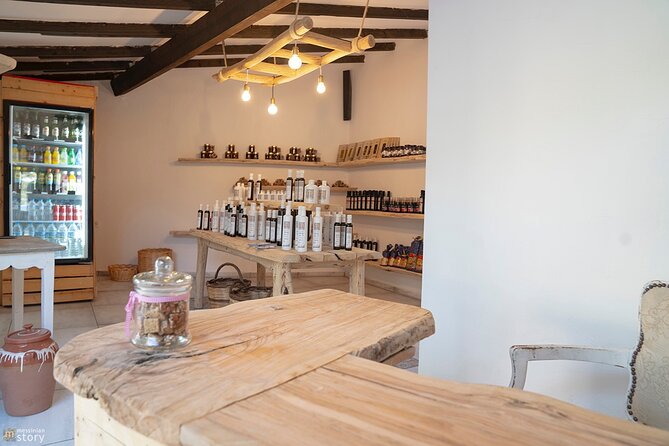
The mill offers local products and handmade souvenirs for purchase after the visit. This is convenient because you can taste the oil first, learn how it should be stored, and then decide what you want to bring home.
That order matters. Buying oil before tasting it means choosing by label alone. Tasting it at the mill gives you a better sense of its flavor and lets you ask direct questions about use and storage.
The information does not list bottle sizes, prices, shipping, or the full range of souvenirs. Bring a payment method that suits the operator, and ask about packing if you are flying. The tour includes a mobile ticket, but that does not tell you which payment methods are accepted for purchases.
Booking, weather, and cancellation details
You can cancel for a full refund if you do so at least 24 hours before the 11:00 a.m. start time. Changes or cancellations made inside that window are not accepted for a refund, and cut-off times follow local Greek time.
The experience depends on good weather. If poor weather forces a cancellation, you can receive a different date or a full refund. The activity also has a minimum number of participants, so a cancellation for that reason brings the same choice of another date or experience, or a full refund.
Since the activity begins at a specific rural meeting point, save the address before setting out: Ben Olive Mill, Oichalia, Parapougki 240 08, Greece. The visit returns to the meeting point, so you can continue your own route afterward.
Should you book this olive mill visit?
Book it if you want a friendly, food-centered introduction to Kalamata olive oil, especially if you value personal conversation over a large attraction. Pavlos and Olga bring warmth to the visit, and the combination of farm, mill, tasting, local food, waterfall, and spring makes good use of a short morning.
The strongest reasons to go are the generous traditional snack spread, the chance to compare oils, and the practical advice about storage and production. The private format is another plus for families and small groups.
Skip it if $63.67 feels too high for 90 minutes, or if you need transportation from Kalamata. This is best seen as a compact regional experience that fits into a driving itinerary, not as a full-day excursion.
For the right visitor, it offers something a supermarket tasting cannot: a direct link between the tree, the mill, the family table, and the bottle you may carry home.
FAQ
Where does the Olive Tour and Tasting begin?
The activity begins at Ben Olive Mill in Oichalia, Parapougki 240 08, Greece.
What time does the tour start?
The scheduled start time is 11:00 a.m.
How long does the experience last?
The visit lasts approximately one hour and 30 minutes.
Is transportation included?
Transportation is not listed as an inclusion. You meet at Ben Olive Mill, and the activity ends back at the same meeting point.
What food is included?
The food includes traditional bread with olive oil and farm herbs, Kalamata olives, local cheese, smoked pork, figs, oregano, and other local snacks. Bottled water is also included.
Are alcoholic drinks included?
No. Alcoholic beverages are not included.
Can I cancel for a full refund?
Yes. You can cancel at least 24 hours before the local start time for a full refund. Cancellations or changes made less than 24 hours before the start are not refunded.
Just added around Greece
- Athens: Greek Wine & Olive Oil Tasting at Brettos Plaka★ 4.5 · 3 reviews
- Breakfast in the markets with olive oil and honey tasting★ 4.8 · 8 reviews
- PRIVATE RHODES TOUR + Lunch Stop & WINE/OLIVE OIL Tasting★ 5.0 · 2 reviews
- Olive Tour & Tasting★ 5.0 · 4 reviews
- SYSTASIS Olive Oil Tasting Experience in Ermioni Greece★ 5.0 · 4 reviews
- Olive Facility Visit with Olive Oil Tasting Session★ 5.0 · 2 reviews
- Olive Oil Tour close to Nafplio★ 4.5 · 3 reviews
- Olive Oil Tasting at the Mykonian Farm★ 4.5 · 3 reviews
Peloponnese Olive Oil Tours, compared.

Olive oil Mill Visit & Olive oil tasting Experience
Read our review →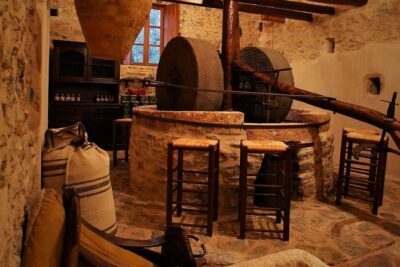
Private Tour in Historic Estate in Monemvasia with wine-olive oil tasting & meal
Read our review →
SYSTASIS Olive Oil Tasting Experience in Ermioni Greece
Read our review →
Olive Facility Visit with Olive Oil Tasting Session
Read our review →Browse the lists this tour appears in