
REVIEW · THESSALONIKI
Olicatessen Olive Oil Tasting in Thessaloniki
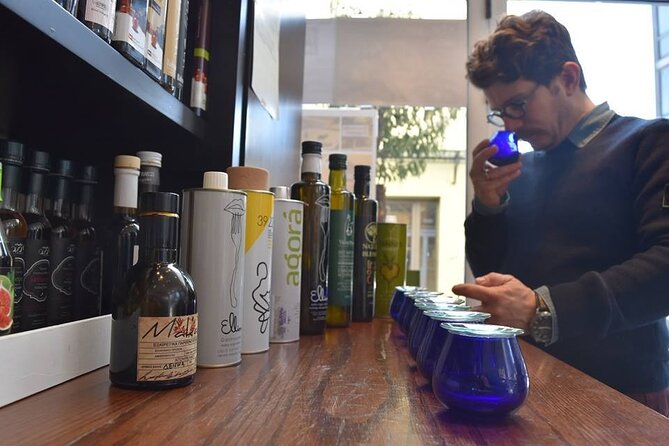
The fun here is not simply dipping bread into oil. You taste six olive oils from different Greek regions and olive varieties, then learn why one smells grassy, another tastes peppery, and a third feels softer and rounder. The session takes place inside Olicatessen, a specialty food shop in Thessaloniki’s Modiano Market.
I like the direct link to small producers, since each bottle comes with a story rather than just a country label. I also like the compact one-hour format, which gives you a focused food lesson without taking half a day. The main consideration is the price: at $40.52 per person, it is a serious tasting rather than a casual market stop.
Key points to know before booking
- Six Greek oils in one sitting: Compare oils by region and variety instead of tasting just one house favorite.
- Inside Modiano Market: The meeting point is Olicatessen at Ermou 24, in the center of Thessaloniki.
- A guided tasting, not a sales pitch: The session covers aroma, texture, flavor, production, and food pairing.
- A special Greek food finish: The tasting ends with a traditional or modern Greek item chosen to match the oils.
- Private for your group: Only your party participates, making it easier to ask questions and set the pace.
- One-hour morning activity: The scheduled start is 10:00 a.m., with the experience ending at the same shop.
Six oils, six ways to read Greek olive oil
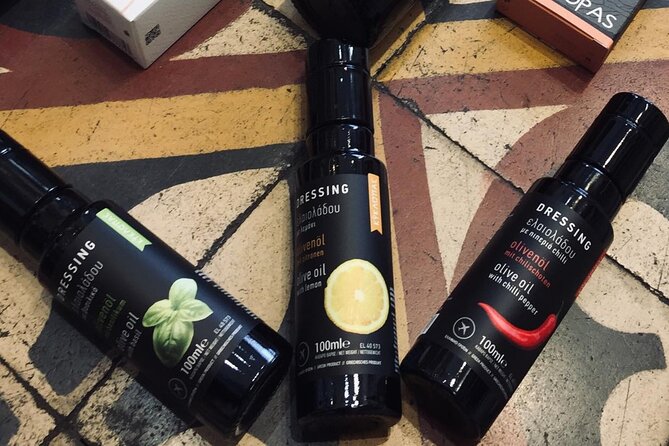
The tasting is built around comparison. That matters because olive oil is easy to treat as one generic ingredient. You drizzle it over a salad, use it for cooking, or dip bread into it, but you may not notice how much the flavor can change from one bottle to the next.
Here, you taste six oils from different parts of Greece and from different varieties of olives. The exact selection can change, so you should not expect a fixed menu. That flexibility is useful because Olicatessen works directly with numerous producers and aims to show a broad range of Greek products.
You can expect the discussion to focus on the oil’s organoleptic qualities, a formal way of describing what your senses detect. In plain terms, you will pay attention to aroma, texture, and flavor. The point is not to memorize technical terms. It is to learn what you are actually tasting.
One oil might seem fresh and herbal. Another may have more bitterness or a peppery finish. The comparison helps you notice that bitterness and a slight sting in the throat are not automatically faults. They can be signs of character and freshness, depending on the oil.
The tasting also gives you a better way to think about quality. A familiar supermarket oil may work perfectly well for everyday cooking, while a more distinctive Greek oil might be best saved for finishing a dish. You are learning how to choose, not being told that the most expensive bottle is always the best one.
More Olive Oil Tastings in Greece:
- The Governor’s Olive Mill Tour with Olive Oil Tasting
★ 5.0 · 502 reviews - From Chania: Wine and Olive Oil Tasting Tour with Snacks
★ 4.8 · 354 reviews - Olive Oil Tasting Tour
★ 5.0 · 195 reviews
Inside Olicatessen at Modiano Market
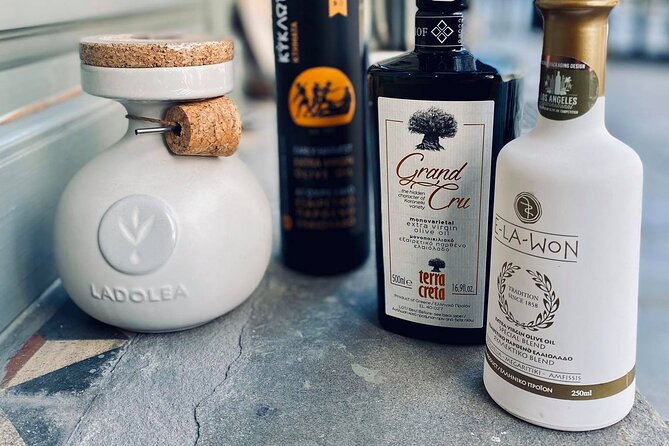
The session takes place at Olicatessen, at Ermou 24, inside Modiano Market in central Thessaloniki. This is a practical meeting point because it places the tasting in a food-focused setting rather than in a detached classroom.
The shop is part of the experience. It is described as attractive and well decorated, so you can expect a polished retail space with Greek food products around you. That gives the tasting a useful context: after learning about olive oil, you can continue looking at other regional foods in the store.
You meet at 10:00 a.m. and return to the same point when the session ends. The one-hour length works well early in your day. You can fit it before sightseeing, lunch, or a walk through central Thessaloniki.
The location is near public transportation, and the activity accepts mobile tickets. Confirmation arrives at booking. Service animals are allowed, and most people can take part. Since the activity is private, you do not share the hour with a large mixed group.
That private setup is one of the better features. Olive oil tasting can feel awkward if you are in a crowded room and cannot ask basic questions. With only your own group, you can pause over a flavor, ask how an oil was produced, or discuss which bottle suits your cooking.
From olive grove to finished bottle
The session does more than list tasting notes. It explains Greek olive oil production, including the role of tradition and newer methods. That balance is important. Greek olive oil has a long place in daily life and food culture, but producers are also working with modern ideas and improved presentation.
You will hear about the producers connected with the oils on the table. Olicatessen’s purpose is to showcase both the products and the people behind them. This makes the tasting feel more personal than a simple exercise in identifying flavors.
The production discussion helps explain why oils differ. Region, olive variety, harvesting, and production choices can all affect the final result. The session does not turn you into an olive oil producer in an hour, but it gives you a framework for asking better questions when you shop.
That is the real value of the story element. You leave with more than a favorite flavor. You have a clearer idea of why a bottle may taste a certain way and why two Greek oils can be very different despite coming from the same country.
The guide style appears to be warm and conversational. Alexandros has been associated with the tasting and has invited participants to return for a honey tasting, while Ellie has led sessions covering different varieties and production details. Teresa has also been praised for her clear presentation, and Kostas has responded to feedback about the products and store. Your guide may be someone else, but the experience is designed around personal explanation rather than a scripted lecture.
Learning the language of aroma and texture
Many food tastings depend on specialist vocabulary that can make beginners feel out of place. This one appears more approachable. You are encouraged to notice what you smell and taste first, then connect your impressions to the language used by the guide.
Aroma is an important part of the session. Before tasting, you may notice how an oil smells, then see how that first impression compares with its flavor. Texture also matters. Some oils feel light and clean, while others may seem fuller or more forceful.
Flavor is where the six-oil format pays off. Tasting several oils side by side makes differences easier to detect than tasting one bottle at home. You can compare freshness, bitterness, sweetness, peppery notes, and the length of the finish.
The experience suits both beginners and people who already cook with good olive oil. If you know little about olive oil, you get a practical introduction. If you already care about food, the range of varieties gives you a chance to sharpen your palate.
Do not expect a formal certification course. The value lies in guided attention and conversation. You are not being tested. You are being shown how to slow down and notice what is in the glass.
A few more olive oil tours around Greece worth a look
- Crete: Quad Safari, Olive Mill with Tasting & Ghost Village
★ 4.9 · 1,004 reviews - Knossos-Zeus Cave -Old Traditional Villages-Olive Oil Factory
★ 5.0 · 694 reviews - From Chania: Olive Oil, Wine, Cheese & Honey Tasting Tour
★ 4.6 · 490 reviews - Crete: Road-trip to Lasithi, Zeus Cave & Olive Mill Farm
★ 4.4 · 451 reviews
Pairing the oils with Greek food
A good tasting should explain what to do with the product afterward. This session includes advice on appreciating and pairing olive oils, so you can think beyond the tasting itself.
A delicate oil may suit a dish where you want subtle flavor. A more assertive oil may work better when you want the olive oil to be noticed. The guide can help connect the character of each oil with food, which is more useful than simply declaring one oil the winner.
The session ends with an additional Greek food item selected to complement the tasting. It may be traditional or more innovative, but the exact food is not specified in advance. That means you should treat it as a pleasant extra rather than booking specifically for a particular dessert, cheese, or snack.
This final pairing gives the tasting a natural finish. You first notice the oil by itself, then see how it behaves with food. That difference is worth paying attention to. An oil that seems strong on its own may become balanced when paired with the right bite.
If you have dietary requirements, tell Olicatessen ahead of time. The experience specifically asks participants to share this information, and it is better to do so before arriving rather than hoping the final pairing will suit you.
How much value do you get for $40.52?
At $40.52 per person, this is not the cheapest way to sample Greek olive oil. You could buy a bottle or visit a market shop for less. The price makes more sense if you want instruction, a private setting, six comparisons, and a final food pairing in one organized hour.
You are paying for selection as much as quantity. Tasting six oils from different regions and varieties can cost more than buying one ordinary bottle, but it gives you a broader understanding of Greek olive oil. The direct relationship with producers also adds value for people who care about origin and small-scale food production.
The private format helps justify the cost. You have room to ask questions and discuss your own preferences. That matters more if you are a couple, family, or small group with a shared interest in food.
Still, you should be realistic. This is a short tasting, not a full market tour or a visit to an olive farm. You will not spend hours among olive trees or watch the pressing process. If you want a rural production visit, this is not the right type of activity.
For a city break, though, the timing is efficient. You get a focused introduction in the center of Thessaloniki and can continue with your day afterward.
Who will enjoy this most?
I would recommend the tasting to anyone who likes food and wants a more informed souvenir from Greece. It works especially well for people who buy olive oil at home and want to understand what labels, varieties, and flavor differences mean.
It is also a good choice for couples. The private format gives you a shared activity that is more engaging than simply browsing a food shop. You can compare which oils each of you prefers and use the pairing discussion to guide future purchases.
Food-focused visitors will get the most from the producer stories and tasting vocabulary. You do not need prior experience, but curiosity helps. The more willing you are to smell, taste, and describe the oils, the more useful the hour becomes.
It may be less suitable if you dislike strong or bitter flavors, though the session is designed to explain those qualities rather than force you to like them. It may also disappoint you if you want a long tour, a farm visit, or a large meal. This is a compact educational tasting with a small food finish.
Timing, access, and cancellation details
The activity begins at 10:00 a.m. and lasts about one hour. It ends back at Olicatessen, so you do not need to arrange a separate return trip.
The meeting point is Ermou 24, Thessaloniki 546 24, Greece. It is near public transportation, and you can use a mobile ticket. Confirmation is provided when you book.
Most people can participate, and service animals are allowed. Since the activity is private, only your group takes part.
You can cancel for a full refund if you do so at least 24 hours before the scheduled start. Cancellations or changes made within 24 hours are not accepted for a refund, and the cut-off follows local Thessaloniki time.
What makes the experience worth remembering
The strongest part of the tasting is the way it turns a familiar staple into something you can examine. Olive oil is on almost every Greek table, but six side-by-side samples show how much variety exists within that everyday ingredient.
I also value the connection to producers. You hear about the people and choices behind the bottles, rather than tasting anonymous oils with no sense of place. That makes the experience more useful when you later shop for Greek food.
The guides are another strength. The feedback connected with Alexandros, Ellie, Teresa, and Kostas points to a friendly, personal approach. Their roles may vary, but the sessions are presented as welcoming and conversational, not stiff or overly technical.
The main weakness is simply its narrow scope. You get one hour devoted to olive oil. That focus is exactly why it works for some people, but it will not replace a wider Greek food tour.
Should you book the Olicatessen tasting?
Book it if you want a short, private introduction to Greek olive oil in central Thessaloniki. The six-oil comparison, producer stories, pairing advice, and final Greek food item give you more than a quick sample at a shop.
I would especially choose it early in a Thessaloniki stay, when the lessons can shape what you order and buy during the rest of your trip. At $40.52, it is best viewed as a guided food lesson, not a bargain snack.
Skip it if you want a farm visit, a full meal, or a longer cultural tour. But if you enjoy food, ask questions, and want to understand why Greek olive oils taste different, this one-hour session earns its place in your plans.
FAQ
Where does the olive oil tasting take place?
The tasting takes place at the Olicatessen store inside Modiano Market, at Ermou 24, Thessaloniki 546 24, Greece.
What time does the experience start?
The scheduled start time is 10:00 a.m.
How long does the tasting last?
The experience lasts approximately one hour.
How many olive oils will I taste?
You will taste six olive oils from different Greek regions and varieties.
What will I learn during the tasting?
You will learn about Greek olive oil production, producer stories, and the organoleptic qualities of oil, including aroma, texture, and flavor. You will also learn about appreciation and food pairing.
Is food included?
The tasting ends with a traditional or innovative Greek food item selected to complement the olive oils.
Is the activity private?
Yes. Only your group participates in the activity.
Can I bring a service animal?
Yes. Service animals are allowed.
What is the cancellation policy?
You can cancel at least 24 hours before the start time for a full refund. Cancellations or changes made less than 24 hours before the experience are not accepted for a refund.
Just added around Greece
- Athens: Greek Wine & Olive Oil Tasting at Brettos Plaka★ 4.5 · 3 reviews
- Breakfast in the markets with olive oil and honey tasting★ 4.8 · 8 reviews
- PRIVATE RHODES TOUR + Lunch Stop & WINE/OLIVE OIL Tasting★ 5.0 · 2 reviews
- Olive Tour & Tasting★ 5.0 · 4 reviews
- SYSTASIS Olive Oil Tasting Experience in Ermioni Greece★ 5.0 · 4 reviews
- Olive Facility Visit with Olive Oil Tasting Session★ 5.0 · 2 reviews
- Olive Oil Tour close to Nafplio★ 4.5 · 3 reviews
- Olive Oil Tasting at the Mykonian Farm★ 4.5 · 3 reviews
Olive Oil Tastings, compared.

The Governor’s Olive Mill Tour with Olive Oil Tasting
Read our review →


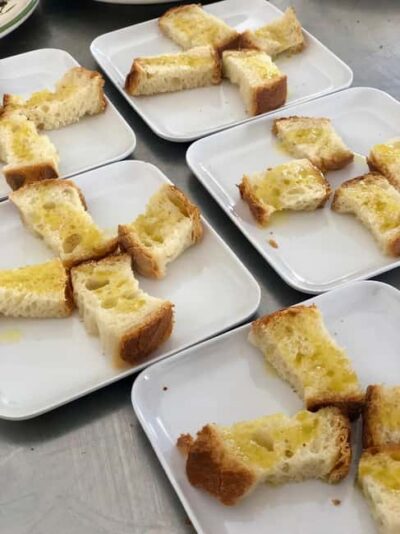
Masseria tour among thousand-year-old olive trees with oil tasting
Read our review →
Olive Grove Tour with Wines & Olive Oil Tasting
Read our review →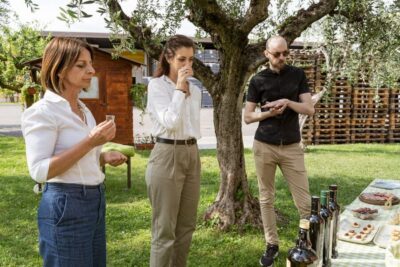
Bardolino: Lake Garda Oil Mill Tour with Olive Oil Tasting
Read our review →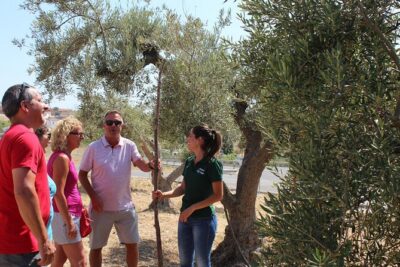
Guided tour and olive oil tasting in Alhaurin el Grande (Málaga)
Read our review →Browse the lists this tour appears in