
REVIEW · SPAIN
Marbella Old Town: Private Walking Tour with Olive Oil Tasting
Marbella’s best surprise is not its polished resort image, but the small old town tucked behind it. This private walk takes you from Alameda Park through whitewashed lanes, old chapels, medieval walls, and lively squares before ending with a tasting of six to 10 olive oils. The contrast between coastal glamour and old Andalusian streets gives the tour its appeal.
I like the private format, since your guide can answer questions and adjust the pace. I also like the finish at D’Oliva, where olive oil becomes more than a bottle on a restaurant table. You taste the differences with bread and learn why oils can vary in flavor.
The main consideration is timing. The tasting depends on D’Oliva’s opening hours, and the complimentary museum visit depends on opening times too. At $150.85 per person, this makes the most sense for a small group that values personal attention rather than a low-cost overview.
Key points to know before booking
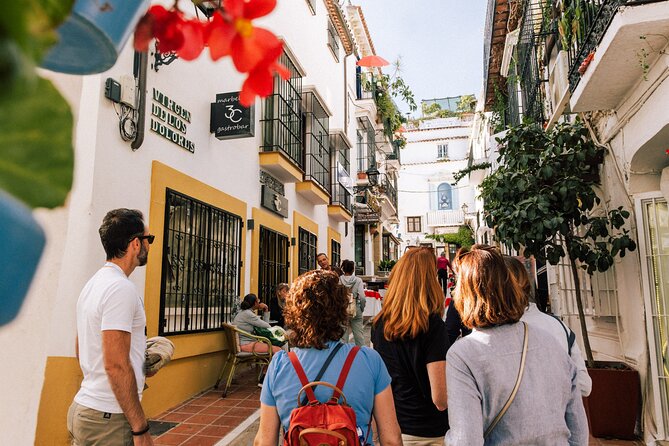
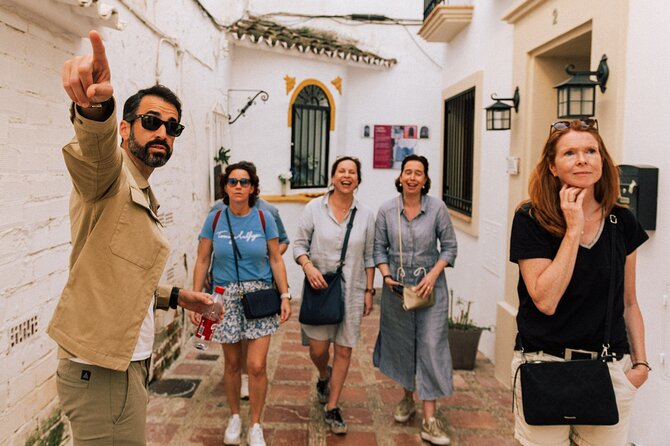
- A private guide for your group: You are not placed with strangers, and guides such as Javier, Eva, Silvina, and Fran have led this experience.
- A compact old-town route: The walk lasts about two hours and covers Alameda Park, Avenida del Mar, historic squares, a chapel, medieval walls, and Plaza de los Naranjos.
- A useful mix of art and local history: Dalí sculptures, Moorish-era street patterns, a sixteenth-century chapel, and the old city defenses all appear along the way.
- Olive oil is the grand finale: You can sample 6 to 10 extra virgin oils at D’Oliva, subject to the shop’s opening hours.
- No transport is included: You meet in central Marbella and finish at Plaza de los Naranjos or nearby.
- Good for a first look at Marbella: The tour gives you orientation, local context, and suggestions for what to do after the walk.
Why Marbella’s old town is worth two hours
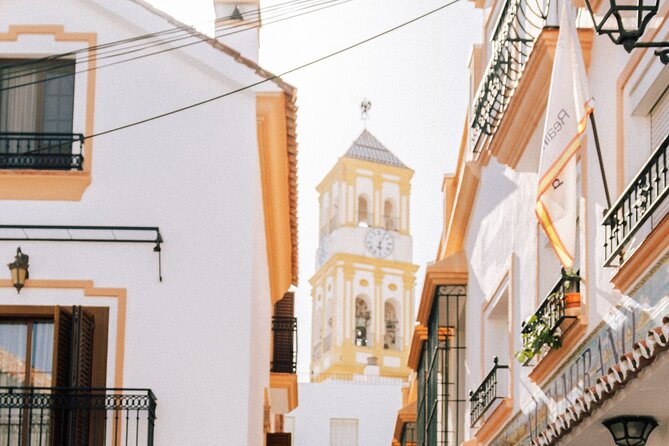
Marbella can be easy to misread. The resort image, waterfront apartments, and polished shopping areas often get most of the attention. Yet the old town has a different character, with narrow lanes, white walls, orange trees, small churches, and traces of the city’s earlier defenses.
This tour gives you a clear route through that older side of Marbella. You are not simply pointed toward attractive streets and left to wander. Your guide explains how the city changed, where religious and civic buildings fit into its story, and how the old street plan developed.
The two-hour length works well for a first introduction. You get enough time to see the main sights without turning the morning into a long march. Since this is private, you can ask about restaurants, shops, local customs, or places to return to after the tour.
Javier is one of the guides associated with the experience and is a fourth-generation resident of Marbella. Other bookings have been led by Eva, Silvina, and Fran. The guide may vary, but the format remains focused on local stories and conversation rather than a rigid script.
More Olive Oil Tastings in Spain:
- Guided tour and olive oil tasting in Alhaurin el Grande (Málaga)
★ 5.0 · 200 reviews - Visit of the olive grove, olive oil tasting and snack
★ 4.9 · 111 reviews - Visit Oil Mill Museum and Olive Oil Tasting in Ronda
★ 4.5 · 105 reviews
Starting at Alameda Park and Avenida del Mar
The meeting point is by the Virgen del Rocío fountain in Parque de Alameda, a central and convenient place to begin. The park offers an immediate change of pace from the surrounding streets. It is leafy, relaxed, and close to the old town.
From there, the route heads toward Avenida del Mar. This attractive avenue leads down toward Marbella’s promenade and features 10 sculptures by Salvador Dalí. The sculptures give the walk an art connection before you enter the more traditional streets of the old town.
The route also refers to Marbella’s approximately 20-kilometer promenade. You should not read this as a promise that you will walk the entire length during the two-hour tour. Instead, the promenade helps place the old town within the wider shape of the city, connecting the historic center with Marbella’s coastal side.
This opening section is useful if you have just arrived in Marbella. It shows how close the old town is to the waterfront and helps you understand the city’s two faces: the resort center by the sea and the older quarter just inland.
The chapel and the square of the former palace
Capilla de San Juan de Dios is a small sixteenth-century chapel in the heart of the old town. It is not a vast monument, and that is part of its charm. The stop gives you a chance to notice the scale of old Marbella, where important buildings often sit among ordinary homes, shops, and narrow lanes.
Your guide can add the human context that a quick photograph cannot provide. You learn how the chapel fits into the city’s religious and civic past, then continue into the streets around it.
At Plaza Altamirano, the focus shifts to political history. The square occupies the site of the sixteenth-century palace of the city’s former Comendador. Today, the setting is more intimate than grand, but the location helps explain how authority was organized in earlier Marbella.
I appreciate stops like this because they do not require a long entrance queue or a major detour. You see a place, hear why it matters, and keep moving. The tradeoff is that the tour gives only about 10 minutes to several stops, so you should expect an overview rather than a long archaeological lecture.
Hospital Bazán and the National Engraving Museum
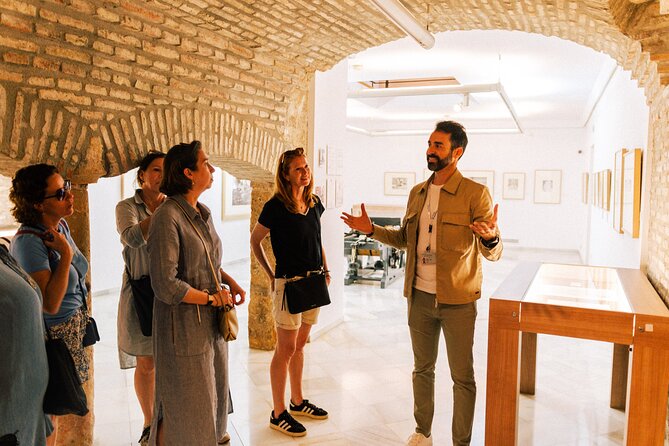
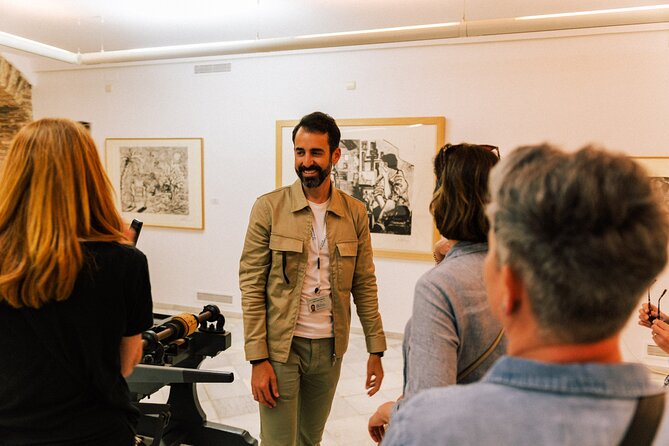
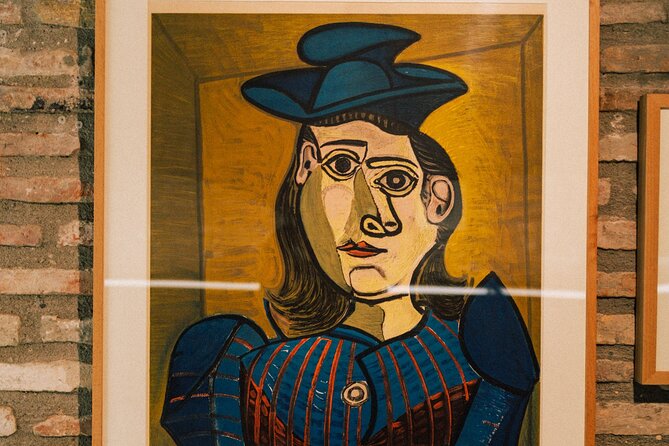
The old Bazán Hospital is one of the most interesting stops on the route. The building dates from an earlier era and now houses the National Engraving Museum. If the museum is open during your tour, the guide usually takes the group inside, and entrance is complimentary.
This is one of the tour’s practical advantages. You get a chance to see an interior collection without paying an extra admission fee, but you should treat the visit as dependent on opening hours. If the museum is closed, the outside of the building still helps you read the old town as more than a collection of pretty lanes.
Allowing roughly 10 minutes here means the museum visit may be brief. That is fine for orientation, especially if you want to return later for a slower look. Ask your guide about the museum if art and printmaking interest you, since the amount of time available can depend on the day’s schedule.
More Walking Tours in Spain:
- Puglia: Olive Oil Tasting Experience with Olive Grove Walk
★ 4.6 · 49 reviews - Buje: Authentic Istrian family farm, guided walk, foods & wine
★ 5.0 · 37 reviews - DISCOVER SORRENTO, food &Walking tour . Lemons-cheese&olive oil
★ 4.5 · 34 reviews - Cres: Olive Oil Walking Tour with Tastings
★ 4.9 · 24 reviews
Medieval defenses at Torre de la Pólvora

Torre de la Pólvora offers a look at the remains of Marbella’s medieval walls. This is not a complete fortress experience, and you should not expect a large, preserved castle complex. The value is in seeing how defensive structures survive inside a modern town.
The old walls also help explain the tight street plan nearby. The city center was shaped by defense, movement, and limited space. As you walk, pay attention to buildings that seem to fit awkwardly into the old line of the walls. That mix of old stone and later construction is part of what makes the area interesting.
A guide is especially useful here. Without explanation, a partial tower or wall can be easy to pass by. With context, it becomes evidence of how Marbella developed over time.
Plaza de los Naranjos and the end of the walk
The route finishes at Plaza de los Naranjos, Marbella’s best-known old-town square, or in the nearby streets. This is a practical ending point because you are left in the middle of the area’s cafés, restaurants, and small shops.
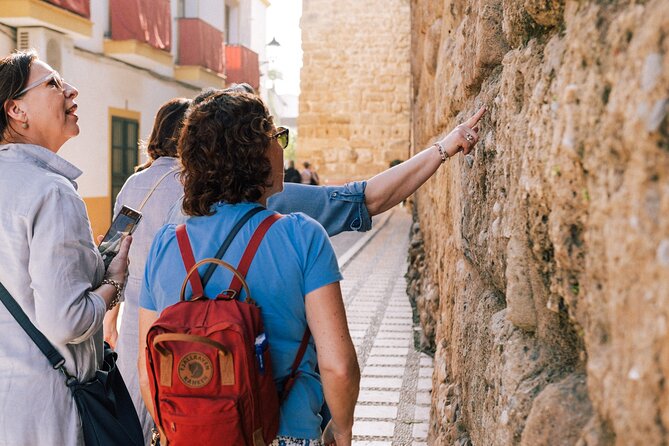
The square has its own complicated story. Narrow Moorish-era streets were removed to create this sixteenth-century Castilian-style plaza. In other words, the square’s spacious, formal appearance came partly from clearing away an older street pattern.
That detail gives you something to look for as you continue exploring on your own. The surrounding lanes feel more winding and enclosed, while the plaza feels planned and open. You can compare the two forms within a few minutes.
The official end point is useful for a half-day in Marbella. You can stop for tapas, browse the old town, or ask your guide for suggestions. Several bookings have included help with planning lunch and further sightseeing, which is one advantage of having a local guide rather than following a printed route.
The olive oil tasting at D’Oliva
The tasting is not an afterthought. It gives the tour a strong Andalusian finish and turns a familiar food into something you can examine more closely.
At D’Oliva, you may taste between six and 10 extra virgin olive oils, depending on availability. Bread is provided for sampling, and the shop staff explain differences in flavor. The point is not simply to identify your favorite. You begin to notice that olive oil can be mild, peppery, grassy, bitter, or intensely fruity.
For many people, this is the most distinctive part of the experience. A church or square can be seen in many cities, but a guided tasting connects Marbella with an everyday part of Spanish food culture.
There is one important limitation: the tasting is subject to D’Oliva’s opening hours and availability. If this element matters most to you, check the timing when you book and confirm the arrangements with the operator. It is included in the experience when available, but it should not be treated as guaranteed at every hour.
What the private format adds
A private tour changes the pace and feel of a walking route. You do not have to wait for a large group to gather, and you can ask follow-up questions without holding up a crowd. If someone in your group wants more detail about the walls, the chapel, or local food, the guide can spend a little extra time there.
The format also helps with mobility. One booking described the walk as easy to navigate for people with some mobility issues, and the route stays within the old town rather than requiring private transport. Still, Marbella’s historic center includes narrow streets and uneven surfaces, so you should discuss any mobility concerns with the operator before arrival.
Service animals are allowed, and most people can participate. The tour is offered in English. A mobile ticket is available, and confirmation is sent at booking.
The private setup is also why the cost is higher than a standard group walk. At $150.85 per person, value depends heavily on group size. For one or two people, it is a premium introduction. For a small group sharing the experience, the personal guide, flexible conversation, and tasting can make the price easier to justify. Group discounts may be available.
Timing, meeting point, and weather
Plan on about two hours, with roughly 10 minutes at many of the historic stops and about 15 minutes for the olive oil tasting. The schedule can shift slightly if the guide spends more time answering questions or if the museum is open.
You meet at the Virgen del Rocío fountain in Parque de Alameda, listed at the location code G457+GM Marbella. The tour ends at Plaza de los Naranjos or close by. Private transportation is not included, so you need to make your own way to the central meeting point.
Wear comfortable shoes and bring water, especially in warm weather. The route is not described as difficult, but outdoor conditions can affect the experience. If poor weather forces a cancellation, you can choose another date or receive a full refund.
You can cancel for a full refund up to 24 hours before the start time. Changes or cancellations made less than 24 hours in advance are not accepted for a refund.
Who should book this Marbella walk
I would choose this tour if you are visiting Marbella for the first time and want more than a self-guided stroll through attractive streets. It is also a good fit if you enjoy local food and prefer a small, private experience to a large group.
The tour suits couples, families, and friends who want to set their own pace. It is particularly useful at the start of a stay, since your guide can point out areas to revisit and suggest places for lunch or further sightseeing.
You may want a different activity if you are mainly interested in a long museum visit, a full-day excursion, or a detailed food tour. The museum visit is brief and dependent on opening hours, and the olive oil tasting lasts about 15 minutes. This is first an old-town walking tour, with food as a memorable finish.
Should you book it?
Book this tour if you want Marbella’s old town explained by a local guide and like the idea of ending with a hands-on olive oil tasting. The private format, central route, and mix of art, religious buildings, medieval defenses, and food make it a well-rounded introduction.
Skip it if the price feels high for a two-hour walk or if you need a guaranteed museum visit and tasting at a fixed time. Before paying, confirm the guide, start time, and D’Oliva’s availability. For a small group seeking personal attention and useful local advice, this is a thoughtful way to get your bearings in Marbella.
FAQ
How long does the Marbella old-town tour last?
The tour lasts approximately two hours.
What language is the tour offered in?
The experience is offered in English.
Is this a private tour?
Yes. Only your group participates in the private activity.
Where does the tour begin?
The meeting point is by the Virgen del Rocío fountain in Parque de Alameda, in central Marbella.
Where does the tour finish?
The tour ends at Plaza de los Naranjos or in the surrounding old-town area.
Is transportation included?
No. Private transportation is not included.
Is the olive oil tasting included?
Yes, the tasting is included when available. You may sample 6 to 10 extra virgin olive oils at D’Oliva, subject to the shop’s opening hours and availability.
Is museum admission included?
Entrance to the National Engraving Museum at Hospital Bazán is complimentary if the tour takes place while the museum is open.
Can I cancel for a full refund?
Yes. You must cancel at least 24 hours before the experience start time for a full refund. If poor weather causes the operator to cancel, you can receive a full refund or choose another date.
Just added around Spain
- XXI Century Olive Oil Mill Tour★ 5.0 · 3 reviews
- Visit to an olive oil mill and oil tasting with aperitif and food and wine pairing.★ 5.0 · 2 reviews
- Ulldecona: Guided Tour of the Millenary Olive Trees of Arión★ 5.0 · 2 reviews
- Treurer: Tapas Gourmet and Extra Virgin Olive Oil★ 4.7 · 3 reviews
- Olive Oil and Winery Tour from Zaragoza City★ 5.0 · 4 reviews
- Olive Oil Private Full-Day Tour with Tasting in Valencia★ 5.0 · 2 reviews
- Olive Oil Factory from Seville Private Tour★ 5.0 · 2 reviews
- Olive Oil Tasting Experience in Sevilla★ 5.0 · 2 reviews
Olive Oil Tastings, compared.
The Governor’s Olive Mill Tour with Olive Oil Tasting
Read our review →


Masseria tour among thousand-year-old olive trees with oil tasting
Read our review →
Olive Grove Tour with Wines & Olive Oil Tasting
Read our review →
Bardolino: Lake Garda Oil Mill Tour with Olive Oil Tasting
Read our review →
Guided tour and olive oil tasting in Alhaurin el Grande (Málaga)
Read our review →Browse the lists this tour appears in