
REVIEW · BAEZA
Baeza: Olive Oil Tasting Experience
Jaén produces much of Spain’s olive oil, and this 90-minute tasting in Baeza gives that everyday kitchen staple a proper introduction. At La Casa del Aceite, you’ll learn how olives are grown and picked, how oil is made, and how quality differs before tasting three varieties side by side.
I like the clear, hands-on format: the official blue or red tasting glass helps you judge color and aroma, while apples and bread reset your palate between samples. I also like the final taste of foods made with extra virgin olive oil, including specialty chocolate. The main limitation is that the experience focuses on explanation and tasting rather than a full working mill visit, and one attendee wished for a short film showing the production process.
- Three oils, one sitting: Compare different varieties and learn how their aromas and flavors change.
- A useful Jaén introduction: Follow olive growing, harvesting, and oil production through images and explanation.
- Proper tasting tools: Use an official blue or red glass and a card for recording your notes.
- Local pairings: Cleanse your palate with apple and bread, then sample foods made with EVOO.
- Personal guiding: Maria has led sessions in excellent English, while Anna has also guided the experience.
- Easy central meeting point: Find La Casa del Aceite at Plaza de la Constitución in Baeza.
Why Olive Oil Makes Sense in Baeza
Baeza is in Jaén, the Spanish province most closely tied to olive oil production. Here, olive trees are not just a scenic backdrop. They shape local agriculture, food, work, and identity.
That context makes this more useful than a quick shop tasting. You’re not simply sipping oil and choosing the one you like best. You’ll first learn why oils differ, then use that information immediately at the table.
The experience is especially helpful if olive oil labels leave you guessing. Terms such as variety, quality, and extra virgin can seem vague when you see them on a supermarket shelf. Here, the guide connects those ideas to what you smell and taste.
At $17 per person, the price is modest for a guided activity in central Baeza. You get instruction, three oil samples, palate cleansers, a tasting sheet, and additional food samples. I see it as good value for anyone who wants more than a casual food stop, though it will be less useful if you already know olive oil tasting techniques well.
Starting at La Casa del Aceite in Plaza de la Constitución
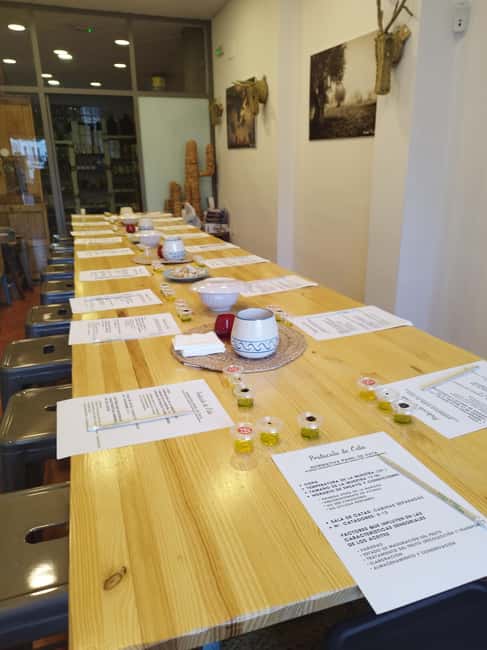
Your meeting point is the entrance of La Casa del Aceite, directly on Plaza de la Constitución. This central location makes the activity easy to fit into a day of sightseeing in Baeza, with no separate transport arranged as part of the experience.
Plan to arrive in comfortable clothes. The activity lasts about an hour and a half, and the format moves between explanation and seated tasting rather than demanding a great deal of walking.
The guide speaks English or Spanish. Maria has led a session in excellent English and handled a wide range of questions about growing, harvesting, and production. Anna has also guided the tasting with energy and strong subject knowledge. Since guides can vary, the tone and exact presentation may differ, but the planned content remains the same.
The activity is wheelchair accessible. That is a useful detail for anyone planning a food experience with a mixed group, since accessibility can be harder to judge in older Andalusian buildings.
More Olive Oil Tastings in Spain:
- Guided tour and olive oil tasting in Alhaurin el Grande (Málaga)
★ 5.0 · 200 reviews - Visit of the olive grove, olive oil tasting and snack
★ 4.9 · 111 reviews - Visit Oil Mill Museum and Olive Oil Tasting in Ronda
★ 4.5 · 105 reviews
The First Part: Olive Trees, Harvesting, and Production
The opening presentation introduces the culture of olive oil in Jaén. You’ll begin with the earliest crops and move toward the olive trees and plantations found around Baeza.
This section matters because tasting is easier once you understand what created the oil in your glass. The guide explains that different olive varieties and growing areas can produce different results. You’ll also learn the basic differences in oil quality, rather than treating all bottles labeled olive oil as interchangeable.
Images show how olives are picked and how oil is usually produced. That visual help is useful because the process can otherwise sound abstract. You’ll see the basic path from tree to finished product, then connect it to the oils served later.
The presentation is informative without requiring specialist knowledge. If you are new to olive oil, you can follow the key ideas without preparation. If you already cook with Spanish oil, you’ll have a better framework for asking questions about varieties and quality.
One small gap is worth noting. The experience does not promise a visit to an active olive mill, and one person hoped for a short film about production. If you want machinery, working fields, and a full harvest visit, this is not that kind of outing. It is a compact indoor lesson paired with a tasting.
How to Taste Three Varieties Properly
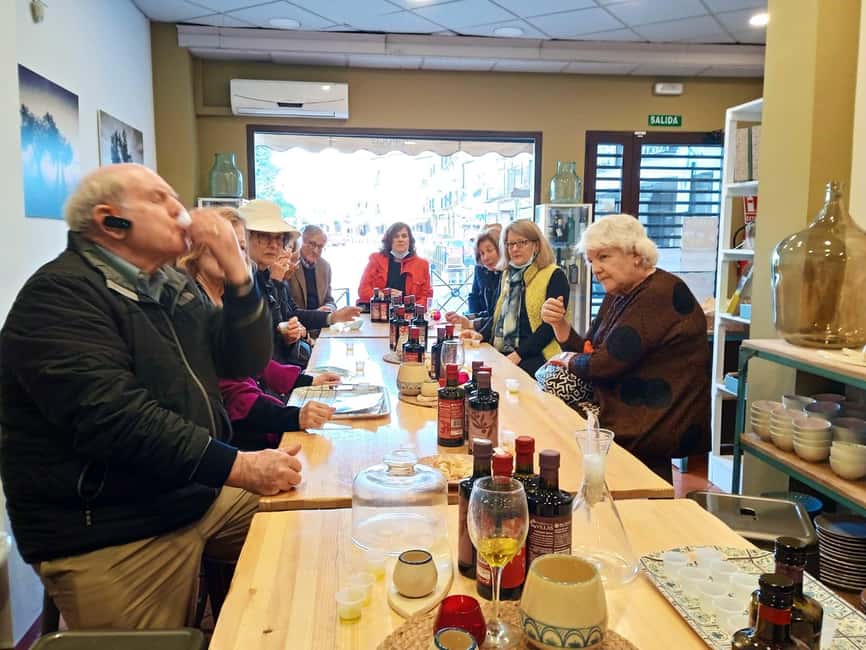
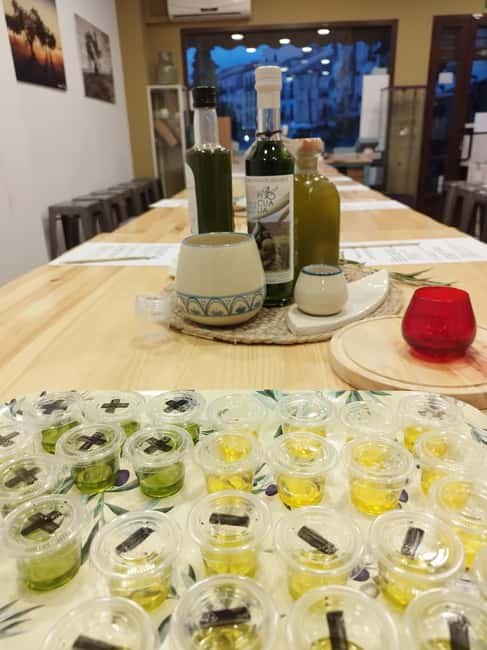
The seated tasting is the heart of the experience. You’ll receive three olive oils made from different varieties, then examine and taste them one at a time.
The official blue or red tasting glass is more than a nice prop. Its color keeps you from relying too heavily on the oil’s appearance, since color alone does not tell you whether an oil is good. The shape also helps hold aromas so you can notice more before tasting.
You’ll use a tasting card to record what you detect. The guide helps you consider the sensory qualities of each sample, such as aroma, flavor, and the sensations left in your mouth. You do not need to arrive with a trained palate. The value is in learning a method you can repeat at home.
Expect the oils to differ. One may seem softer, another more pronounced, and another more aromatic or peppery. The point is not to crown one sample the universal winner. Your preferred oil depends on what you cook, what you eat with it, and how much intensity you want.
That comparison is the reason I prefer this format to a single sample at a shop. With three oils tasted in sequence, you can notice contrasts instead of trying to remember an isolated flavor.
Apple, Bread, and EVOO-Made Treats
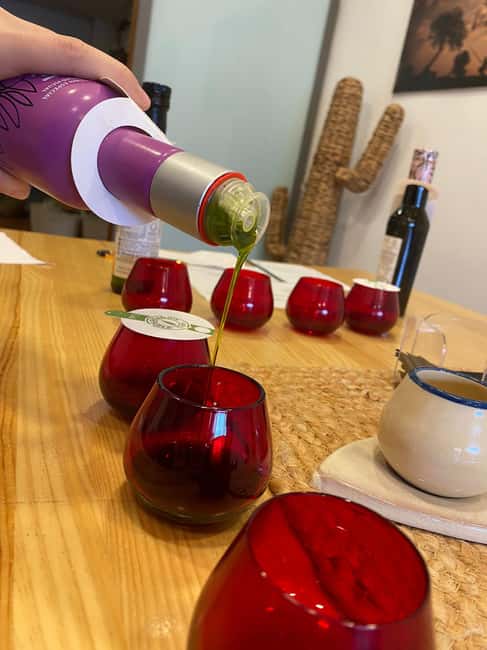
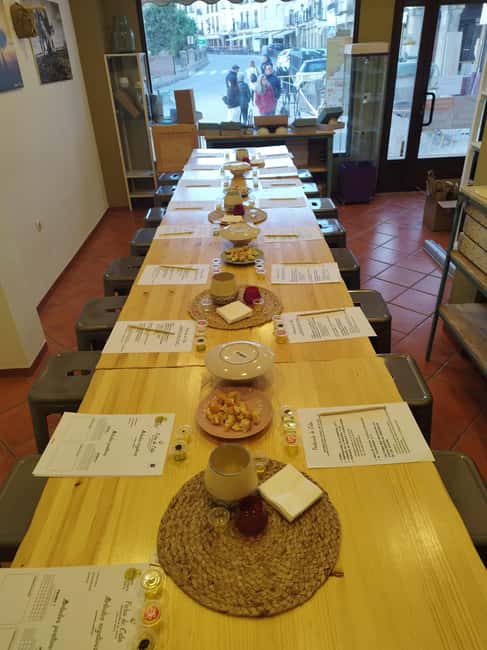
Apple and bread are provided between samples to refresh your palate. These are simple accompaniments, but they serve a practical purpose. Strong flavors can linger, and a clean palate makes the next oil easier to judge.
At the end, you’ll try a small selection of foods made with extra virgin olive oil. Specialty chocolate is included among the possible treats. That final tasting shifts the focus from judging oil on its own to thinking about how EVOO works in finished foods.
This part should appeal to people who enjoy Spanish food but do not want a full meal. It adds variety without turning the activity into a long restaurant-style event.
Keep your expectations in proportion. The description promises a small tasting, not a large spread or lunch. You’ll sample products, learn how oil can be used beyond savory dishes, and finish with a pleasant food note.
A few more olive oil tours around Spain worth a look
- Ronda: LA Almazara LA Organic, Olive Oil Museum and Tasting
★ 4.6 · 435 reviews - Guided Tasting Tour in 16th century House and Olive Oil Factory
★ 5.0 · 169 reviews - Oil tourism in Pulpí Discover the World of EVOO
★ 5.0 · 133 reviews - Private Tasting of Olive Oil in Córdoba
★ 5.0 · 93 reviews
What Makes the $17 Price a Good Deal
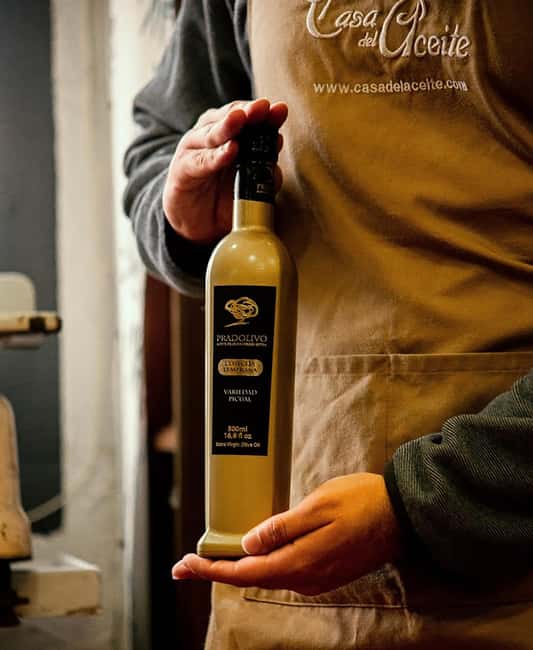
The $17 cost is low compared with many dedicated food activities, but value depends on what you want from your time in Baeza.
For that price, you receive:
- A live guide in English or Spanish
- An explanation of olive growing and production in Jaén
- Three olive oil samples
- Use of an official tasting glass
- A card for tasting notes
- Apple and bread between samples
- A selection of foods made with EVOO
I consider that a fair package for a 1.5-hour activity. The guide’s explanations are the main value. You can buy olive oil in many places, but comparing three varieties with a tasting method gives you something you can use later.
The price is also easy to justify if you are already interested in regional food. Baeza’s olive oil culture is a major part of local life, so this activity adds meaning to dishes you may eat elsewhere in Andalusia.
On the other hand, do not book it expecting a farm excursion, a full meal, or a long technical seminar. The low price reflects a short, focused format. It works best as a smart addition to sightseeing, not as an all-day food tour.
Who Will Enjoy This Baeza Tasting Most
I would recommend this experience to several types of visitors.
First, it suits curious cooks. You’ll learn how to compare oils and can use that knowledge when shopping or seasoning food at home.
It also fits visitors who want a local activity with a strong connection to Jaén. The session explains why olive oil matters here instead of presenting it as a generic Spanish product.
Food-focused couples and small groups should find the 1.5-hour length manageable. You get a clear subject, a seated tasting, and enough variety to keep the session active without taking over the day.
It is also a good choice for people who do not drink alcohol. Many Andalusian tastings center on wine, but this one gives you a regional food experience without alcohol being part of the activity.
Families may find the educational part useful, though the provided information does not specify a minimum age or a children’s format. The tasting includes bread, apple, and sweet products, but the main lesson is aimed at adults who want to understand oil.
I would be more cautious if your priority is seeing olive trees in the countryside or watching oil being made at a mill. The activity discusses those stages and uses images, but it does not promise an outdoor plantation visit.
Timing, Language, and Booking Flexibility
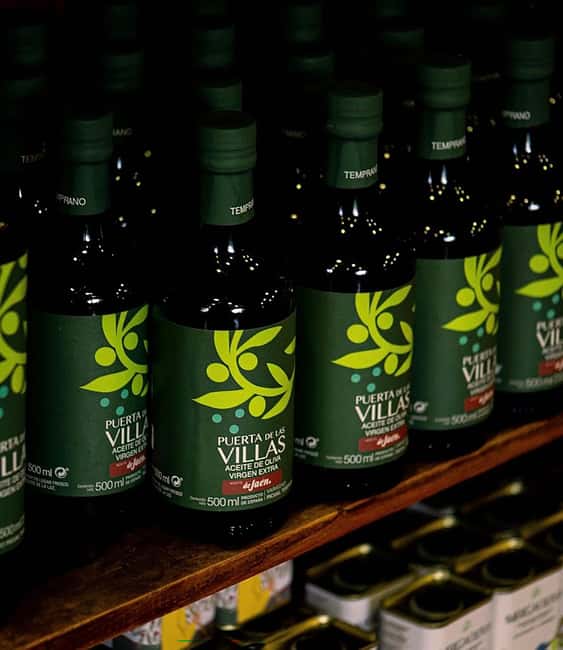
The activity lasts 1.5 hours, with starting times based on availability. That makes it fairly easy to place before or after other Baeza plans, but you should check the exact time when booking.
English and Spanish are available. If you want to ask detailed questions about production or tasting, choosing the language in which you are most comfortable will improve the experience.
You can cancel up to 24 hours ahead for a full refund. You can also reserve now and pay later, which is useful when your Andalusia schedule is still shifting. These policies reduce the risk of fitting the tasting into a busy sightseeing day.
The meeting point is specific and simple: the entrance to La Casa del Aceite in Plaza de la Constitución. You do not need to arrange transport as part of the activity.
How It Compares With a Larger Food Tour
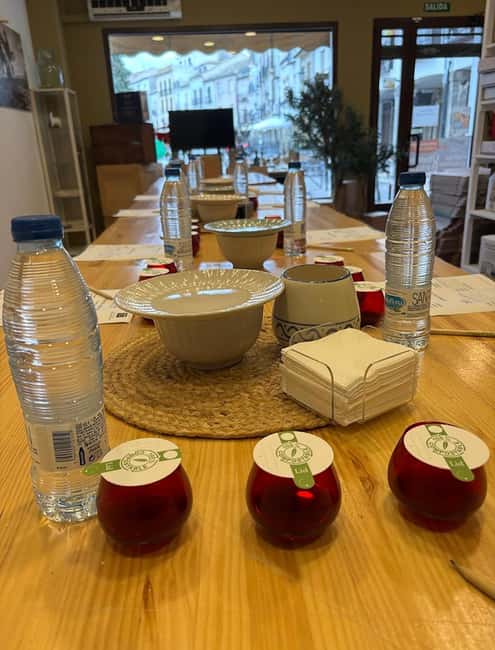
This experience is narrow by design. It concentrates on olive oil rather than trying to cover every Andalusian food tradition in one afternoon.
That focus is a strength if you want to understand one product properly. You’ll have enough time to hear the basics, ask questions, and compare three oils without rushing from one stop to another.
A broader food tour could offer more dishes and perhaps more neighborhoods, but it might not give olive oil the same attention. Here, the tasting glass and note card create a small lesson you can remember.
The tradeoff is variety. If you want a full meal, several businesses, or a walking tour of Baeza, choose something else or pair this with another activity. The oil tasting is best treated as one focused stop.
The Strongest Part: Clear Guiding and Personal Attention
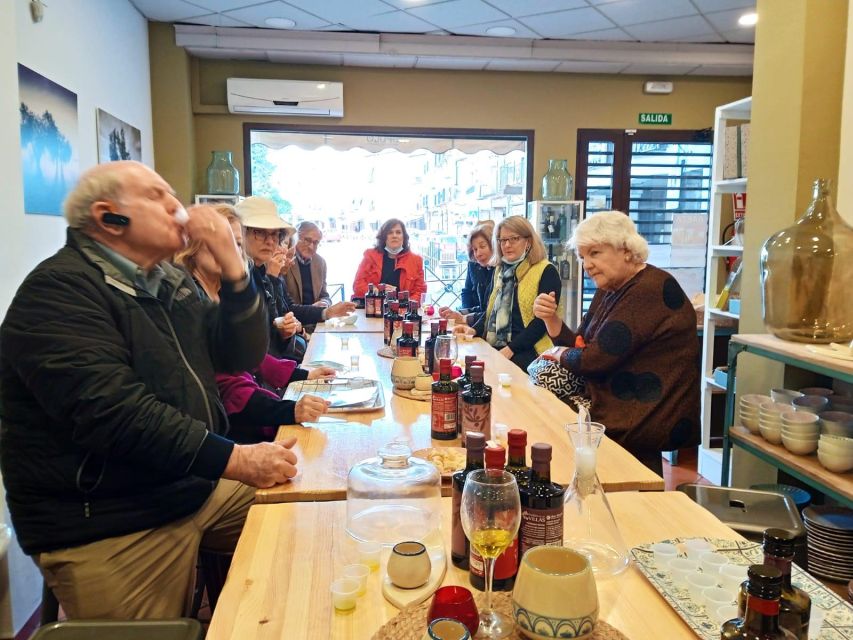
The most consistently praised element is the guide’s presentation. Maria’s excellent English and willingness to answer questions made the session especially useful for an English-speaking couple. Anna has also led the activity with enthusiasm and strong command of the subject.
A private or very small group can make a difference here. One session had only two participants, allowing the guide to respond closely to questions and adjust the discussion. Group size can change from one date to another, so do not assume every departure will feel private.
The teaching also gets credit for covering several angles: olive varieties, cultivation, harvesting, production, quality, and tasting. That range gives the experience substance without requiring you to know technical terms in advance.
With an overall score of 4.7 from seven ratings, the activity has a strong record. The one clear criticism is the lack of a short production film, which is a useful expectation setter rather than a major flaw.
Should You Book the Olive Oil Experience?
Book it if you want an affordable, central, and well-explained introduction to the food culture of Jaén. The three-oil comparison, tasting glass, note card, and EVOO-made treats give you more than a quick sample at a shop.
I especially recommend it if you cook, enjoy food history, or want a short activity between Baeza’s major sights. The guides, including Maria and Anna, can make the lesson personal through questions and conversation.
Skip it if you need an outdoor olive farm visit, a working mill tour, or a substantial meal. For everyone else, $17 buys a useful hour and a half, and you’ll leave with a better idea of what to look for the next time you pour olive oil over bread.
FAQ
Where does the olive oil tasting take place?
Meet at the entrance of La Casa del Aceite in Plaza de la Constitución in Baeza, Andalusia.
How long does the experience last?
The guided tasting lasts 1.5 hours.
How many olive oils will I taste?
You will taste three different olive oils and learn how to compare their sensory qualities.
What food is included with the tasting?
Apple and bread are provided to cleanse your palate between oils. You will also sample a selection of foods made with extra virgin olive oil, including specialty chocolate.
Is the experience available in English?
Yes. The live guide can lead the activity in English or Spanish.
Is the activity wheelchair accessible?
Yes, the experience is listed as wheelchair accessible.
Can I cancel my booking?
You can cancel up to 24 hours in advance for a full refund. You can also reserve now and pay later.
Just added around Spain
- XXI Century Olive Oil Mill Tour★ 5.0 · 3 reviews
- Visit to an olive oil mill and oil tasting with aperitif and food and wine pairing.★ 5.0 · 2 reviews
- Ulldecona: Guided Tour of the Millenary Olive Trees of Arión★ 5.0 · 2 reviews
- Treurer: Tapas Gourmet and Extra Virgin Olive Oil★ 4.7 · 3 reviews
- Olive Oil and Winery Tour from Zaragoza City★ 5.0 · 4 reviews
- Olive Oil Private Full-Day Tour with Tasting in Valencia★ 5.0 · 2 reviews
- Olive Oil Factory from Seville Private Tour★ 5.0 · 2 reviews
- Olive Oil Tasting Experience in Sevilla★ 5.0 · 2 reviews
Olive Oil Tastings, compared.
The Governor’s Olive Mill Tour with Olive Oil Tasting
Read our review →
Masseria tour among thousand-year-old olive trees with oil tasting
Read our review →
Olive Grove Tour with Wines & Olive Oil Tasting
Read our review →
Bardolino: Lake Garda Oil Mill Tour with Olive Oil Tasting
Read our review →
Guided tour and olive oil tasting in Alhaurin el Grande (Málaga)
Read our review →Browse the lists this tour appears in