
REVIEW · ATHENS
2-Day Delphi & Olympia Tour with Olive Oil & Honey Tasting
Ancient Delphi and Olympia are the reason to take this two-day road trip, but the smaller stops give it much of its character. You move from mountain villages and a Venetian harbor to the two great sacred sites of classical Greece, without having to handle Greek roads yourself.
I like the private car and hotel pickup, especially for solo visitors or anyone who wants a calm ride with an English-speaking driver. I also like the local food stops, from Arachova’s formaela cheese to farm-made honey and olive oil in Olympia. The main drawback is price: at $963.65 per person, this is a costly choice for one person, and admission tickets plus any guide upgrade cost extra.
Key points to know before booking
- Delphi and Olympia in two days: You see two of Greece’s most important archaeological sites on one long but efficient route.
- Private transport from Athens: Pickup is available at your hotel, Piraeus port, or Athens airport for an additional airport charge.
- Food is part of the route: Expect olive oil, wine, Greek olives, honey, coffee, desserts, and a chance to taste Arachova cheese.
- One night in Naupactus: The overnight stop breaks up the drive and puts you near the Venetian port and castle.
- Driver, not automatically a guide: An English-speaking driver is included. You can upgrade for a tour guide, and archaeological entrance fees are not included.
- Weather can change the plan: The Monastery of Hosios Loukas is part of the advertised route, but poor mountain weather can lead to more time in Nafpaktos instead.
Why this two-day route works
Greece packs a lot into a small area, but Delphi and Olympia are not next-door stops. Doing both independently in two days means dealing with long drives, parking, hotel timing, and unfamiliar roads. This trip handles the transport and keeps the route moving.
The journey is also more personal than a large coach excursion. Only your group participates, and pickup and drop-off are arranged from your chosen point in Athens. That matters on a route with several stops, since you are not waiting for a busload of people at every coffee break.
Still, do not mistake private transport for a fully guided archaeological tour. The included service is a private car with an English-speaking driver. If you want detailed explanations inside Delphi and Olympia, choose the guide upgrade. You will also pay entrance fees separately, so budget beyond the headline price.
The $963.65 per-person cost makes the most sense for a small group that values convenience and privacy. Room arrangements are based on party size: two people share a double room, three share a triple room, and one person receives a private single room. Solo travelers get the easiest logistics, but they also face the steepest cost per person.
More Olive Oil and Honey Tastings in Athens:
- Extra Virgin Olive Oil & Greek Honey Experience with Pairings
★ 5.0 · 7 reviews - Traditional breakfast in markets with olive oil and honey tasting
★ 5.0 · 6 reviews - From Chania: Olive Oil, Wine, Cheese & Honey Tasting Tour
★ 4.6 · 490 reviews
Arachova and the first taste of mountain Greece
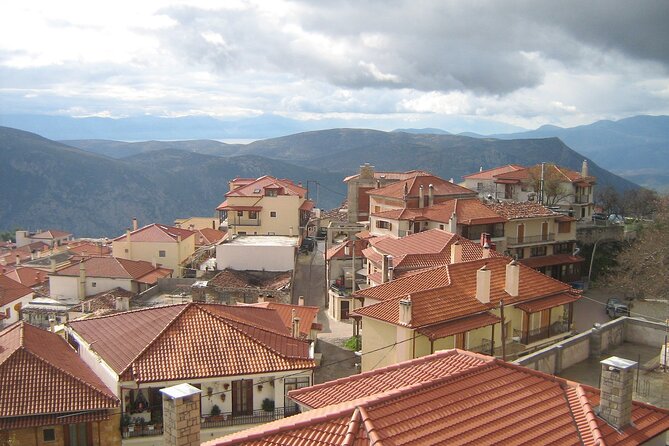
The first major stop is Arachova, about 1,000 meters above sea level. It is known as one of Greece’s popular winter destinations, but the appeal here is not limited to snow or ski season. You get about three hours to walk around, stop for coffee, and sample the village’s local character.
Make time for formaela, Arachova’s famous cheese. It can be served in several ways, and this is a useful introduction to regional food before the archaeological sites take over the day. The stop is long enough for a relaxed break rather than a quick photograph beside the car.
Arachova is also a reminder that this tour is not only a chain of ancient ruins. You get mountain scenery, local food, and a village stop before reaching Delphi. If your main goal is to spend every possible minute at the archaeological site, the three-hour visit may feel generous. I see it as a welcome change of pace after leaving Athens.
Delphi, where the ancient world met
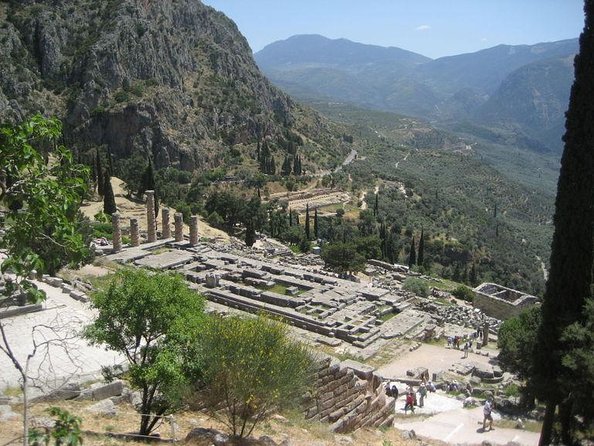
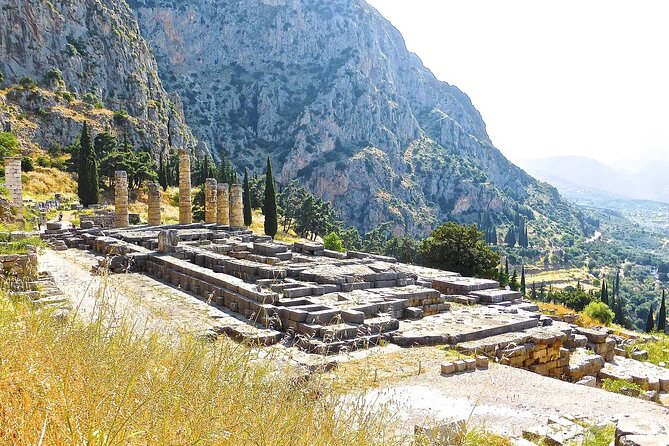
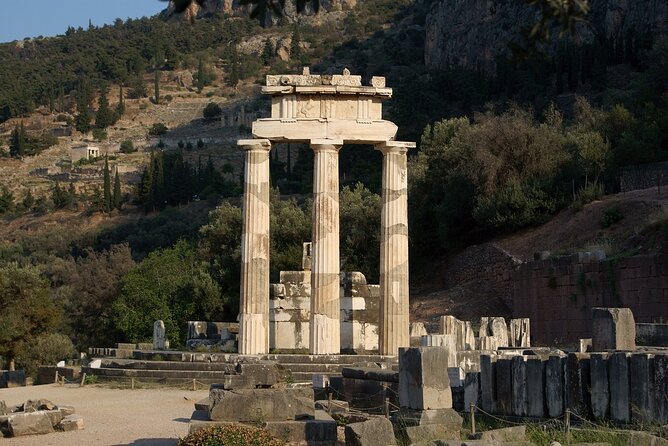
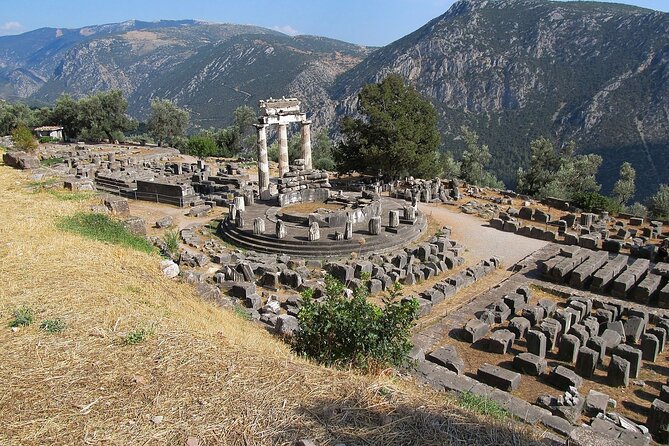
Delphi is the heart of the first day. In ancient times, it was regarded as the center of the world, set between the two rocky Phaedriades. Its importance came from the sanctuary of Apollo and the oracle, whose advice influenced rulers, cities, and private visitors across the Greek world.
Plan on about two hours at the archaeological site and museum. That is enough to see the major points, but it is not a leisurely study visit. If you care about ancient architecture or religious history, you may want to use every minute and keep your pace steady.
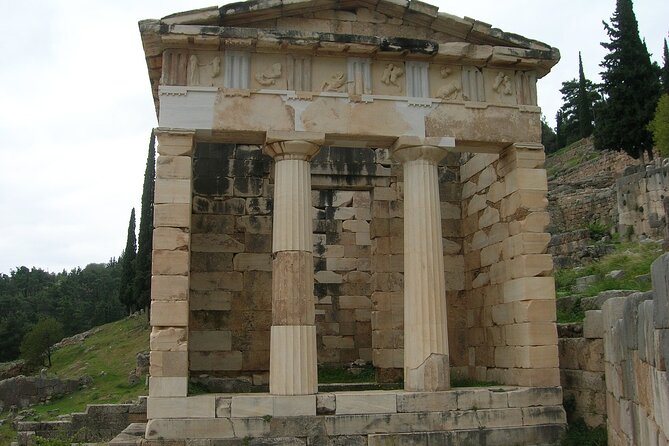
The site includes Castalia Spring, the Monument of the Argive Kings, the Treasury of the Athenians, the Athenian Stoa, the Polygonal Wall, the Monument of Plataea, and the Temple of Apollo. The Treasury of the Athenians is especially useful for understanding how individual city-states displayed their wealth and loyalty at the sanctuary.
The museum adds needed context. Ancient stones can be hard to read without objects, sculpture, and architectural pieces nearby, so do not skip it. You will need to buy admission separately, and the listed two-hour stop includes both the archaeological site and museum, so an organized pace helps.
A guide upgrade is worth considering here if ancient Greek religion and politics are new to you. Without a guide, you will have the freedom to move at your own speed, but the driver may not provide the same level of site interpretation as a licensed archaeological guide.
Nafpaktos gives the first day a gentler finish
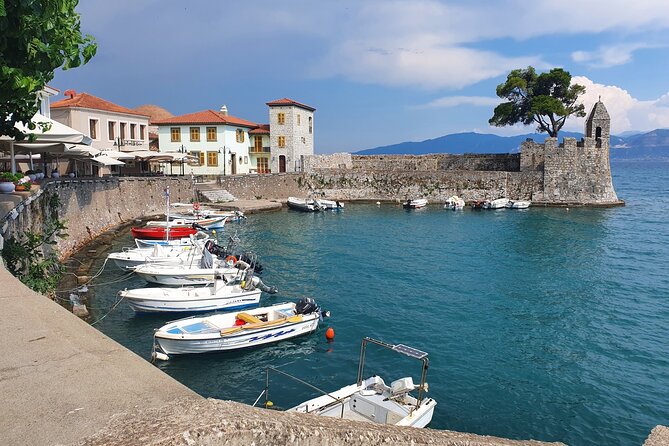
After Delphi, the route continues to Nafpaktos, a seaside town with a Venetian castle and a small Venetian port. You have about two hours to walk around and take in the views before settling in for the night.
This is a smart overnight location because it breaks up the long route. Rather than returning to Athens or pushing straight toward Olympia, you get an evening in a smaller coastal town. The port and castle also provide a pleasant contrast to Delphi’s mountain setting.
The overnight hotel is in Naupactus, the modern name commonly used for Nafpaktos. Breakfast is included. The hotel can be charming and friendly, but do not expect the sound insulation of a modern chain property. The building may be older, so light sleepers should pack earplugs.
The exact hotel name and pickup times are supplied about a week before departure in an updated itinerary. That makes it harder to plan every detail far ahead, but the extra information should help you organize dinner, luggage, and the next morning.
Same groves, a different morning out:
- Athens: Acropolis Wine Tasting with Cheese and Olives
★ 4.9 · 337 reviews - Athens Old Town: Greek Olive Oil & Herbs Tasting
★ 4.2 · 41 reviews - ”Athens Olive Oil Tasting”
★ 4.9 · 16 reviews - Street food tasting in the locals favorite hidden places
★ 5.0 · 15 reviews
Olympia puts the Olympic story in place
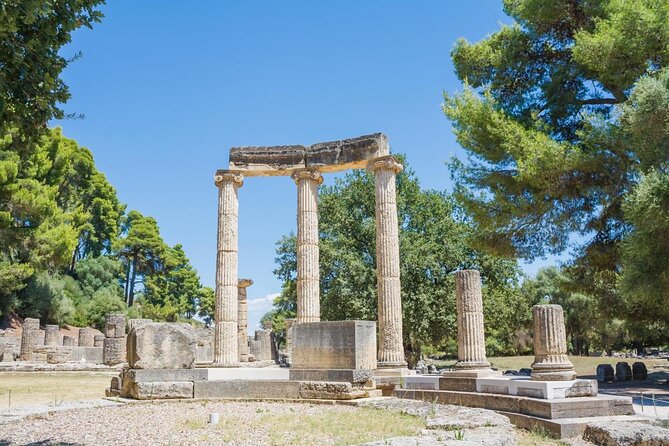
Day two begins at Ancient Olympia, the birthplace of the Olympic Games. The site takes you back to the early games traditionally dated to 776 B.C., when athletic contests formed part of a major religious festival dedicated to Zeus.
You have about two hours here, with admission charged separately. The site includes the Council House, where athletes took the Olympic oath, the Treasury Houses, the Gymnasium, the Palestra, and the ancient stadium.
The stadium is the visual payoff. The marble starting blocks remain in place, making it easier to picture the runners lining up for competition. You can stand in the same broad space where ancient athletes competed, though the site is more open and spread out than many visitors expect.
The gold and ivory statue of Zeus, once counted among the Seven Wonders of the Ancient World, is no longer present at Olympia. The value of the visit is seeing the setting where the cult and games operated, then using the remains to reconstruct the wider complex in your mind.
Two hours can work, but it will not satisfy everyone. If you enjoy reading every sign and examining each architectural fragment, you may wish for more time. The private format gives you some flexibility, so ask about timing if your group has a strong interest in the ruins.
Olive oil, wine, and olives in Ancient Olympia
After the archaeological site, the tour shifts from ancient competition to present-day food. You spend about an hour at a market in Ancient Olympia, with tastings of local wine, premium olive oils, and Greek olives.
This is more useful than a standard souvenir stop because you get a direct introduction to products tied to everyday Greek cooking. Taste before you buy, and remember that the market is still a commercial stop. You may want to purchase something, but there is no need to fill your luggage with bottles unless you have room and a plan for carrying them.
The tasting also gives you a break after walking around Olympia. Archaeological sites require attention and standing, so an hour with food and drink helps reset the day before the drive back to Athens.
Klio’s Honey Farm adds a local touch
The honey farm is one of the most distinctive parts of the route. Under the trees, you can have coffee or juice with handmade desserts prepared using honey produced on the farm over generations.
This is a quieter stop than a museum or market. It lets you see how a local product becomes part of a family-run food tradition, and it gives you another chance to try something specific to the area rather than simply passing through.
The visit lasts about an hour. You are not asked to spend the entire day at a farm, which keeps the schedule practical. If you prefer archaeology above all else, this stop may feel optional. If you like food and small local businesses, it is one of the tour’s strongest additions.
Hosios Loukas and the weather question
The Monastery of Hosios Loukas is included among the places this route is designed to visit, but mountain weather can affect the plan. Poor conditions may make the monastery unsafe or impractical, in which case the schedule can shift toward extra time in Nafpaktos.
That flexibility is sensible. Mountain roads and winter conditions deserve caution, and a safe substitution is better than forcing a stop. Still, you should understand that the monastery is not guaranteed in every departure.
This is one reason to treat the route as a private touring framework rather than a rigid checklist. The driver can help adjust the day, but weather, road conditions, and site timing may shape what you actually see.
The drive back to Athens
The return to Athens takes about three hours from the final stops, although the full day can feel longer once you add the archaeological visit, tastings, and road breaks. A private car makes the return easier because you can settle in without navigating or changing buses.
A stop at the Corinth Canal can provide a memorable break on the drive home. It is a brief chance to look into the canal and stretch your legs before the final run into Athens.
Pickup and drop-off are available from an Athens hotel or Piraeus port. Airport pickup is also possible for an additional charge. Confirm the exact meeting point and timing before departure, especially if you are connecting with a flight or cruise.
What is included, and what costs extra
The package includes:
- Private car and English-speaking driver
- Hotel, port, or designated-point pickup and drop-off
- One night in Naupactus
- Breakfast
- Honey farm visit
- Olive oil and wine tasting in Olympia
- One bottle of water per person per day
Archaeological admission fees are not included. That applies to Delphi and Olympia, and you should keep extra cash or a payment card available for entry. Gratuities are optional, and the hotel city tax is also extra.
At this price, the strongest value is not the food alone. You are paying for a private vehicle, a two-day route, an overnight stay, and the ability to see two major sites without renting a car. The value improves for couples or a small group sharing the vehicle and room. For a solo visitor, the comfort is real, but the cost is harder to justify unless independence and ease matter more than saving money.
Who should book this trip
I would choose this tour if you want Delphi and Olympia in the same short holiday and do not want to drive. It is especially suitable for solo visitors, couples, and small groups who prefer a private vehicle over a large coach.
It also suits you if food matters almost as much as ruins. Arachova cheese, olive oil, wine, olives, and farm honey give the trip more variety than a simple two-site archaeology run.
You may want another option if you need a low-cost tour, want a licensed guide included automatically, or prefer to spend long unhurried hours at each archaeological site. A rental car could cost less for a group comfortable with driving, but you would take on the roads, parking, navigation, and hotel planning yourself.
The service is offered in English, confirmation arrives at booking, and most people can participate. Service animals are allowed, and the route is near public transportation in its pickup areas. WhatsApp is recommended for quick communication, and the program is delivered digitally unless you request a printed copy.
Free cancellation is available up to 24 hours before the experience begins. Changes or cancellations inside that window are not accepted for a refund.
Should you book it?
Book this trip if you want a private, carefully arranged route through Delphi, Olympia, Arachova, and Nafpaktos, with food stops that make the journey feel connected to modern Greece. The polite, cautious driving and prompt pickup are important advantages when you are covering this much ground.
Skip it if $963.65 per person feels too high, especially since admissions and a guide upgrade are extra. For the right small group, though, the cost buys time, comfort, and a much easier way to reach two major Greek sites in only two days.
FAQ
Is this a private tour?
Yes. Only your group participates in the activity.
What transport is provided?
A private car with an English-speaking driver is included. Pickup and drop-off are available from your hotel, Piraeus port, or a designated point. Airport pickup from Athens is available for an additional cost.
Is a tour guide included?
An English-speaking driver is included. A tour guide is available as an upgrade, but the supplied tour details do not state that a guide is included in the base price.
Are Delphi and Olympia admission fees included?
No. Entry and admission fees are not included in the tour price.
Where is the overnight stay?
You stay one night in Naupactus, also known as Nafpaktos. Two people share a double room, three people share a triple room, and one person has a private single room.
What tastings are included?
The tour includes honey farm treats, plus olive oil, wine, and Greek olive tastings in Ancient Olympia. Arachova is also a chance to try its local formaela cheese, though the supplied details do not state that cheese tasting is included in the price.
Just added around Athens
- Keramikos Olive Oil Experience & Walking Tour★ 5.0 · 6 reviews
- Relax Day: Thermal Lake, Olive Oil Tasting & Poseidon Temple Tour★ 5.0 · 5 reviews
- Private tour in Nafplio with Olive oil Tasting Tour in Corinth★ 5.0 · 9 reviews
- Olive Oil Tasting Farm Experience, Corinth Canal, Nafplio★ 5.0 · 2 reviews
- Private Wine & Olives Tasting Experience: Beach View Villa Paros★ 5.0 · 2 reviews
- ATHENS OLIVE ESTATE – Olive Oil Workshop with Farm-to-Fork Lunch★ 5.0 · 6 reviews
- Sounion Highlights: Vouliagmeni, Olive Farm, Poseidon Temple, Thorikos Theatre★ 4.5 · 3 reviews
- Full day tour Ancient Corinth with wine or olive oil tasting★ 5.0 · 6 reviews
Olive Oil & Honey Tastings, compared.

Butterfly Valley & Wine, Olive Oil, Honey Tasting Tour (Small Group)
Read our review →
Small-Group Honey & Extra Virgin Olive Oil Tasting Tour in Crete
Read our review →
Katakolon Small Group Tour: Olympic site, Honey/Olive Oil Tasting
Read our review →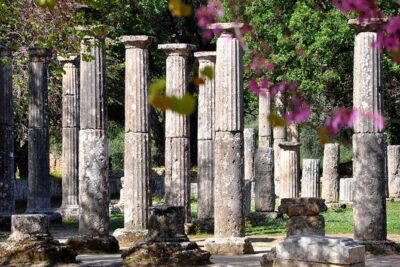
Olympia Shore Ex: Olympic site, Honey Farm & Olive Oil Tasting
Read our review →
Browse the lists this tour appears in