
REVIEW · ATHENS
Breakfast in the markets with olive oil and honey tasting
Athens shows its everyday character best around the food markets, where fishmongers, spice sellers, olive merchants, and produce traders serve local customers. This 2.5-hour morning tour turns that working market world into breakfast, with stops for pies, cheese, yoghurt, coffee, honey, olive oil, and a meal at a taverna used by market workers.
I like the direct contact with family-run food businesses, especially the olive shop operated by an olive farmer and the beekeeper family connection. I also like the small group limit of 10, which gives you room to ask about Greek eating habits rather than simply follow a guide from one sample to the next.
The main drawback is the food list. This is not a good match for vegans or anyone with lactose intolerance, and the generous tasting schedule may feel heavy if you prefer a light breakfast.
Key points to know before booking
- Breakfast begins in the market district: Start near Monastiraki and move through Evripidou, Athinas, and Omonoia.
- The food is substantial: Expect Greek yoghurt, pies, sausage, deli meats, cheeses, beans, local honey, coffee, and more.
- Meet the producers: Visit an olive shop run by an olive farmer and learn about honey from a beekeeper family.
- The best meal comes late: The final breakfast stop is a meze taverna where market traders eat.
- Guides make a difference: Mike and Rachel have led this tour, with a focus on food, culture, and practical Athens advice.
- Plan your morning carefully: Hotel pickup is not provided, and you need to reach the meeting point outside En Athinas near Cecil Hotel and Cosmote.
Why this Athens breakfast tour works
Many food tours in Athens focus on polished restaurants or a long list of small samples. This one takes a more useful route. You walk through the market streets first, then sit down to eat in places tied to the daily life of the neighborhood.
That order matters. Once you see sacks of spices, rows of olives, fresh produce, meat counters, fish stalls, and local shops, the breakfast foods make more sense. You are not just tasting feta or honey as isolated products. You are seeing how they fit into Greek shopping and home cooking.
The setting is central Athens, but it is not built around grand monuments. The tour begins at Monastiraki, then heads toward Evripidou and Athinas. These streets give you a look at a working side of the city that is easy to miss if you spend your whole visit around the Acropolis and Plaka.
I would choose this tour early in a stay. It gives you ideas for what to order later, where to buy spices and olives, and which traditional foods deserve another try. The tour also leaves the rest of your day open for museums, archaeological sites, or a longer lunch.
More Olive Oil and Honey Tastings in Athens:
- Extra Virgin Olive Oil & Greek Honey Experience with Pairings
★ 5.0 · 7 reviews - Traditional breakfast in markets with olive oil and honey tasting
★ 5.0 · 6 reviews - 2-Day Delphi & Olympia Tour with Olive Oil & Honey Tasting
★ 5.0 · 6 reviews
Meeting near Monastiraki and walking into the markets
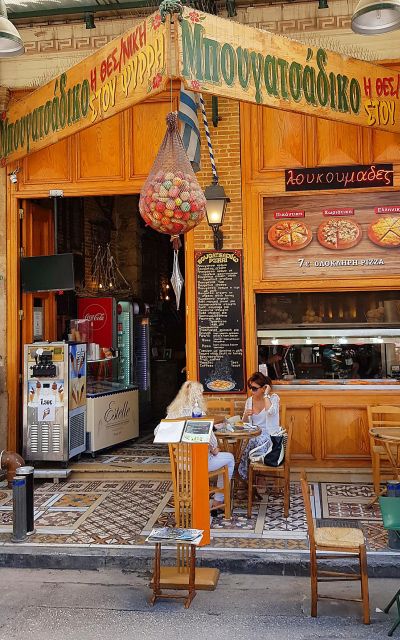
The meeting point is outside En Athinas, a small pie shop beside Cecil Hotel and a large Cosmote shop. You should identify those landmarks before leaving, since the tour does not include hotel pickup or drop-off.
From there, the group walks about five minutes from Monastiraki toward the market area. Wear comfortable shoes and bring water. The walking is part of the point, but the morning includes standing, moving through shops, and eating several times.
The small group format is a real advantage here. A maximum of 10 people is easier to manage in narrow food shops and market lanes than a large crowd. It also makes it simpler to ask a guide why a certain olive tastes bitter, how Greek coffee is made, or which foods are commonly eaten before work.
English is the tour language. Guides who have led the tour include Mike and Rachel. Mike has been praised for his clear narration and his grasp of both food and local culture. Rachel has been particularly good at explaining olive oil and honey, and she has adapted food choices for a participant with dietary needs. That said, you should still state all dietary requirements at booking.
Evripidou: spices, deli counters, and Greek pantry staples
The first market section is around Evripidou, with about 30 minutes for a market visit and food tasting. This is where the tour begins to show how much of Greek cooking depends on pantry ingredients rather than complicated recipes.
You can expect to see shops selling spices, olives, cheeses, and deli foods. The tastings include deli meats and cheese in a side-street deli shop. That stop gives you a practical shopping lesson: you can ask what to buy for a picnic, a simple meal, or a gift to take home.
The tour is especially useful if you want to shop for Greek ingredients during your stay. Your guide can point out places for spices, olives, and other delicacies at local prices. You may not remember every product name, but you should leave with a better sense of where Athenians buy food and how these shops differ from souvenir stores.
The food here is not designed around a single refined plate. It is a series of everyday tastes. That makes the stop more representative of Greek eating, but it also means the pace can feel informal. If you want a formal cooking lesson or precise recipes for every dish, this is not that kind of tour.
Athinas Street and the sound of daily shopping
The next section takes place along Athinas Street, with another 30-minute market visit and tasting. This is one of the strongest parts of the morning because the surroundings provide as much interest as the food.
You pass areas associated with meat, fish, fruit, vegetables, spices, and olives. The sights and smells change quickly. One shop may focus on produce while another is filled with dry goods or preserved foods. Your guide explains how local traders work and how these markets fit into community life.
The tour also shows you how Greeks shop for fresh produce. That sounds simple, but it gives you useful context for later meals. You will notice why a Greek salad tastes different when its ingredients are bought fresh, and why olives, beans, cheese, and olive oil appear so often on the table.
This is also the point where the city feels less arranged for sightseeing. You are seeing businesses that serve regular customers. Be polite when stopping to look, and follow your guide’s lead around shop entrances and counters. The market is a working place, not a stage set.
A few more olive oil tours around Athens worth a look
- Athens: Acropolis Wine Tasting with Cheese and Olives
★ 4.9 · 337 reviews - Athens Old Town: Greek Olive Oil & Herbs Tasting
★ 4.2 · 41 reviews - ”Athens Olive Oil Tasting”
★ 4.9 · 16 reviews - From Athens: Olive Oil Tasting, Olive Grove & Wine Experience
★ 5.0 · 13 reviews
Olive oil with the farmer who produces it
One of the tour’s most distinctive stops is an olive shop run by an olive farmer. You do not simply pour oil over bread and move on. You learn how olive oil is used in daily Greek cooking and taste it with the producer connection in view.
That personal link adds value. Olive oil is one of those foods that can sound interchangeable until you taste different styles side by side. The guide helps you pay attention to flavor and explains why the oil matters so much in Greek meals.
You can also ask practical questions about buying olive oil at home. The tour is not presented as a technical certification class, so do not expect a professional tasting seminar. Its strength is the plain connection between the farms, the market shop, and the food on your plate.
I like this stop because it gives a product you may already use a clear sense of place. Instead of treating olive oil as a decoration, the tour shows it as a daily staple and a central part of Greek food culture.
Greek coffee, pies, and the first real taste of breakfast
The morning continues through Athens before arriving in the Omonoia area for the longest stop, about 70 minutes. This portion includes coffee, breakfast, dessert, local snacks, regional foods, and a food market visit.
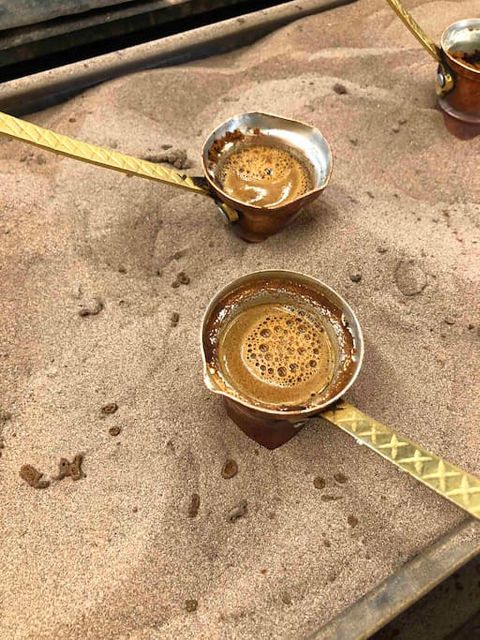
Greek coffee is prepared in the traditional way, and you get to watch it being made before drinking it. The coffee is small and strong, with a method that is part of the ritual. Your guide also explains how Greek coffee developed and how it fits into local social life.
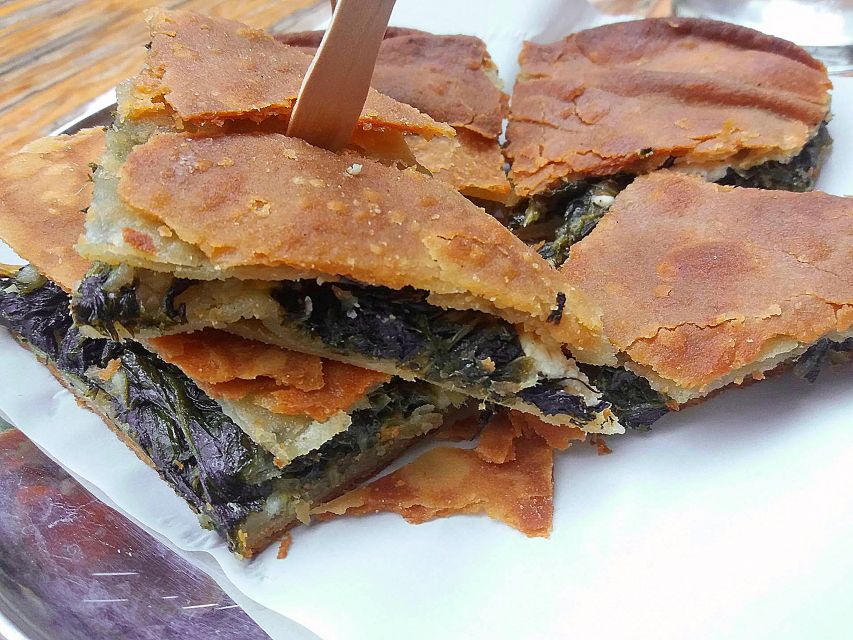
The breakfast foods are varied. Expect typical pies, including spanakopita, along with sausage, cheeses, beans, yoghurt, and other small dishes. Greek breakfast is not always a large restaurant plate served at one time. It can be simple, savory, sweet, and spread across different foods.
The pies are a useful introduction to that idea. A spinach pie is familiar to many people, but tasting it in the context of a Greek morning helps you see it as an ordinary food, not just a tourist favorite. You may also try a Greek spirit, adding a small taste of the broader drinking culture.
The amount of food is worth considering. This is breakfast plus several tastings, not coffee and one pastry. If you eat lightly in the morning, pace yourself and tell your guide early. If you enjoy trying many foods, the variety is one of the tour’s main rewards.
Honey, sheep’s milk yoghurt, and a beekeeper family
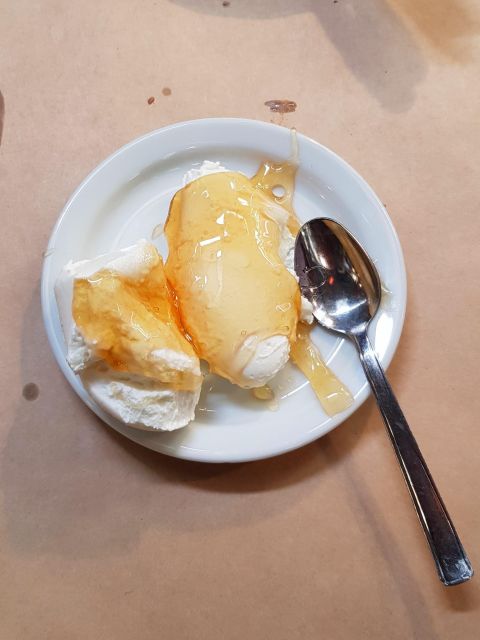
The honey tasting pairs naturally with the yoghurt. You sample Greek sheep’s milk yoghurt with local honey and learn why honey has an important place in the Greek diet.
Sheep’s milk yoghurt has a fuller taste than many standard supermarket yoghurts. With honey, it becomes a simple dessert-like dish that still feels like breakfast. The tasting also gives you a chance to compare honey flavors rather than thinking of honey as one generic sweetener.
The beekeeper family connection makes this more than a spoonful of syrup. You learn about the people behind the product and how honey fits into local food traditions. Rachel, one of the guides associated with the tour, has placed special attention on the different flavors of honey and the healthy uses of olive oil.
Dairy is central here, which is why this tour is not suitable for people with lactose intolerance. It is also not suitable for vegans. Vegetarians may find enough to eat, and one participant was accommodated with a vegetarian meal, but you should give the company your requirements before the tour rather than waiting until breakfast begins.
Breakfast where market traders eat
The final meal takes place at a meze taverna known to local market workers. This is likely to be the most satisfying part of the tour because you sit down after seeing the shops and food stalls that supply the neighborhood.
A meze taverna meal is social and shared. You may try several dishes rather than ordering one main course. The food connects to what you have already encountered: cheese, beans, sausage, yoghurt, vegetables, olive oil, and regional flavors.
The meal is also where a good guide can turn tasting into understanding. Mike has helped explain how to recreate dishes at home, and the tour can provide ideas for later meals in Athens. You leave with more than a list of restaurants. You have a better sense of the kinds of foods to order and how they are meant to be shared.
The word local should not make you expect a secret or inaccessible restaurant. The value is that the stop is tied to the market community and fits into the morning’s food story. It is a traditional, relaxed finish rather than a formal dining event.
What $58 buys you in Athens
At $58 per person, this is not the cheapest way to eat breakfast in Athens. You could buy a pie and coffee for far less. The price makes more sense when you count the number of tastings, the sit-down meal, the producer visits, and the guide’s help navigating several market areas.
You are also paying for access and explanation. A visitor walking alone may see the same streets but miss the olive farmer, the family honey connection, the traditional coffee preparation, and the taverna used by market traders. The guide turns separate purchases into a readable picture of Greek food culture.
Value depends on how much you care about context. If you want a quick meal, skip this and eat independently. If you want an early orientation to Greek food, the price is fair, especially because you can use the advice for the rest of your stay.
The tour does not include transport, hotel pickup, or drop-off. You need to make your own way to the central meeting point and return from Monastiraki at the end. Its short duration makes it easy to fit into a sightseeing day, but do not schedule another activity so tightly that you have to rush away from the final meal.
Who should book this food tour?
I would recommend it to first-time visitors who want a practical introduction to Athens beyond the major monuments. It also suits food-focused travelers, couples, and small groups who prefer conversation and tastings over a large organized outing.
It is a good choice if you want to know where to buy spices, olives, and Greek delicacies. It is also useful for anyone who plans to eat at tavernas later and wants a guide to local dishes before ordering alone.
You should think twice if you are vegan, lactose intolerant, or uncomfortable with a meat-and-dairy-heavy breakfast. The tour can accommodate some dietary needs, but the supplied food list makes clear that dairy is a major part of the morning.
Book the early departure if possible. You get breakfast out of the way, the market is at the heart of the tour, and you keep the afternoon free for Athens sights. Bring comfortable shoes, water, and an appetite that can handle more than one course.
Should you book it?
Book this tour if you want food, markets, and useful local guidance in one morning. Its best features are the family-run businesses, the olive oil and honey tastings, and the final meal connected to the market community.
Skip it if you want a quiet café breakfast, a vegan menu, or a formal cooking class. For everyone else, $58 buys a generous introduction to Greek breakfast and the everyday food culture of central Athens, with enough practical advice to improve the rest of your trip.
FAQ
Where does the tour meet?
Meet outside En Athinas, a small pie shop beside Cecil Hotel and a large Cosmote shop. The starting area is near Monastiraki.
How long does the tour last?
The tour lasts 2.5 hours. The longest scheduled section is the 70-minute food and breakfast stop around Omonoia.
What foods are included?
Food may include Greek yoghurt, local honey, spanakopita and other pies, sausage, cheeses, beans, deli meats, regional foods, dessert, and local snacks. You also taste olive oil and drink Greek coffee.
Is hotel pickup included?
No. Hotel pickup and drop-off are not included, so you must reach the meeting point independently.
Is the tour suitable for vegans or people with lactose intolerance?
No. The tour is not suitable for vegans or people with lactose intolerance. Tell the provider about any dietary requirements when booking.
What language is the tour conducted in?
The live guided tour is conducted in English. Groups are limited to 10 participants.
Just added around Athens
- Athens: Greek Wine & Olive Oil Tasting at Brettos Plaka★ 4.5 · 3 reviews
- Keramikos Olive Oil Experience & Walking Tour★ 5.0 · 6 reviews
- Relax Day: Thermal Lake, Olive Oil Tasting & Poseidon Temple Tour★ 5.0 · 5 reviews
- Private tour in Nafplio with Olive oil Tasting Tour in Corinth★ 5.0 · 9 reviews
- Olive Oil Tasting Farm Experience, Corinth Canal, Nafplio★ 5.0 · 2 reviews
- Private Wine & Olives Tasting Experience: Beach View Villa Paros★ 5.0 · 2 reviews
- Sounion Highlights: Vouliagmeni, Olive Farm, Poseidon Temple, Thorikos Theatre★ 4.5 · 3 reviews
- ATHENS OLIVE ESTATE – Olive Oil Workshop with Farm-to-Fork Lunch★ 5.0 · 6 reviews
Olive Oil & Honey Tastings, compared.


Butterfly Valley & Wine, Olive Oil, Honey Tasting Tour (Small Group)
Read our review →
Small-Group Honey & Extra Virgin Olive Oil Tasting Tour in Crete
Read our review →
Katakolon Small Group Tour: Olympic site, Honey/Olive Oil Tasting
Read our review →
Olympia Shore Ex: Olympic site, Honey Farm & Olive Oil Tasting
Read our review →
Browse the lists this tour appears in